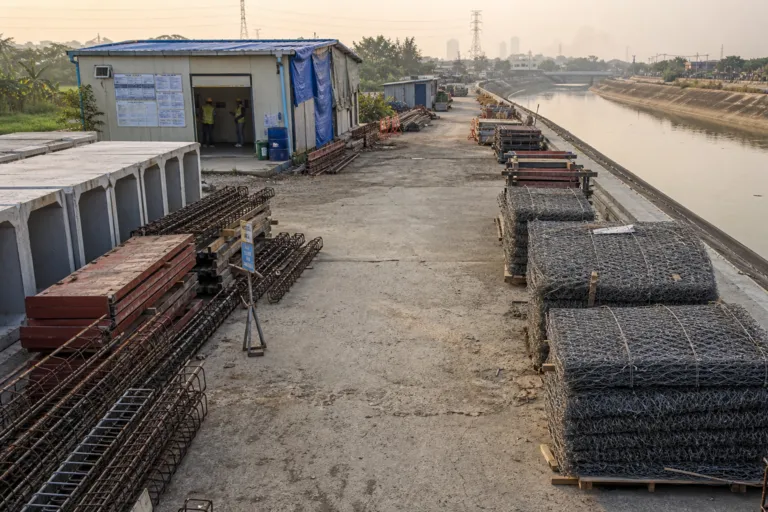
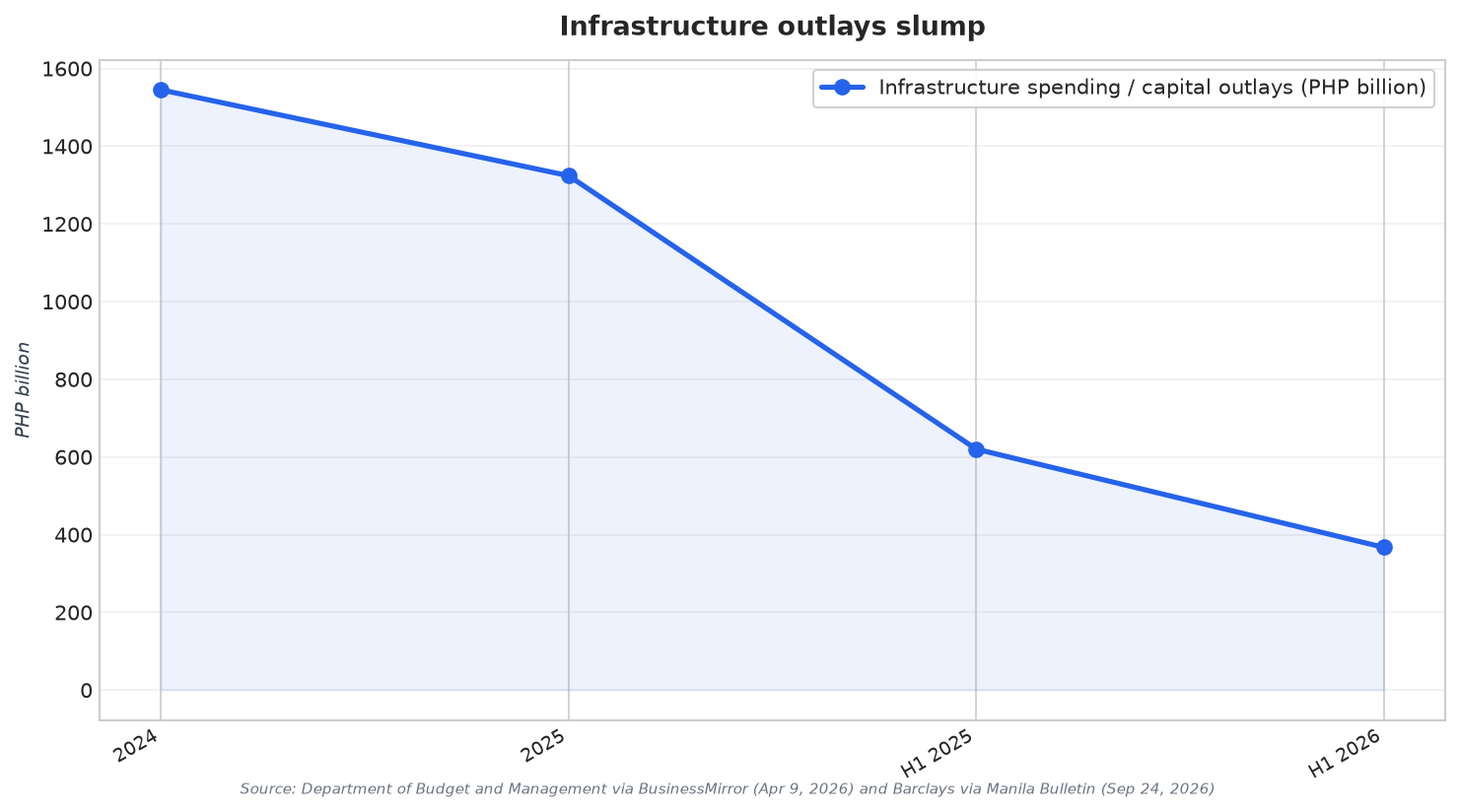
The Philippines’ flood-control projects scandal grew into a broader test of governance and execution. In 2025, President Ferdinand Marcos Jr. highlighted alleged anomalies during his State of the Nation Address, and Congress opened inquiries as scrutiny intensified. Allegations included ghost projects, substandard construction, and repeated contract awards to a small group of contractors. The fiscal and operational fallout quickly became visible in national accounts. According to the Department of Budget and Management (DBM), infrastructure disbursements fell to ₱1.324 trillion in 2025, down 14.3% from ₱1.545 trillion in 2024, as implementation was disrupted and payments were delayed.
Signs of stress also appeared in specific local concerns and budget decisions. A pastoral letter cited government records showing more than ₱5 billion allocated to flood-control projects in Malabon and Navotas since 2023, while residents reported non-functioning floodgates, clogged canals, and poor infrastructure. Marcos later vetoed ₱16.7 billion worth of flood-control projects in the 2025 national budget, citing redundancy and improper placement. Even before the economy could absorb a new pipeline, at least 2,000 ongoing flood infrastructure projects were expected to face tighter scrutiny, reinforcing delays that rippled into broader construction activity.
How the Spending Freeze Hit Growth and Confidence
The spending pullback did not stay confined to flood projects. The World Bank said allegations of corruption led to increased scrutiny and audits beginning in mid-2025, covering how infrastructure is planned, included in the budget, and procured. Real GDP growth fell to 2.8% in the first quarter of 2026, and the World Bank forecast full-year growth to slow to 3.7% in 2026, from 4.4% in 2025, with fixed investment projected to contract by 0.5%. It also reported that government spending on infrastructure and other long-term assets fell by around 1.3 percentage points of GDP between the first quarters of 2025 and 2026.
Market and analyst commentary echoed that the shock moved through both budgets and expectations. The World Bank warned that uncertainty around infrastructure procurement made investors more hesitant, and said the immediate result was a slowdown in government construction as well as private investment. Fixed capital formation contracted for three consecutive quarters beginning in the third quarter of 2025, while construction recorded the sharpest contraction among major sectors in the first quarter of 2026 as pipelines stalled. Barclays, meanwhile, reported that infrastructure and other capital outlays contracted by 40.8% to ₱367.4 billion in the first half of 2026, from ₱620.2 billion a year earlier—evidence that restarting public investment remained difficult.
A recovery from the Philippines infrastructure spending slowdown will require controls that deter abuse without paralyzing delivery. DBM said its measures aimed to strengthen accountability, improve project quality, ensure value for money, and enhance capability for faster and more sustainable long-term growth—even if that meant lower capital disbursements in the short run. But execution still has to restart. Economist Michael Ravelas argued that infrastructure is usually back-loaded and can accelerate if execution improves quickly, urging DPWH to unclog procurement and right-of-way issues and focus on shovel-ready projects. At the same time, critics warned about governance gaps: one analysis estimated losses of 42.3–118.5 billion pesos a year from flood-control corruption since 2023, reinforcing why credible rules, transparent budgeting, and faster, impartial enforcement must accompany any spending rebound.
What triggered the recent slowdown in public infrastructure spending in the Philippines?
How large was the drop in capital outlays in 2026 according to Barclays?
How did the World Bank link the infrastructure disruption to growth and investment?
What does a credible recovery from the Philippines infrastructure spending slowdown require?