Social commerce is changing how products are discovered and bought. In-feed, earned, owned, and paid media collapse into one. A creator post can act as social proof, education, and conversion at the same time. Discovery, trust, and purchase do not always happen in sequence anymore. They can happen in the same scroll, in public, and in real time. For consumer brands thinking about social commerce Middle East strategy, this matters because the feed is becoming the front door, not a support channel.
The shift is especially relevant as MENA consumer markets grow and expectations rise. Bain & Company noted that MENA growth is being shaped by channel evolution and rising expectations on convenience, including in markets like the UAE where e-commerce is meaningful and still expanding. In the same research, around 37% of MENA consumers reported not having enough time for daily essentials. That time pressure raises the value of fast, confidence-building content that reduces steps between interest and purchase, while still meeting higher standards for trust and relevance.
Young shoppers are a key accelerator of this behavior. A Boston Consulting Group report, cited by Chain Store Age, found consumers are 1.5 times as likely as older generations to discover brands through social media. It also found micro-influencers, defined as having fewer than 100,000 followers, are nearly as influential as celebrities with over 1 million followers for brand discovery: 22% of young consumers use micro-influencers for discovery, versus 27% who use celebrities. The same report said Gen Z and Gen Alpha are 2.0 times as likely as prior generations to cite influencer content as a reason for conversion.
What “Selling in the Feed” Demands From MEA Brand Teams
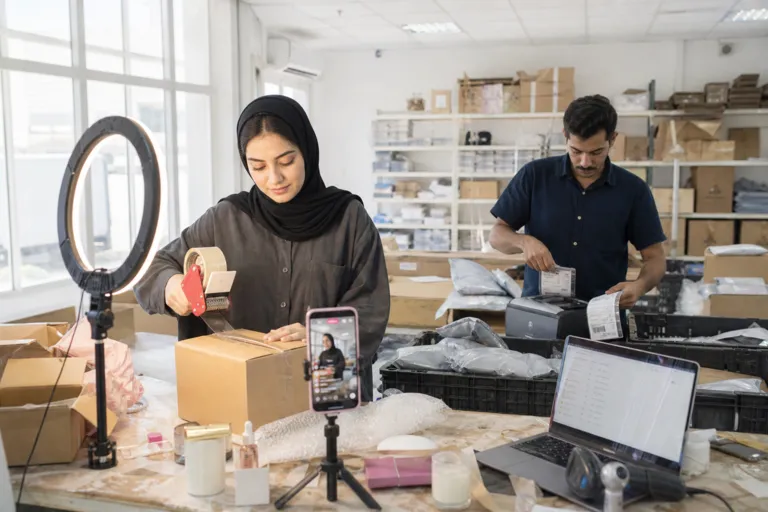
Feed-first commerce is operationally demanding, not just creative. Forbes described social commerce as “infrastructure heavy,” noting the need for studios and teams of presenters for live-streaming. It also reported that in Indonesia, research shows 60% of shoppers make purchases via live-streaming platforms. That example is outside MEA, but it illustrates the production intensity behind always-on selling. For MEA consumer brands, the takeaway is that content calendars and performance media cannot be separated from fulfilment readiness, customer support, and rapid response.
Authenticity and trust are not optional in this environment. Retail Gazette reported that social platforms collapse the traditional retail funnel, often making discovery, engagement, and purchase happen almost instantly. Attendees also noted that customers want authenticity and real experiences, not manufactured ones. The same discussion flagged growing customer frustration, including a “hatred of automation and chatbots” among some shoppers. That means social commerce Middle East programs need human-backed service, clear expectations, and content that sounds local and sincere.
Measurement and influence signals are also shifting. Retail TouchPoints argued that social and video are no longer “upper funnel,” and noted that two in three consumers say social content sways what they buy, while more than half point to influencers as driving purchasing decisions. At the same time, The Drum emphasized that clicks matter less than saves, shares, comments, and time spent. For MEA brands, that reframes success: optimize for proof and momentum inside the feed, then ensure the post-purchase experience protects the trust that was formed publicly.
What does “selling in the feed” mean for social commerce Middle East strategies?
Why are younger shoppers so important to social commerce?
Are micro-influencers or celebrities better for brand discovery?
What operational risks come with social-first retail?
What regional pressures make feed-based commerce more relevant in MENA?