Quick commerce in the GCC is built on a simple promise: get what you need fast. In Saudi Arabia, that promise lands in a market where online behavior is already mainstream. Maven Insights reports an estimated 99% internet penetration, with 85% of residents living in urban centers. It also notes that 79% of retail payments are electronic and 66% of the population is under 35. That mix creates constant, on-demand needs. The catch is that quick delivery is often costly to execute, yet brands still risk losing relevance if they opt out of the channel consumers reach for when something is urgently needed.
The same Maven Insights survey of nearly 3,000 consumers in KSA shows why speed remains table stakes. When choosing an app, speed is the most important factor, followed by product price and promotions. But the report also says the market is shifting: the future depends on reliability, trust, and consistent execution. This is the core quick commerce GCC dilemma. Brands can’t simply promise faster delivery and hope it sticks. They need to deliver correctly, repeatedly. When quick commerce becomes a habit, it is usually because the ordering process works the same way every time.
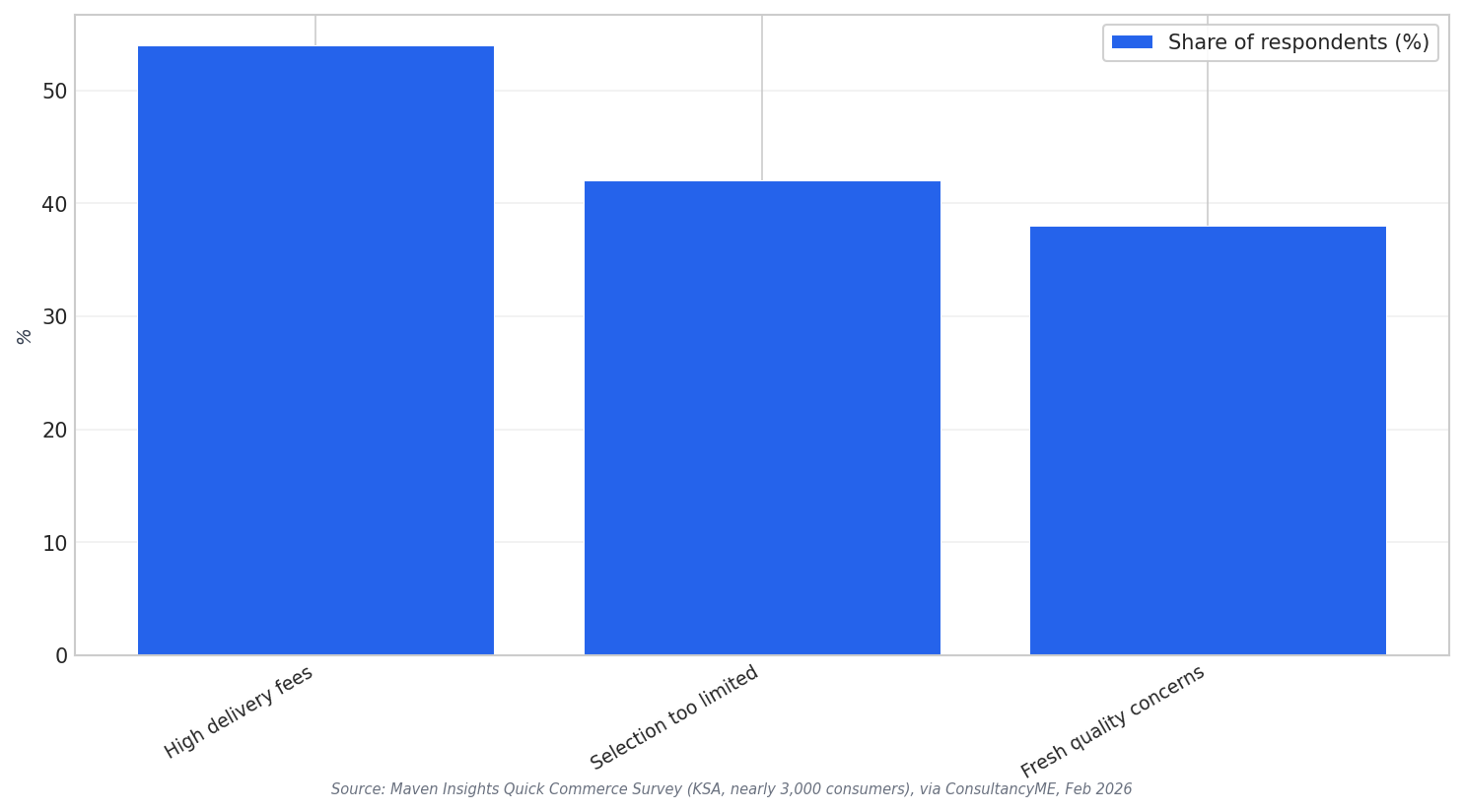
Even with high adoption, major friction points block more frequent ordering. Maven Insights found that 54% of respondents worry about high delivery fees. Another 42% say product selection is too limited. Fresh food adds another hurdle, with 38% of users citing quality concerns. These are not minor issues. They directly reduce order frequency, basket confidence, and brand switching costs. The opportunity is clear, but so is the constraint: if brands push speed while ignoring fees, assortment, and freshness execution, they amplify dissatisfaction rather than demand.
Why Reliability and Refund Speed Decide Loyalty
What happens after a problem matters as much as the delivery itself. Maven Insights reports that when issues arise, roughly 68% of consumers cite refund delays as their primary frustration, and 56% value a fast refund above all other solutions. A separate Worldpay report, in partnership with Visa, found that 55% of shoppers have returned a product purchased online. It also reports that 52% of shoppers are more likely to shop with retailers offering 30-minute refunds, while 41% wait at least three days to receive their refund. For quick commerce GCC brands, this means the “speed” conversation must include payments and refunds, not just riders and routing.
Operationally, speed without dependable execution can increase cost and damage trust. Locus’ CEO, Nishith Rastogi, says the real challenge is reliability at scale, and that failed deliveries create costs like reattempts, extra miles, and avoidable waste. Practical Ecommerce also warns that inconsistent delivery experiences can lead to support costs, refunds, and negative reviews, and that merchants must balance cost, speed, and quality. Inbound Logistics adds a pragmatic takeaway: a more effective approach is to prioritize consistency over speed, define realistic delivery windows by market, and focus on reliably meeting the promise.
Opting out of quick commerce can look like a margin-saving move. But KSA usage patterns suggest consumers are using these apps to solve immediate problems, not to browse or discover trends, and categories like health and pharmaceutical products represent 42% of the market in the Maven Insights findings. That is exactly the kind of mission-driven demand brands cannot ignore. The winning approach is to stay in the fast lane while removing the friction that blocks repeat behavior: reduce fee pain where possible, expand dependable assortment, protect fresh quality, and treat refunds as a core reliability metric. In quick commerce GCC, sustainable growth comes from doing “fast” correctly.
What does “quick commerce GCC” mean in this context?
What stops consumers from ordering more often in KSA quick commerce?
Why are refunds so important to loyalty in quick commerce?
Is speed still the main reason people choose a quick commerce app?
What operational approach can reduce the downside of chasing speed?