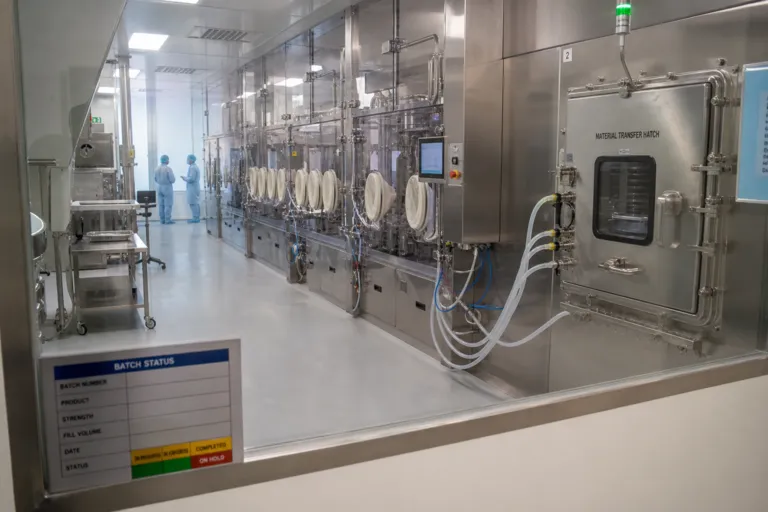
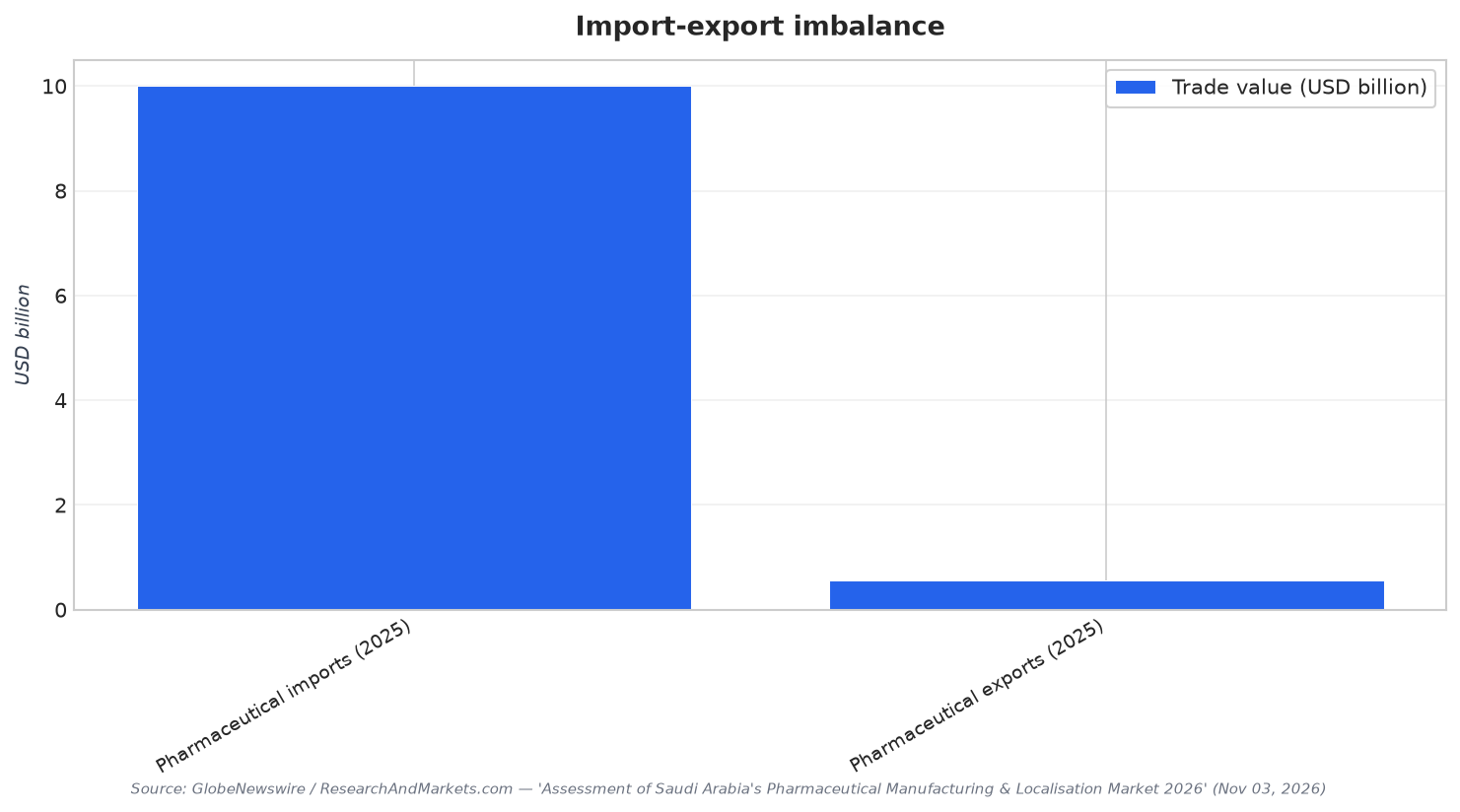
Made in KSA medicines are gaining momentum as the Kingdom expands domestic production and strengthens supply security under Vision 2030. Saudi pharmaceutical localization is being pushed by industrial localisation policies, public procurement mechanisms, and collaborations with international pharmaceutical companies that support technology transfer and a move toward more specialised production, including biopharmaceutical development. The opportunity is framed by trade flows: in 2025, Saudi Arabia imported approximately USD 10.00 billion of pharmaceutical products under HS Chapter 30, while exports reached approximately USD 563 million. That gap does not automatically mean every product is viable to localise, but it explains why decision-makers are looking at product-by-product pathways supported by regulatory approvals, intellectual property considerations, and long-term purchasing arrangements.
Procurement is one of the most practical levers shaping what gets built and where. Annual procurement exceeds SAR 25 billion, the government tender market alone is valued at SAR 21 billion, and government purchasing represents 54% of the SAR 30 billion pharmaceutical market. In 2021, 89% of NUPCO supply chain contracts were awarded to local partners, signaling to import-only suppliers that importing may not be sufficient when a compliant local product exists. Policy targets are also explicit. Saudi Arabia aims to localize 80% of pharmaceutical production by 2030, and the Made in Saudi program requires 40% added local value for product approval for government selling. Together, these signals encourage manufacturers to assess local footprint options, from full manufacturing to staged localisation built around packaging and fill-finish.
Where Manufacturers and Partners Are Finding Practical Entry Points
Local capacity is already material, and it is growing. One industry view notes that 40 factories cover 36% of market demand, with local production growing at 5% annually and exports exceeding SAR 1.5 billion. At the same time, new investment continues to arrive. In 2025, MS Pharma launched a USD 50 million biologics manufacturing plant in Saudi Arabia that serves both local and international markets and is positioned to support workforce development and strengthen biopharmaceutical capabilities. Deal-making also points to how partners can enter: French pharmaceutical company BPI signed a SR375 million (USD 100 million) agreement to establish its first manufacturing base in Saudi Arabia, securing a plot in Sudair City for Industry and Business that exceeds 51,000 square meters.
Partnership structures are increasingly central to competitive positioning. In market coverage discussing “localization-led consolidation,” joint ventures and technology-transfer partnerships are highlighted through examples such as Lifera’s proposed tie-up with Jamjoom Pharma and Pfizer Saudi Arabia’s memorandum of understanding with Lifera. This partnership model aligns with the idea that localisation will advance product by product, because different medicines have different technical requirements, regulatory pathways, and commercial risk profiles. It also helps explain why CDMOs and contract manufacturing players are tracking KSA as a regional hub, where market entry strategies can be designed around agreements, expansions, and collaborations rather than only greenfield builds.
Secondary packaging is another practical on-ramp because it ties directly to compliance and procurement scoring. The KSA pharmaceutical secondary packaging market is led by folding cartons, described as the SFDA-mandated carrier of critical information, tamper-evident features, and brand differentiation. Vertically integrated manufacturers such as SPIMACO, Tabuk Pharmaceuticals, Jamjoom Pharma, and Sudair Pharma are cited as running high-speed carton lines for solid oral generics, oncology therapies, and specialty care medicines that require Arabic/English text and serialized codes. This creates room for packaging converters, artwork and serialization specialists, and CDMO partnerships that can help manufacturers reach local value thresholds while building toward deeper manufacturing steps over time.
What is driving the push for Made in KSA medicines?
How does government procurement influence localisation decisions?
What targets and thresholds shape Saudi Arabia’s localisation roadmap?
Where are partnerships showing up in Saudi pharmaceutical localization?
Why is secondary packaging considered a practical entry point for localisation?