The phrase small modular reactors Middle East is increasingly tied to strategy, not just technology. Small modular reactors (SMRs) are designed to produce 300 megawatts of electricity or less, and supporters argue they can deliver reliable electricity with lower emissions. The current generation is designed to be fabricated in factories and shipped for assembly on site. That delivery idea matters because energy planning is shifting toward “where and when it’s needed most,” especially for large, power-hungry loads that prefer long-term power commitments. In the U.S., Amazon announced a $3 billion data-center campus in Warren County starting construction in 2026, and officials credited long-term power commitments as decisive. The Gulf can read this as a signal about what future investors may demand.
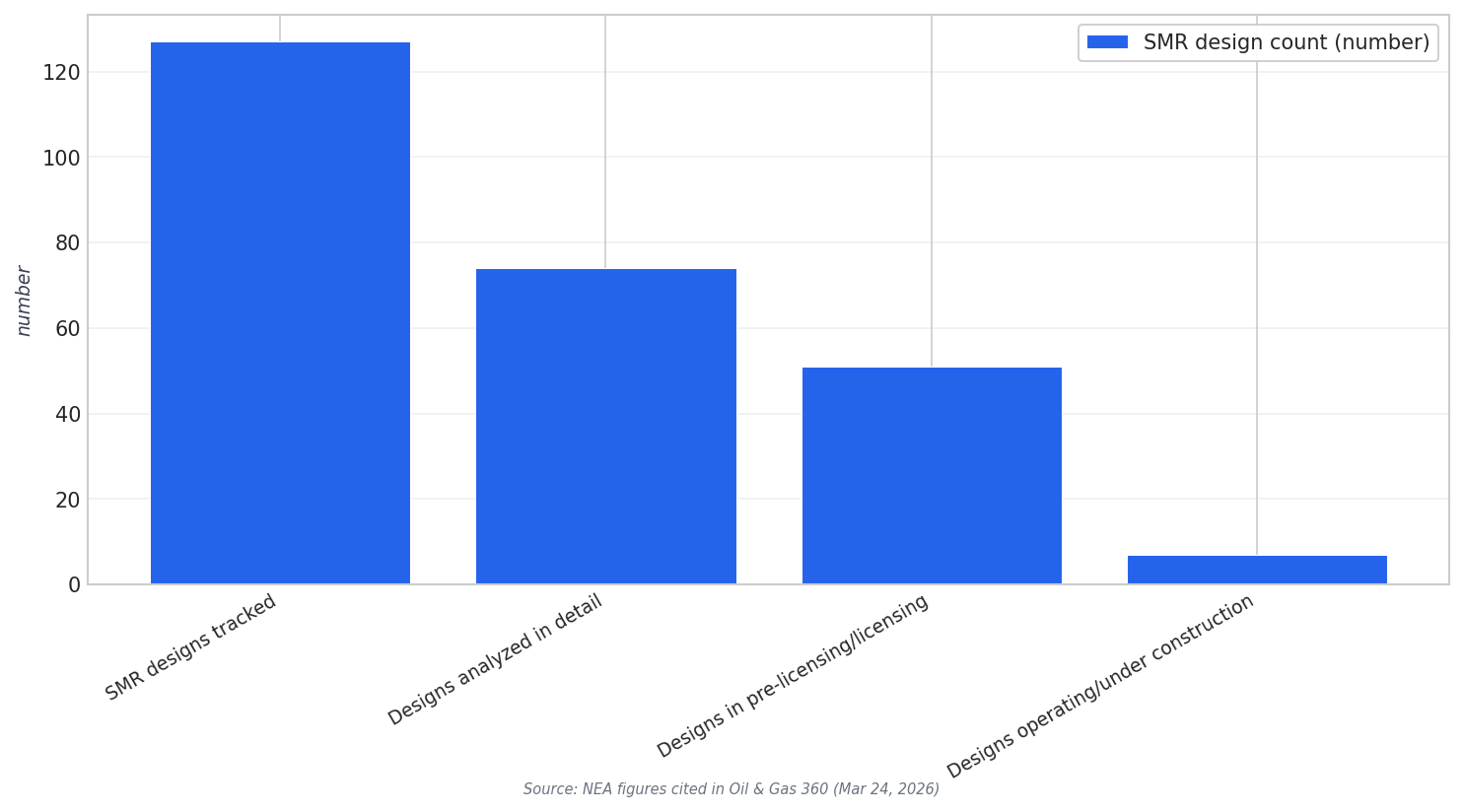
Globally, the SMR landscape is crowded and still early. The Nuclear Energy Agency (NEA) reports the world now tracks 127 SMR designs, up from 98 in the prior edition. Of those, 74 designs were analyzed in detail because designers had sufficient publicly verifiable data. The NEA also says 51 designs are in pre-licensing or licensing discussions across 15 countries, but only seven SMR designs are currently operating or under construction globally. These numbers frame the Gulf’s next phase: there are many options on paper, but few proven projects. The NEA also highlights that design diversity creates challenges for regulators and the industrial supply chain.
What the Gulf Can Copy—and What It Should Avoid
One lesson is that SMRs will not win on price alone. A U.S. industry view is that they must win on reliability, density, industrial integration, and geographic fit. That aligns with how Gulf planners often link power strategy to industrial clusters and critical infrastructure. There is also expanding interest in non-traditional deployment models. A Forbes analysis describes “nuclear-as-a-service” models as a shift that can transfer early-stage risk away from utilities, while noting investor confidence depends on steady policy support and demonstrated project execution. For Gulf decision-makers, the message is practical: execution and delivery systems can matter as much as the reactor concept itself.
Water and industrial processes are another strategic angle. NuScale research described an integrated approach where SMR technology could help produce desalinated water and hydrogen, while reusing brine waste as an industrial feedstock. In that same set of design details, NuScale’s NPM is described as producing 77 MWe, and supporting 100% steam turbine bypass to either a condenser or an industrial end user, enabling off-grid operation. Separately, ABS and KRISO agreed to cooperate on concept designs for an SMR-powered ship and a floating SMR power generation platform, including work on regulatory guidelines and international standards. In Gulf terms, floating or port-linked concepts connect directly to coastal infrastructure realities.
Constraints are real, and they can define timelines. The NEA flags fuel as a standout challenge: more than half of HALEU-using SMR projects had not progressed beyond non-binding agreements or collaborative studies for fuel supply as of early 2025. And critics argue the economics are unproven, saying no one has yet proven the technology can be built on time and at a cost that makes economic sense. Power-sector buildout also depends on standardized delivery ecosystems. POWER Magazine argues modular reactors need modular ecosystems, and success depends on standardized and replicable infrastructure around permitting, civil works, water access, grid integration, and funding frameworks. For the small modular reactors Middle East narrative, the next phase is less about hype and more about building those surrounding systems.
What does “small modular reactors Middle East” usually refer to in strategy terms?
How big is an SMR compared with large nuclear units?
How many SMR designs are there, and how many are actually operating or being built?
What is a key bottleneck that can slow SMR deployment plans?
Why do delivery and permitting systems matter as much as reactor design?