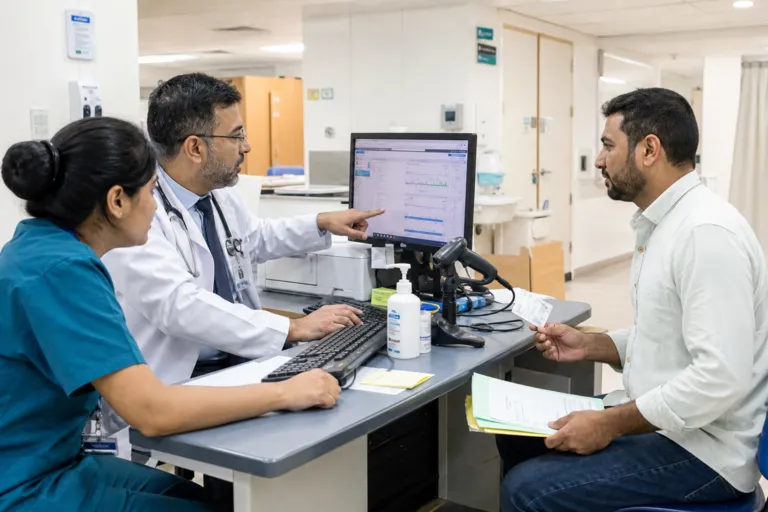
The idea behind unified medical records UAE is simple. Clinicians should not need to hunt across separate systems to understand a patient. In one UAE example, a unified approach is described as integrating details into a single platform rather than forcing professionals to access separate databases for lab results, patient histories, and other data. That matters because delays can happen when teams wait for reports to be processed. A more unified record aims to reduce that friction and help clinical teams act with better context during care.
Real-time data is a major operational shift that can come with unification. One described change is moving from systems with infrequent updates to platforms with constant information refreshment. Immediate updates on changes in a patient’s condition can enable timely intervention, rather than waiting until the next shift change. Real-time processing can also support clinical decision tools that highlight potential complications before they escalate. These tools may alert teams to potential drug interactions or propose alternative treatments based on similar earlier cases.
In the UAE, NMC Healthcare has been described as modernising its data strategy using Snowflake’s AI cloud data platform. The reporting states NMC is enhancing data management across 70 medical facilities throughout the Middle East and improving treatment for 5.5m patients annually. The same coverage says the technology integrates electronic medical records, CT images, lab results, and bed management systems into a cohesive data source. The goal is a comprehensive patient view without needing to access multiple systems, and clinicians receive real-time updates from the hospital network.
What Providers Need to Get Right
A unified record vision is not only about technology. It also changes day-to-day work and expectations. One analysis of the evolving “Single Patient Record” ambition says the next stage requires a broader view of the person, noting that housing, employment, education, financial security, and other social factors influence outcomes and demand. That same piece highlights two groups that need targeted support: data scientists, analysts, and informatics teams who need advanced training, and frontline clinicians who need improved digital literacy to confidently use analytic outputs.
Interoperability is another make-or-break issue for unified medical records UAE efforts. Coverage of a US data sharing push notes that patient health information is scattered across multiple disconnected systems, leading to inefficiencies, medical errors, and wasted time and money. Another report says the administration wants networks that facilitate access using the Fast Healthcare Interoperability Resources (FHIR) standard. But adopting FHIR can be challenging, including different implementations and different versions over time. Separate reporting also raises data security concerns, including that some apps could operate outside HIPAA.
For providers, the biggest practical takeaway is that unification is not a single procurement. It is an operating model. It depends on systems that can integrate key data types, workflows that can act on real-time updates, and staff training that keeps up with more complex data environments. It also requires careful governance so patients can feel their data is kept secure. When executed well, unification reduces the need to jump across portals and databases and supports more coordinated decisions at the point of care.
What does unified medical records UAE mean for providers?
What kinds of systems are being integrated in unified record approaches?
Why does real-time data matter in a unified record model?
What workforce changes may be needed to make unified records work?
What risks or challenges can slow interoperability efforts?