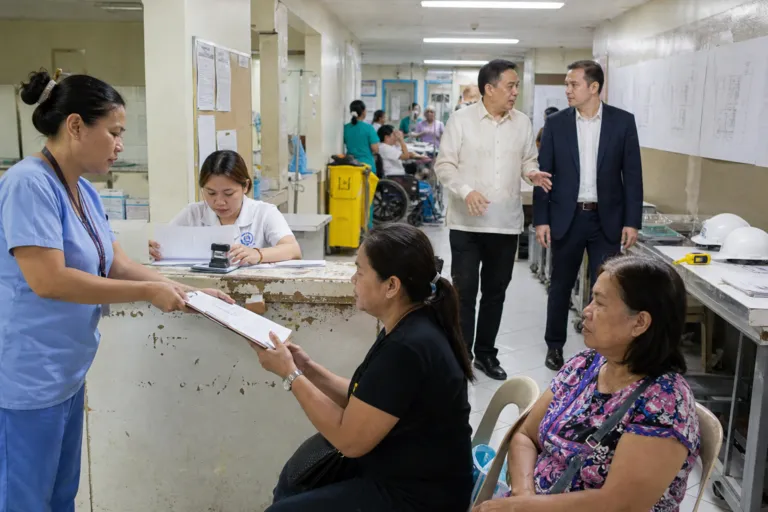
“Philippines healthcare investment 2026” is increasingly framed by a simple tension. Universal coverage ambitions raise expectations for access, quality, and continuity of care. Capital looks for structures that make long-gestation healthcare projects bankable. In the sources available here, the clearest Philippines-specific signal is not a national budget line or a systemwide spending ratio. It is a workforce story anchored in Cebu, and it matters because staffing capacity shapes how quickly facilities, service lines, and new care models can scale.
Cebu’s investment narrative points to labor as an input to the healthcare build-out. A SunStar Cebu report says the province produces more than 12,000 medical professionals annually. The same report describes a shift from traditional call centers to higher-value work, including “clinical excellence,” and frames Cebu’s multilingual, tech-savvy base as a draw. The pitch to investors is direct: acting amid a “national landscape” described as uncertain, capital can help build industries that generate employment, enhance healthcare, and foster innovation.
Where Coverage Ambitions Meet Investable Structures
Even when a country’s universal coverage direction is clear, investability often hinges on mechanics: risk pooling, payment discipline, and a policy environment that reduces uncertainty. An opinion piece in The Hindu BusinessLine argues that prioritizing primary and preventive care offers the highest long-term returns by reducing disease burden before it becomes more complex and costly. It adds that this requires sustained public investment, stronger risk pooling through insurance, and a stable policy environment that encourages private investment and innovation. While that article discusses India’s context, the investment logic travels well: coverage needs capital, and capital needs predictable rules.
Separate reporting from Nigeria underscores a finance constraint that investors routinely price in: mismatched funding tenors. The Nation (Nigeria) describes healthcare manufacturing as capital-intensive, with long gestation periods, heavy upfront investment, stringent regulatory requirements, advanced technology needs, and reliance on highly skilled human capital. It also highlights a recommendation for guaranteed payment turnaround time of no more than 30 days for manufacturers and service providers, plus a revolving healthcare fund to recycle capital rather than rely on sporadic interventions. These details are not about the Philippines, but they illustrate the kind of cash-flow and capital-availability questions that can either accelerate or stall health system build-outs.
Other sources show how governments package health priorities into investable programs, even if the examples are outside the Philippines. Vanguard reports Nigeria disbursed over ₦86.8 billion under BHCPF from 2023–2024, approved an additional $200 million to bridge funding gaps after donor exits, and cites initiatives set to inject over $1 billion and mobilise $3.4 billion in pooled funding. Punch adds operational scale markers, including memoranda with more than 200 facilities and claims and facility counts tied to maternal care. These figures demonstrate what “programmatic investability” looks like: defined services, defined providers, and defined payment flows.
For Philippines healthcare investment 2026, the sources here support one grounded conclusion: capacity building will be constrained or enabled by the talent pipeline, and Cebu’s “more than 12,000 medical professionals annually” is a tangible input to that equation. The broader lessons from outside the Philippines point to what investors often require alongside demand: stronger risk pooling, stable policy, and payment systems that behave predictably. Without those, even a strong workforce advantage can struggle to translate into sustained build-out momentum.
What is the clearest Philippines-specific data point tied to the build-out in these sources?
How does this article define the link between universal coverage goals and private capital?
What does the keyword “Philippines healthcare investment 2026” imply in the context of the provided sources?
Why does payment discipline matter for healthcare build-outs, based on the sources?