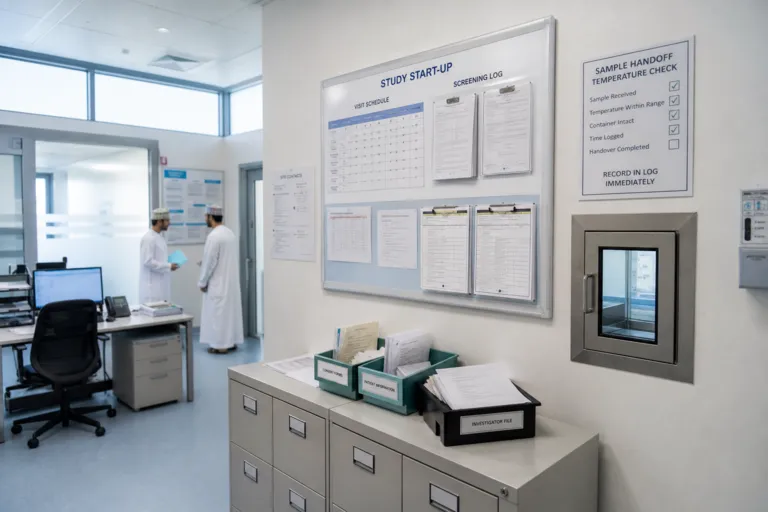
Across the Gulf, clinical research is shifting from a niche activity into a strategic industry. PharmaBoardroom reports that the Middle East has seen a “tremendous surge in clinical research over the past five years,” after being “long regarded as a clinical trials backwater.” The same source highlights why global sponsors are paying closer attention: Middle Eastern populations account for just 1.24% of global representation today, creating pressure to include regional cohorts in multi-country studies. Multinational drug developers are responding with expanded footprints and capital directed at localizing clinical studies, particularly across the Arabian Peninsula.
That momentum is starting to show up in market and pipeline signals tied to the broader pharmaceutical build-out. PharmaKnowl Consulting says the GCC pharmaceutical market reached USD 23.7 billion in 2024 and is projected to grow to USD 49 billion by 2033. While this is not a direct clinical-trials figure, it frames the scale of healthcare and drug-supply activity surrounding research. Ken Research adds an operational datapoint: the Middle East Clinical Trial Supplies Market is valued at approximately USD 105 million, alongside a rise in trials, with “over 1,200 trials registered in future,” described as a 15% increase from the previous period.
What the Gulf Is Building to Compete for Global Studies
Regional ambitions are pairing policy with infrastructure. The Middle East Insider notes a “significant increase in the number of registered clinical trials in recent years,” and links it to the maturation of regulatory and research infrastructure. It also reports that Gulf governments allocate “billions of dollars” to health-related scientific research and describes Saudi Arabia’s National Clinical Trials Laboratory initiative, formed in partnership with international research institutions, to position the Kingdom as a primary regional hub for testing new drugs before market launch. The same source points to internationally accredited hospitals and research centers, including King Faisal Specialist Hospital and King Abdulaziz Medical City in Saudi Arabia, and Cleveland Clinic Abu Dhabi in the UAE.
Saudi Arabia’s trajectory offers a clear example of what scale can look like when systems align. Clinical Trial Vanguard states that Saudi Arabia is rapidly becoming a regional hub, citing over 400 active studies and a market opportunity estimated at US$200 million. It describes drivers that sponsors recognize, including a robust regulatory framework and growing healthcare infrastructure, plus a focus on innovation. The article also highlights the role of the Ministry of National Guard-Health Affairs (MNG-HA) in facilitating research via access to extensive patient databases, and it notes ongoing work to strengthen commercialization and patenting.
Globally, sponsors still cluster trials in established markets, but the Gulf’s case for diversification is getting stronger. Grand View Research reports that North America dominated the clinical trials market with a 50.7% revenue share in 2025, and adds that the Middle East and Africa clinical trials industry experienced significant growth driven by rising oncology investment, favorable regulatory reforms, and increasing collaborations between local and global pharma companies. In parallel, PharmaBoardroom describes clinical research becoming strategically integral to national visions in wealthy Gulf states such as Saudi Arabia and the UAE. Together, these signals explain why clinical trials Middle East strategies are increasingly built around both representation and execution capacity.
Why are Gulf countries seeing increased clinical research activity now?
What numbers show rising trial activity in the region?
How big is the clinical trial opportunity in Saudi Arabia, according to sources?
How does the Middle East compare with global trial concentration?
What is driving interest in clinical trials in the Middle East as a topic for global sponsors?