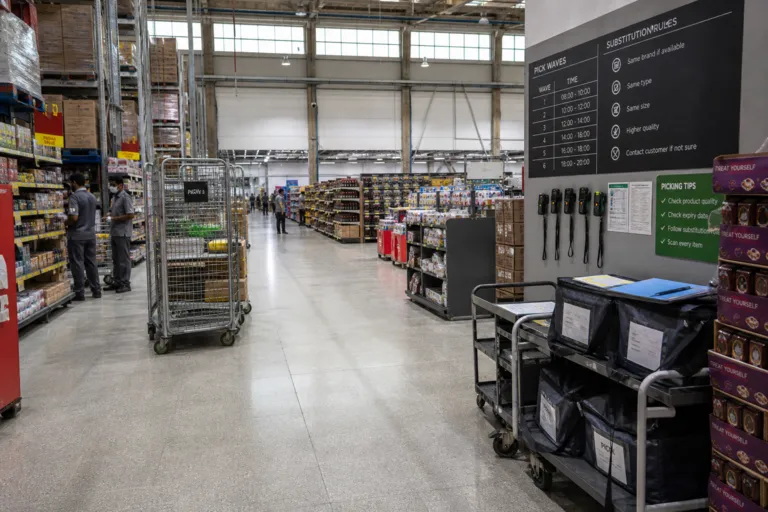
Trading down in the Gulf in 2026 is less about abandoning brands and more about redefining what “worth it” means. GCC consumers are described as more price aware, more promotion sensitive, and more willing to compare alternatives across channels, even for routine purchases like groceries, household staples, and personal care items. This more deliberate mindset is paired with an emotional dimension: shoppers still seek comfort, aspiration, and perceived value, but they want simplicity, clarity, and trust while they shop. In that tension, retailers have to remove friction from essential shopping while keeping discretionary categories emotionally resonant.
This shift is unfolding in a region that is still expanding overall. A Middle East retail market outlook estimates USD 932.54 billion in 2026, up from USD 868.89 billion in 2025, highlighting that growth and value pressure can coexist. The same outlook anticipates USD 1,644.68 billion by 2034 with a 7.35% CAGR from 2026 to 2034, reinforcing long-run momentum. But the “how” matters as much as the “how much.” Reporting referenced on UAE and Saudi consumer baskets points to shoppers becoming more selective and more willing to spread spending across traditional trade, modern retail, and e-commerce, which changes pricing architecture, pack strategy, and channel investment decisions.
What Trading Down Means for GCC Retail Strategy in 2026
In practice, the GCC value retail shift is showing up as a dual-track strategy. Research cited on grocery in MENA describes consumers balancing price consciousness and bargain hunting with a willingness to spend more on selected products. That means “value” cannot be a blunt discounting tool. Retailers need targeted promotions, clearer tiering between entry and premium ranges, and consistent execution across touchpoints so the deal feels trustworthy. The GCC context adds complexity because expectations vary by segment, city, channel, and occasion, with expatriates, nationals, tourists, and cross-border shoppers sharing the same retail ecosystems.
Speed and convenience are also becoming part of value, not separate from it. In quick commerce, the GCC market is sized at USD 4.59 billion in 2026 and is forecast to reach USD 12.43 billion by 2031 at a 22.05% CAGR. Investment and infrastructure moves illustrate how operators are scaling convenience: Talabat said in May 2026 it raised its full-year 2026 investment plan to USD 120 million to grow talabat mart density and strengthen supply chain capabilities. In the UAE, ADNOC Distribution and noon partnered to place noon Minutes fulfillment hubs inside ADNOC’s network of 551 service stations and 373 Oasis convenience stores, while Amazon entered the UAE in October 2025 with Amazon Now using Emirates Post offices as micro-fulfillment hubs through a partnership with 7X and grocery supply support through LuLu.
Finally, trading down is not limited to mass-market baskets; it is also reshaping premium access through resale. The GCC secondhand luxury goods market is assessed at USD 685.4 million in 2026 and forecast to scale to USD 1,870.34 million by 2035 at an 11.80% CAGR. The same source notes that platform data shows 34% of Riyadh buyers choosing buy-now-pay-later arrangements over conventional credit, with watches priced between USD 5,000 and USD 15,000 highlighted. For retailers, this creates a strategic choice: compete with authenticated resale, partner into it, or defend primary sales with services, trust signals, and experience. In 2026 Gulf retail more broadly, shoppers remain price-sensitive on everyday goods while being willing to pay for time, atmosphere, and social connection, pushing malls and stores toward lifestyle destinations rather than pure transaction spaces.
What is driving trading down behavior in GCC retail in 2026?
How big is the Middle East retail market in 2026, according to the sources?
How does quick commerce relate to value in the Gulf in 2026?
What does the GCC value retail shift mean for premium categories like luxury?