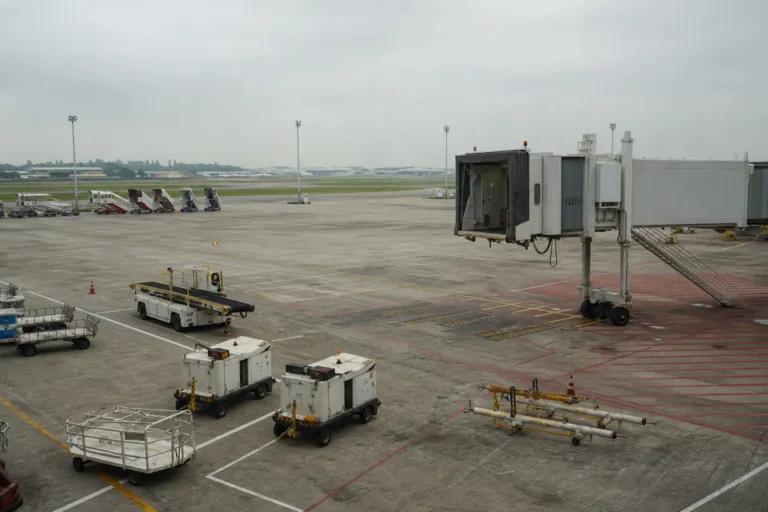
Southeast Asia is expected to be one of the fastest-growing aviation subregions over the next 20 years, alongside South Asia, according to CAPA. Yet “too few planes” has become a practical constraint, not a slogan. Boeing data cited by Aviation Week shows Southeast Asia remains behind 2019 levels in narrowbody capacity. The size of the single-aisle fleet is about 75 aircraft smaller than before the COVID-19 pandemic, and single-aisle capacity is down about 6%. That gap matters because the subregion’s networks are built around high-frequency, short-haul flying where narrowbodies do most of the work.
The demand story is clear in the network build-out that already happened. Boeing calculates that the number of airport pairs and monthly flights in Southeast Asia doubled between 2000 and 2025, while monthly seats tripled. Those gains created a larger base of routes that now needs replacement aircraft and reliable deliveries to keep expanding. Even when airlines want to add flights, capacity is capped by what is in service today, not just what is planned on paper. In that context, an aircraft shortage affecting Southeast Asia’s airlines becomes a growth shaper, influencing which routes get added, which frequencies return, and how quickly schedules can normalize.
Orderbooks Are Big, but Timing Is the Constraint
Airlines in Southeast Asia have about 1,700 aircraft on order, and 83% are narrowbodies, CAPA reports. Boeing’s longer-term view adds scale: Southeast Asian airlines will require 4,885 new aircraft over the next 20 years, with 80% expected to be narrowbodies. These figures highlight how central single-aisle jets are to meeting projected traffic growth. But orderbooks do not equal immediate lift. The near-term shortage shows up as delayed replacement and slower restoration of narrowbody capacity, even as airlines signal “growth ambitions” through fleet plans and delivery pipelines.
Regional constraints are also visible when placed against wider Asia-Pacific context. Mordor Intelligence estimates the Asia-Pacific region had an active fleet of approximately 4,760 passenger aircraft until September 2024. Against that backdrop, Southeast Asia’s narrowbody shortfall versus 2019 stands out as a localized bottleneck inside a much larger market. The same source notes Boeing’s 2024 Commercial Market Outlook expects passenger air traffic in Southeast Asia to more than triple over its forecast period. If traffic expands faster than fleet recovery, airlines have to make harder choices about deployment, prioritizing the aircraft they do have for the best-performing routes.
In 2026, the operating environment adds pressure. The Traveler describes Asia’s aviation sector facing aircraft shortages alongside jet fuel shocks, with airlines trimming lower-yielding services and prioritizing higher-revenue long-haul operations. It also cites global traffic statistics for June 2026 indicating international capacity within Asia fell compared with a year earlier, partly because some airlines pulled back frequency on shorter routes. For Southeast Asian carriers that depend heavily on narrowbody flying, these conditions can amplify the impact of constrained fleets. The result is a tighter supply of seats at the same time demand signals remain robust.
Why does an aircraft shortage matter so much for Southeast Asia’s airlines?
How large is Southeast Asia’s aircraft order pipeline?
What does Boeing project for long-term aircraft needs in Southeast Asia?
What recent operating pressures are affecting capacity in Asia in 2026?