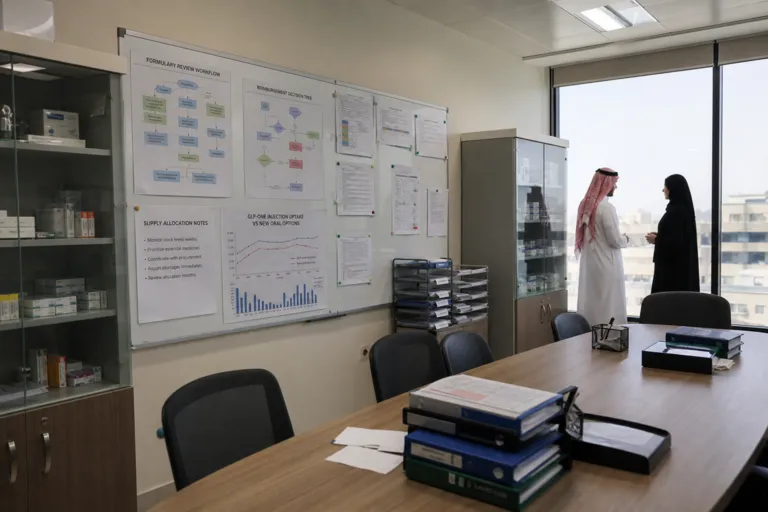
The Gulf’s weight-loss conversation is being pulled into a new phase by GLP-1 medicines. Novo Nordisk says demand has grown “meaningfully” across every GCC market since 2022, while Eli Lilly has pointed to a large untreated population, suggesting runway for further uptake in a region that carries a heavy burden of diabetes and obesity. But the same Gulf narrative also comes with a caution label. The World Obesity Federation warned against treating commercial momentum as proof of a public-health reversal, and its director of programme development and strategy told Arabian Business that no country has yet demonstrated through robust measured data that rising GLP-1 use has reduced obesity prevalence nationally. That gap matters for policy, reimbursement, and long-term wellness planning.
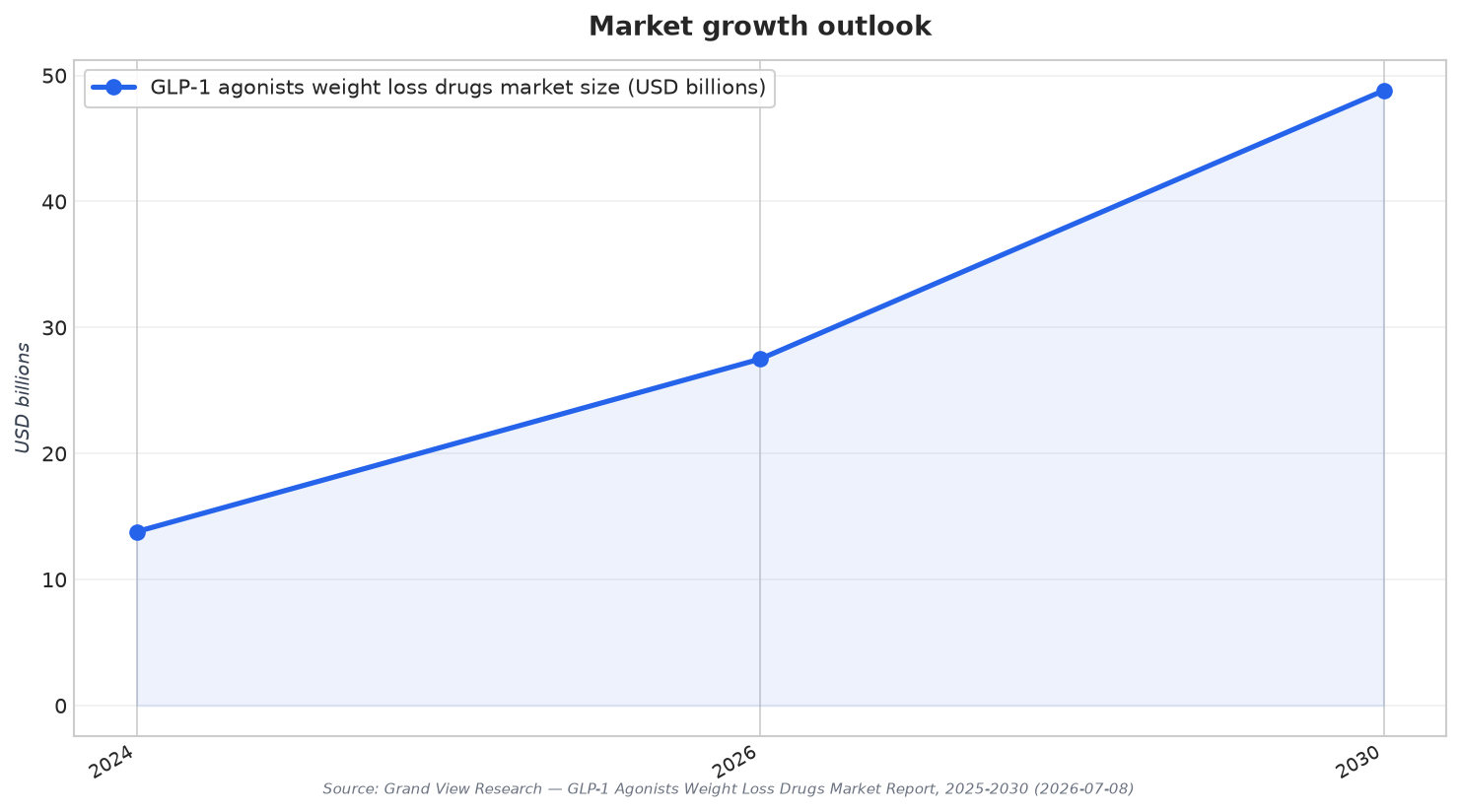
Globally, the commercial curve is easier to quantify than the population-health curve. Grand View Research values the GLP-1 agonists weight loss drugs market at $13.8B in 2024 and projects growth from $27.5B in 2026 to $48.8B by 2030, at a CAGR of 18.5%. Another 2026 compilation cites global GLP-1 sales surpassing $132 billion in 2025 (IQVIA / AMCP, 2026). These are not Gulf-only figures, but they frame why manufacturers, distributors, and providers in the region are treating this category as a strategic priority. For a Gulf pharma ecosystem that relies on availability, cold-chain execution, and patient support, the “gold rush” pressure lands first on supply reliability and continuity of therapy.
Insurance, Adherence, and the New Economics of Staying on Therapy
Coverage and affordability are also becoming part of the product story, even when the policy decisions are happening elsewhere. J.P. Morgan notes that, in the U.S., most major insurers and Medicare plans cover GLP-1s for type 2 diabetes, while coverage for obesity and weight management is “much more limited” and often excluded from standard plans. It also points to an access push: as 2025 ended, the Trump administration announced it would seek to lower costs and increase access for Medicare and Medicaid recipients. For Gulf decision-makers, these U.S. signals are best read as context: they show how payer rules can either widen or narrow utilization, and how pricing and access can change demand dynamics quickly.
Staying on therapy is another pressure point that can reshape the GLP-1 obesity market in Gulf systems, because drop-off affects outcomes and cost planning. Forbes Health cites a 2025 study in JAMA Network Open showing that among individuals taking GLP-1 medications for obesity or overweight, 46.5% of those with type 2 diabetes discontinued GLP-1 use after one year versus 64.8% without the condition. The same source notes that weight loss, income, insurance coverage and out-of-pocket cost, as well as adverse events like pancreatitis and bowel obstruction, were significantly associated with discontinuation. And it reports common symptoms are gastrointestinal, including nausea, vomiting, diarrhea, constipation, abdominal pain, and indigestion, often most prevalent when starting or after dose increases.
The Gulf’s wellness sector is already reacting in ways that extend beyond pharmacies and clinics. An opinion piece in Gulf Business argues that in the UAE, GLP-1 access has become “faster and smoother than in many global markets,” and that these drugs are “rewiring demand across categories,” including shrinking baskets and accelerating wardrobe churn. It also links rapid weight loss to rising interest in temperature-sensitive aesthetic treatments such as dermal fillers, skin-tightening, and facial contouring—products that depend on cold-chain logistics. The same piece notes the UAE cosmetics market is projected to reach US$2.4 billion by 2032. In this environment, GLP-1 demand becomes a supply-chain and wellness-services story as much as a prescription story.
Is demand for GLP-1 medicines rising across the GCC?
Has the Gulf’s GLP-1 boom proven it is reducing obesity rates?
What do global forecasts suggest about the GLP-1 weight-loss drug market?
What does discontinuation look like after one year on GLP-1s for obesity or overweight?
How is the GLP-1 obesity market in the Gulf influencing wellness and aesthetics?