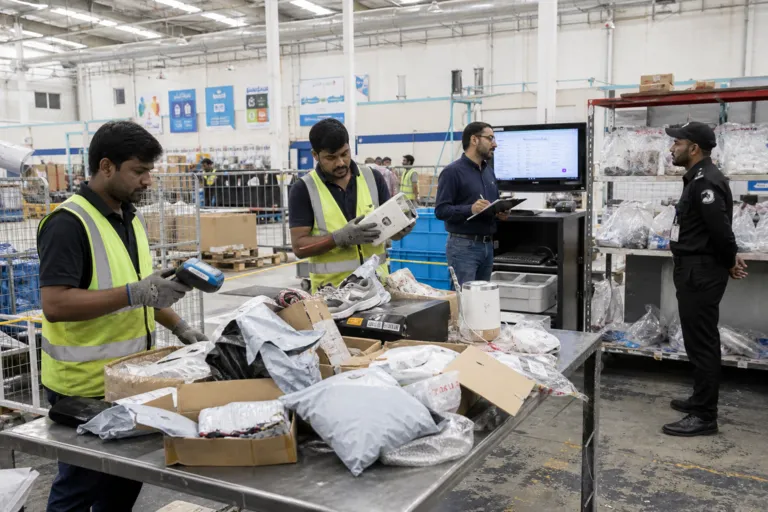
Returns are no longer a quiet operational chore. They are becoming a competitive fight that can decide who wins on margin. Gaurav Saran, CEO of ReverseLogix, said retailers are seeing “increased volume, more sophisticated fraud, tighter labor availability, and rising transportation costs collide at once.” He described the result as returns shifting “from a back-office function into a front-line profitability issue.” For GCC reverse logistics leaders, that framing matters because every delay and decision now touches earnings, not only customer experience.
Seasonality is also getting sharper and more disruptive. A report cited by E-Commerce Times linked inventory scarcity and later promotions to more holiday purchases concentrating in the October–December window. That, the report warned, makes returns surge in January and become “less spread out and more disruptive, testing reverse logistics and recovery systems.” Wes Berry of ReturnPro added that while returns lift after Black Friday, the volume typically picks up “through Christmas,” and “right now is when you start to see the volume pick up.” In practice, returns peaks can hit at the same time as labor tightness and transport cost pressure.
Why Returns Strategy Is Shifting From Speed to Control
Retailers are redesigning the returns experience rather than simply accelerating it. One emerging approach is tying free returns to loyalty membership or in-store activity. An executive quoted by E-Commerce Times called this shift “intentional and strategic,” because it can improve retention and lifetime value, improve data capture through loyalty ecosystems, lower reverse-logistics costs by consolidating in-store returns, and drive incremental purchases from return visits. At the same time, Jordan Shamir of NoFraud noted that many retailers are redesigning returns “from the ground up,” reflecting how returns policies are being rethought alongside fraud prevention and customer experience.
Operationally, the work inside warehouses is also changing. Inbound Logistics explained that goods-to-person (G2P) fulfillment has shifted facilities from bulk retail-store orders to many individual consumer orders, often “just one or two items each.” That increases sortation complexity and can push facilities to perform tasks “traditionally managed by retailers,” including managing reverse logistics. Returns handling involves multiple steps such as quality checks, relabeling, and repacking, each adding complexity and cost. This matters for GCC reverse logistics because returns performance is tightly linked to fulfillment design, not separated from it.
Reverse logistics is also becoming a value stream, not only a cost center. At CSCMP Edge 2025, Inbound Logistics reported that executives discussed returns, refurbishment, and recycling as strategic levers, including secondary-market options. Examples included “bin stores,” livestream auctions and direct-to-consumer broadcasts, and warehouse pickup or outlet-style fulfillment that can bypass shipping costs. The same report shared Home Depot’s scale: its reverse network handles approximately $1.9 billion in COGS returns, liquidation channels generate $200 million in sales, and recycling exceeds 76 million pounds annually, contributing roughly $3.2 million in revenue per year. Even though this is not GCC-specific, it signals how recovery channels can change the economics of returns.
Cross-border complexity adds another layer of risk and design tradeoffs. A guest column on InternetRetailing.net said different regions have “markedly different preferences,” noting that European retailers prefer centralized returns processing (37%), while in Asia third-party returns management is more common. It also stated that nearly one in five global retailers (16%) still refuse returns on international orders entirely, a stance described as increasingly untenable as expectations rise. The same column emphasized returns data as a foundation for innovation, because “every return tells a story” about quality, description accuracy, and customer expectations. In that environment, GCC reverse logistics becomes a battlefield of control: control over routing decisions, fraud exposure, recovery channels, and the data feedback loop that reduces returns at the source.
What is GCC reverse logistics in e-commerce?
Why are returns becoming a margin problem, not just a CX issue?
Why do January returns strain reverse logistics systems?
How do loyalty-linked returns policies change reverse logistics outcomes?
What recovery channels can turn returns into value?