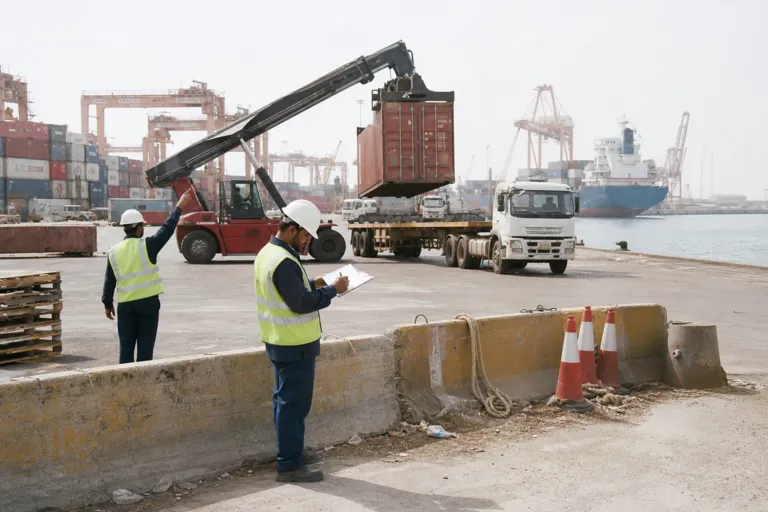
The near-closure of the Strait of Hormuz and disruptions to airspaces along the Persian Gulf have forced a rapid detour in regional logistics. Saudi Arabia’s west coast ports on the Red Sea began serving as a safer lifeline to and from the region, even as one report described fewer ships on Jeddah’s platforms than usual. At the same time, the problem is not only exports. Incoming supplies matter, too, in a region that imports about 85% of its food. With traffic halted in and toward several Gulf ports due to attacks and retaliation, cargo owners have had to prioritize reliability over routine.
MarineTraffic data shared with CNN showed that when the war began, over 60 ships en route to ports in the Gulf had to divert, with some turning back toward home bases in China and India. Others shifted to ports on the Arabian Peninsula along the Arabian and Red seas. In that reshuffle, Saudi Arabia’s Jeddah was cited as one of the alternatives of necessity, alongside Oman’s Sohar and Salala and the Emirati port of Khor Fakkan. Analysts also warned that there was no “industry standard” for the crisis, meaning arrival dates depended heavily on each carrier’s strategy.
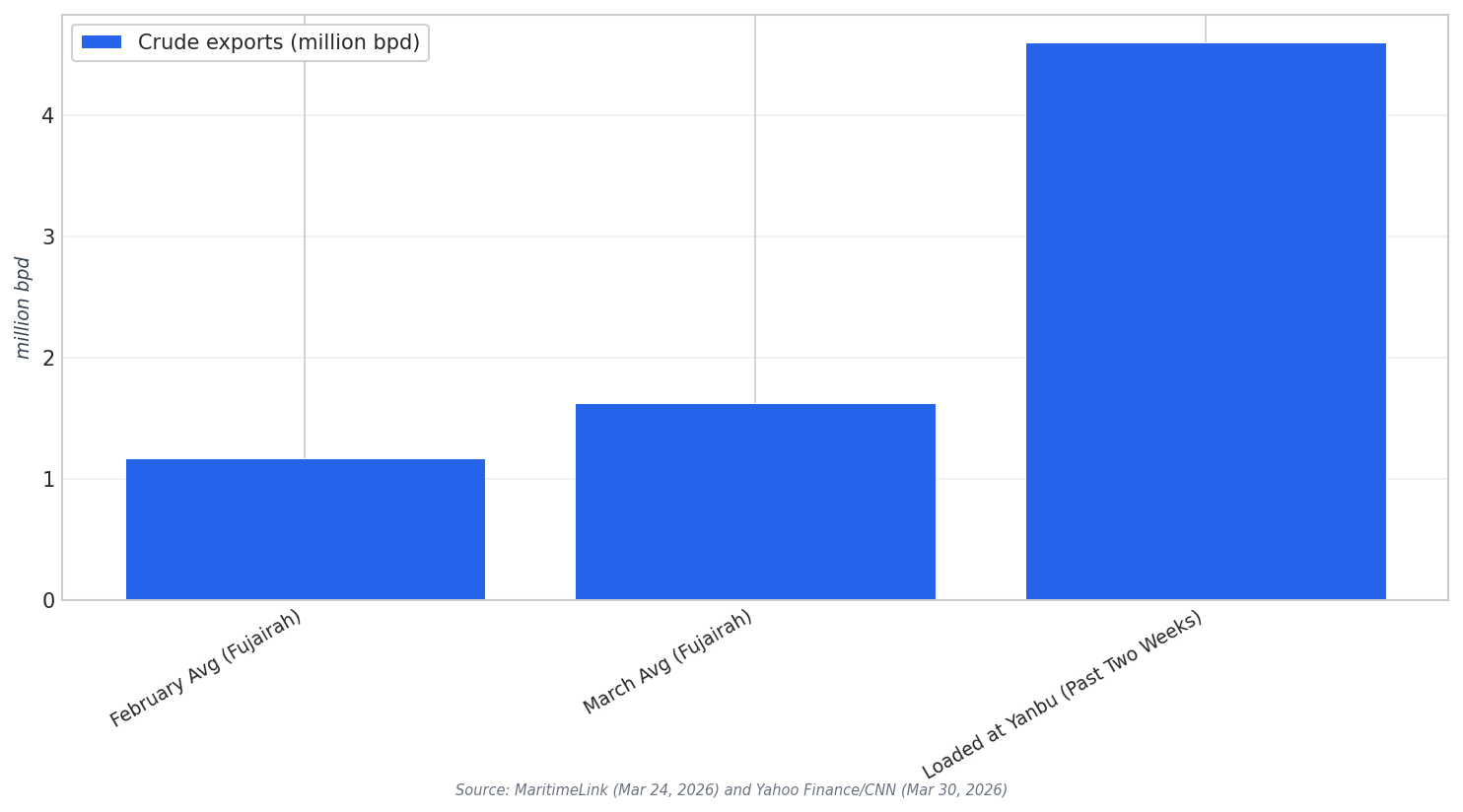
Oil flows became a separate, high-stakes test of Red Sea capacity. Saudi Aramco said it would reroute millions of barrels of crude via a pipeline running to Yanbu, and Saudi officials cited a one-third hike in Red Sea traffic in the weeks since the war began. Reports described an east-to-west conduit with a nominal capacity of 7 million barrels of crude oil per day. Yet some of that capacity is required for refineries, power generation, and desalination needs, which limits how much can be pushed to export markets during disruptions.
Jeddah’s Congestion, NEOM’s Pitch, and the Road Link Fix
The surge in diverted demand created bottlenecks, and Reuters reporting described congestion at Jeddah as a reason at least one Gulf distributor tried a different path. A Qatar-based distributor, Salam Studio & Stores, tested shipping to Doha via Saudi Arabia’s Port of NEOM, a Red Sea facility pitching itself as a faster alternative. The company’s director said they chose NEOM because it had no traffic. But trade analytics firm Kpler called NEOM a niche, RoRo-focused port with stable but limited activity and said there was no sign of a rerouting-driven surge since the Iran war began.
As sea routes shifted, inland corridors grew in importance for keeping shelves stocked across the region. The Maritime Executive highlighted how reduced direct shipments into the Gulf forced traffic onto roads linking markets with ports where there is still free access, while customs delays remained a problem on important routes. It pointed to Highway 40, an 850-mile route that stretches from Jeddah on the Red Sea through Riyadh to Bahrain and Dammam, creating a practical land bridge from Jeddah’s port to Gulf demand centers. It also noted the value of goods crossing through Ramlet Khelah nearly trebled to $830m in March, from $300m in February, underscoring how quickly traders pivoted to alternative routes.
Why did Jeddah port Red Sea trade become more important during the Hormuz disruption?
How many ships diverted away from Gulf ports when the war began?
What role did Yanbu play in the Red Sea detour?
Why did some shippers test NEOM instead of Jeddah?
What inland route helps connect Jeddah to Gulf markets?