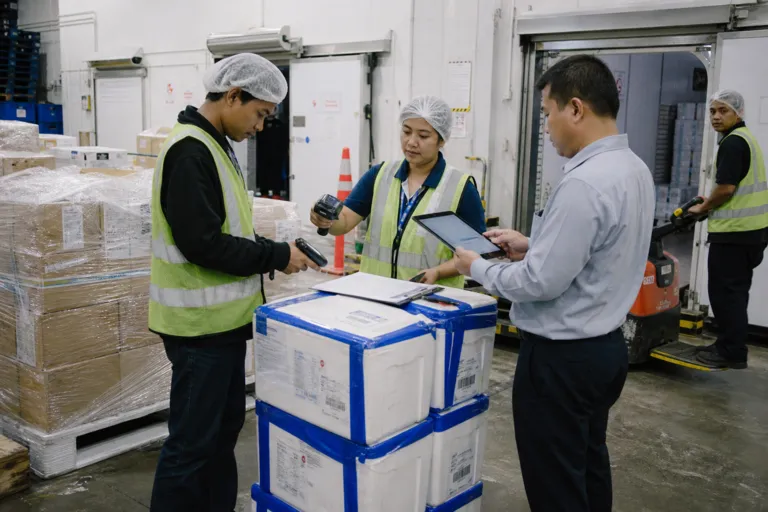
Thailand cold chain logistics is getting a new build-out logic. The pull is not just about moving more goods. It is about moving more goods that cannot drift outside tight temperature bands. On the pharma side, IQVIA expects that half of new medicines launched over the next five years will require cold storage. That is a step up from 37% of new medicines that required cold storage between 2013 and 2017. On the food side, a 2026 cold chain survey by Lineage found 72% of surveyed companies report rising refrigerated and frozen demand, which increases reliance on 3PL partners with flexible cold storage capacity.
Those demand signals are landing in a Thailand manufacturing context that is changing fast. JLL, using Bank of Thailand data, shows manufacturing transformation in 2022–2024 versus 2017–2019. Computer and electronics manufacturing leads with 68% growth compared with pre-pandemic averages. Electrical equipment is also up 70% growth and attracts USD 859 million annually. Food production has expanded eight-fold, and pharmaceuticals jumped 171%. When more food is processed and more pharma activity is attracted, temperature-controlled handling becomes a practical constraint for exporters, importers, and domestic distribution.
What the Build-Out Requires: Visibility, Partners, and Packaging
The cold chain response is increasingly tech-led. The Global Cold Chain Alliance points to new technologies that broaden options for cold storage refrigeration systems, renewable energy generation, low-emission refrigerated transportation, automation, and AI-driven data monitoring systems. The Lineage survey adds an operations lens: 60% rank AI and data as top operational drivers, with investment aimed at visibility, routing, and warehouse automation. It also shows 73% expect tariffs to hit 2026 finances, which can push sourcing and cost strategies to change. These forces make end-to-end coordination and visibility more than a nice-to-have.
Packaging and processing systems are also part of the temperature-controlled story because they support compliance and consistent handling. In Southeast Asia, Informa Markets’ Thailand country general manager said demand for processing and packaging technologies across ASEAN remains strong. He also said manufacturers are accelerating upgrades in automation and production systems, and that the food and beverage sector is the largest driver of investment in packaging technologies across Southeast Asia. He added that the pharmaceutical sector is becoming an increasingly important part of the regional packaging ecosystem. IndexBox also emphasizes that strategic partnerships between packaging specialists, logistics players, and data platform providers are essential to deliver a seamless, trackable cold chain that consumers and regulators demand.
For Thailand, that means execution has to match the sensitivity of the products. Inbound Logistics notes that establishing consistent cold chain operations requires a high level of coordination and visibility, plus adaptation to trade rules, regulations, weather, and changing demand. It also highlights that advanced temperature tracking technologies are changing how the cold chain industry operates at a global level. Meanwhile, Global Market Insights expects the cold chain market to grow to $1.1 trillion+ by 2034, driven by demand for fresh and convenience products and expanding international trade. Thailand cold chain logistics can ride these same drivers, but it must also manage aging infrastructure and the faster pace of food supply chains.
The surge narrative is ultimately about two converging curves. One curve is pharma: more cold-required medicines over the next five years, and more focus on compliant, transparent cold-chain solutions for temperature-sensitive medicines and vaccines. The other curve is frozen and refrigerated food: rising demand and greater dependence on flexible cold storage capacity through 3PL partners. Put together, Thailand cold chain logistics becomes an enabling layer for the country’s evolving industrial mix, where food production is expanding rapidly and pharmaceuticals are posting triple-digit percentage gains versus pre-pandemic averages.
What is driving Thailand cold chain logistics growth right now?
How fast is pharma shifting toward cold storage requirements?
What operational capabilities matter most in modern cold chains?
Why are 3PLs becoming more important for cold storage capacity?
What partnerships support a more trackable cold chain?