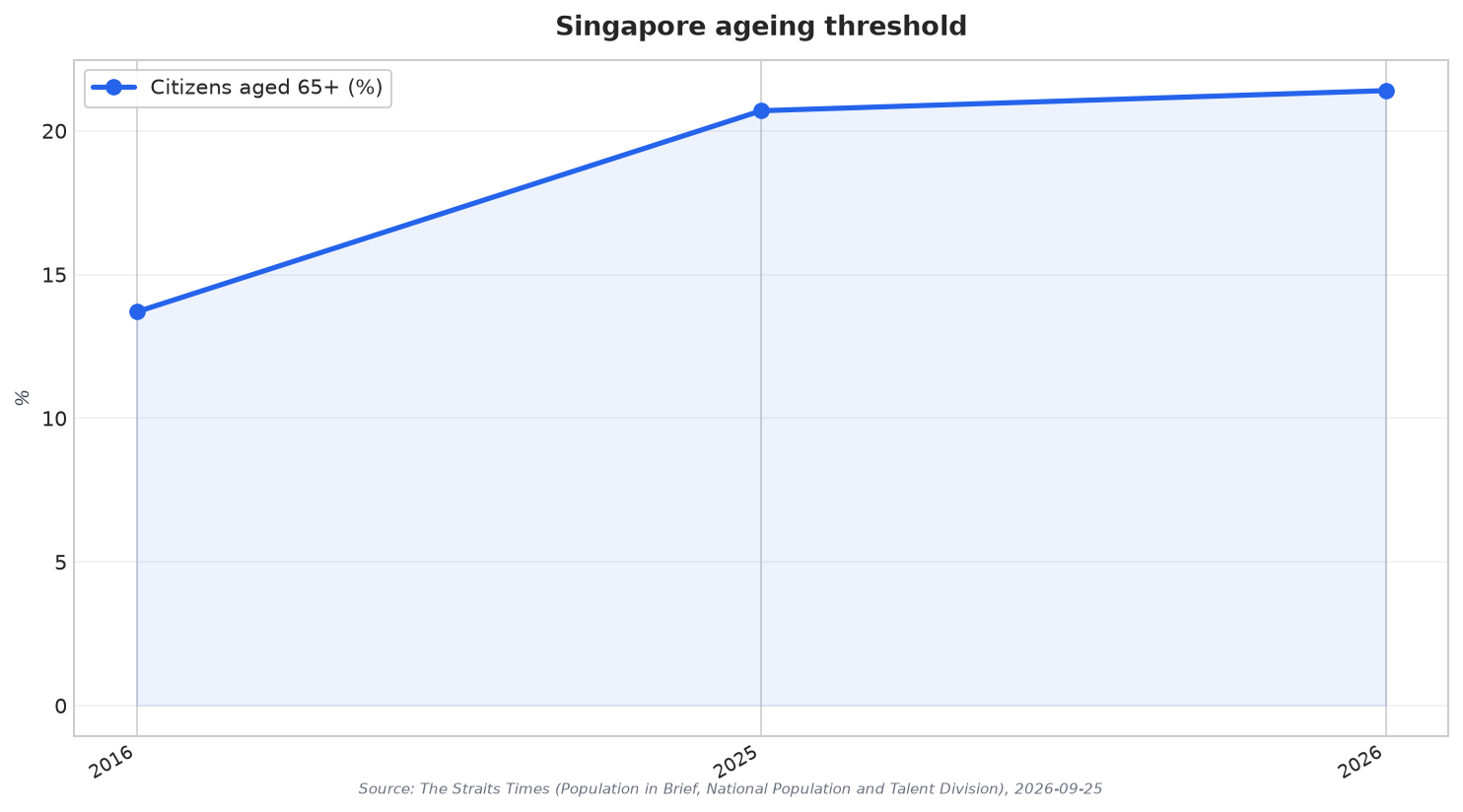
Singapore crossed a demographic threshold in 2026 that is already changing how care is delivered and financed. The National Population and Talent Division reported that 21.4% of the citizen population was aged 65 and above in 2026, up from 20.7% in 2025 and 13.7% in 2016. That meets the United Nations definition of a super-aged society, which is 21% or more aged 65 and above. For investors watching aged-care and home-health services, the milestone is less about symbolism and more about the speed of demand shifts, especially as policy steers care beyond hospitals and deeper into communities.
The ageing curve is steepening at the older end too. The number of citizens aged 80 and above reached 152,000 in 2026, rising from 145,000 in 2025, and representing a 60% jump from a decade earlier when there were 95,000 citizens in that band. At the same time, the support base is thinning. The share of citizens aged 20 to 64 was 59.3% in 2026, down from 64.3% in 2016, and the ratio of working-age residents to elderly residents aged 65 and above fell from 5.4 in 2016 to 3.2 in 2026. The median age also rose from 43.7 in 2025 to 44.1 in 2026.
Why Capital Is Following Care Into Homes and Communities
As the population ages, policy signals matter because they influence what kinds of care models scale. The Government’s Age Well SG programme is positioned as a way to weave together social and health services in local communities around seniors. Several measures also aim to keep seniors economically active, including raising the statutory retirement age from 63 to 64 in 2026 and the re-employment age from 68 to 69, with both set to rise again by 2030. Employers can also receive wage offsets of up to 7% for Singaporean employees aged 60 and above earning below $4,000 a month, and the Part-Time Re-employment Grant can provide up to $125,000 in support.
In the Singapore aged care market, subsidies can shift the investable opportunity set by affecting affordability and channel mix. Baker Tilly highlighted a Home Caregiving Grant of up to $600 per month, long-term care subsidies of up to 80% for residential care, and up to 95% for non-residential long-term care. It also noted a one-off CPF top-up of up to $1,500. These figures underscore why home and community-based services can draw attention: non-residential support can be materially subsidised, and it aligns with the broader push to expand care beyond hospitals and strengthen preventive approaches.
Private capital is also testing new formats in senior living and assisted care, but not without constraints. Sourcingcares.com described 2026 as a breakthrough year tied to new legislative frameworks aimed at integrating private providers into the national healthcare ecosystem, alongside Age Well SG. It pointed to Perennial Holdings planning to open a luxury assisted-living development at Parry Avenue in phases starting from the second quarter of 2026, and noted boutique models entering the field, while also flagging profitability challenges from high operational costs. For investors, the takeaway is practical: the fastest growth drivers are demographic, but near-term returns can hinge on regulation, site availability, and the operating intensity of care.
Why is 2026 a turning point for ageing and care investment in Singapore?
What do the latest figures say about caregiver and workforce pressure?
Which policies could influence returns in the Singapore aged care market?
What incentives exist for employing older workers in 2026?
What is an example of private assisted-living expansion mentioned for 2026?