Generative AI is rapidly becoming part of daily life in Southeast Asia. The Google, Temasek, and Bain e-Conomy SEA 2026 report says 243 million people actively use generative AI, equal to 58% of the working population, and adoption scaled four times faster than the rollout of the mobile internet. Yet the same reporting cited by CNBC notes only 1% to 2% of the region’s population pays for personal AI subscriptions. That gap is pushing businesses to monetize AI elsewhere, especially in online shopping, digital advertising, and automated customer support.
The stakes are high because the region’s digital economy is still expanding. The e-Conomy SEA 2026 report projects Southeast Asia’s digital economy will grow 17% year-on-year to reach $368 billion in Gross Merchandise Value (GMV) in 2026, and the report frames this trajectory as being on track to exceed $1 trillion by 2035. Inside that, e-commerce is a major anchor at $226B GMV in 2026, up 18% year-on-year. This is where AI-assisted shopping is showing measurable impact, as shoppers use multimodal discovery and in-app assistants to navigate complex purchases with more confidence.
From Search to “Agentic” Shopping: The New Checkout Path
AI is not only influencing what people see, but also how they decide. The e-Conomy SEA report says personalized experiences can drive 10% higher conversions and order volume uplifts as large as 75%. CNBC also reports that about 69% of shoppers use AI to compare complex purchases such as electronics. At the same time, trust is becoming the gating factor for more autonomous buying. The report says 72% of users already rely on everyday features like price tracking, and 75% express willingness to let AI agents autonomously compare prices and complete transactions.
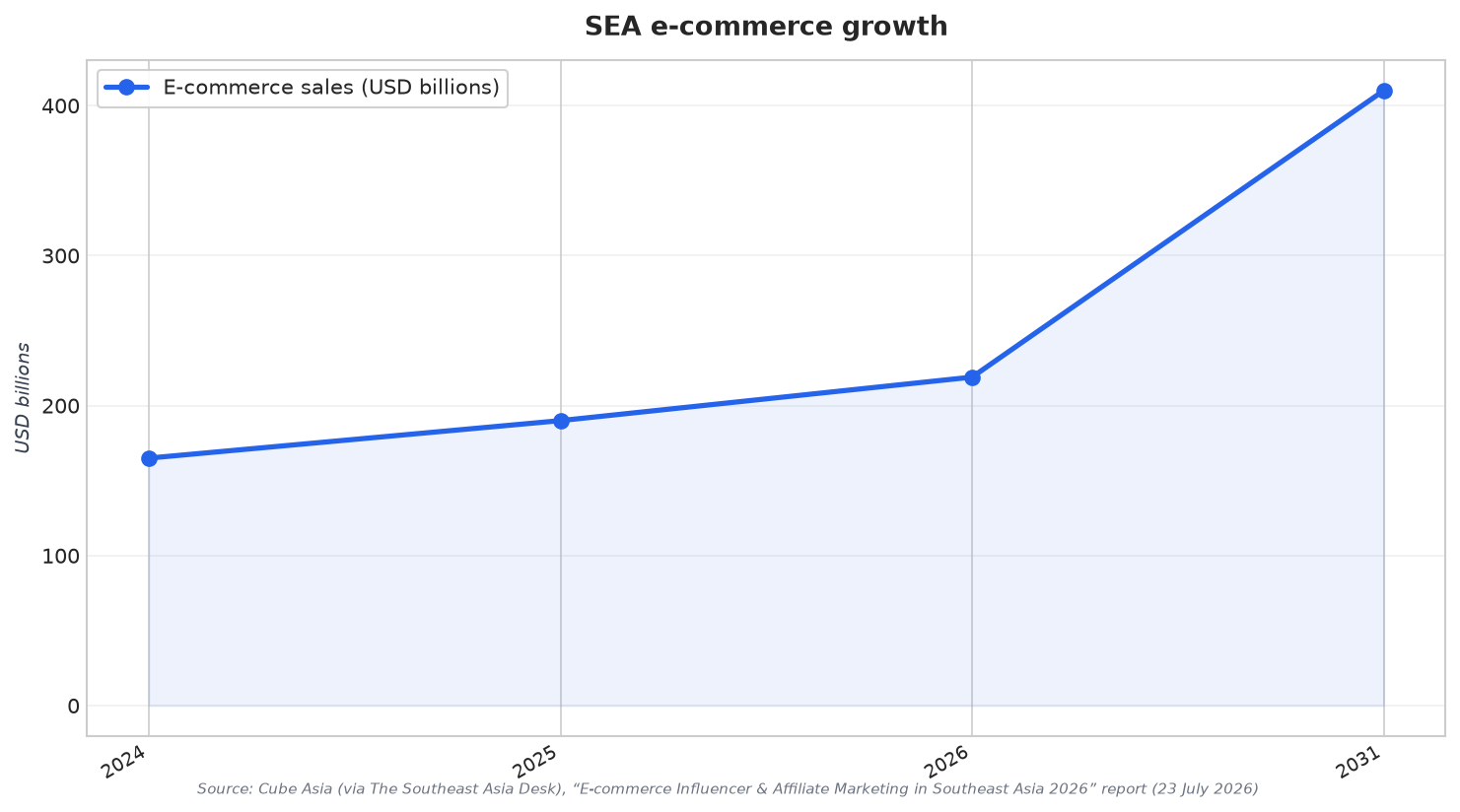
Trust is increasing, but it is not uniform, and human voices still matter. The e-Conomy SEA report says 62% of respondents trust AI tools more than they did a year ago, citing proven track records (56%), rising familiarity (55%), and output accuracy (53%). Yet Cube Asia research summarized by The Southeast Asia Desk also points to a more blended reality in shopping journeys across Indonesia, Malaysia, Singapore, Thailand, the Philippines, and Vietnam: 91.8% of online adults use AI in daily life, including shopping, but consumers still rely more heavily on creators, friends, family, and other human recommendations when deciding what to buy.
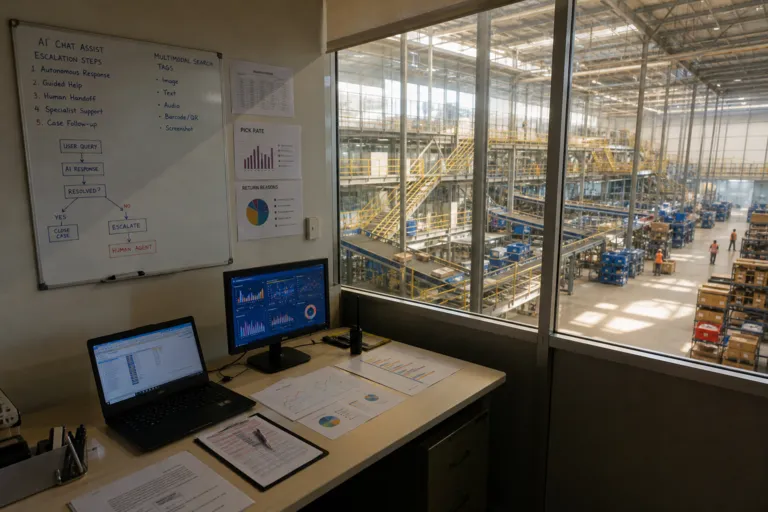
For platforms, the rewiring is operational as well as behavioral, and it is shaping AI-powered e-commerce in Southeast Asia in practical ways. CNBC cites Shopee as an example, saying it handles approximately 80% of customer queries through AI chatbots and cut its cost per customer contact by 30% year-on-year. Meanwhile, the e-Conomy SEA report describes commerce media as becoming a $4 billion market within five years, while also noting ads are only 1% to 3% of platforms’ GMV, leaving what it calls “significant headroom.” As AI changes discovery and support, brands that want to be surfaced in AI answers will need content and product data that AI systems can read and cite, alongside classic SEO.
How widely is generative AI used in Southeast Asia today?
What e-commerce growth numbers are cited for Southeast Asia in 2026?
How does AI affect conversions in online shopping, according to the sources?
Are shoppers ready to let AI agents buy on their behalf?
What is changing in AI-powered e-commerce in Southeast Asia, beyond subscriptions?