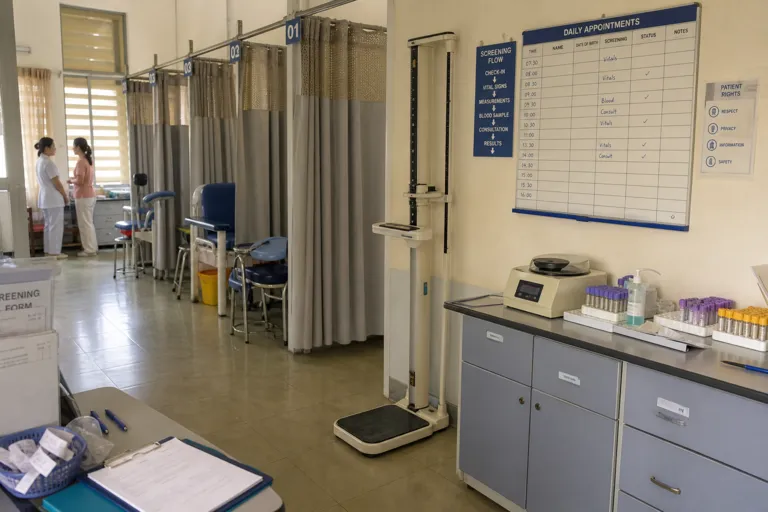
Vietnam is preparing a nationwide shift from treatment-centred care to prevention, early detection, and lifelong health management. Directive No. 17/CT-TTg, issued on May 6, sets out a plan so that all citizens are entitled to at least one free annual health checkup or screening starting in 2026. The same directive also points to electronic health records as an enabling layer for continuous care management, with records integrated into the national digital identification platform VNeID. In policy terms, this anchors the Vietnam preventive healthcare program in routine screening and structured data rather than episodic hospital visits.
Operationally, the timeline is tight. Authorities were instructed to complete a synchronised electronic health record system by May 2026, and provincial and municipal governments were urged to accelerate preparations so that by the end of 2026, all residents can access free checkups or screenings and have electronic health records issued. VietnamPlus also reported that more than half of Vietnam’s population has already received free periodic health check-ups, with the rate exceeding 90% in some localities. This early progress suggests demand will be broad, but it also implies rising pressure on frontline sites, referral hospitals, and workforce coordination at the grassroots level.
Diagnostics Demand, Data Standards, and Lab Readiness
As screening becomes routine, diagnostic capacity becomes the bottleneck to watch. One market estimate values the Vietnam medical and diagnostic laboratory service market at USD 1,000 million in 2024 and anticipates USD 1,632.75 million by 2032, a 6.32% CAGR. The same source links growth to higher preventive-care adoption, broader insurance coverage, and a move toward laboratory automation and integrated laboratory information systems (LIS) for faster reporting and better patient management. It also flags constraints such as skill shortages, uneven service quality, and limited rural infrastructure, which matter when programmes scale beyond major urban hubs.
For providers, the new screening entitlement is also a digital integration project. The Ministry of Health was tasked to issue detailed guidelines for organising free checkups and screenings and to develop unified standards for health data integration and interoperability with the social insurance database system. VietnamPlus further noted that doctors are encouraged to use information from social insurance databases, VNeID, and electronic health records. If this interoperability works in practice, screening data can be analysed by age group, locality, and disease patterns to support disease-specific screening guidance, but it will require consistent data capture at health stations and hospitals.
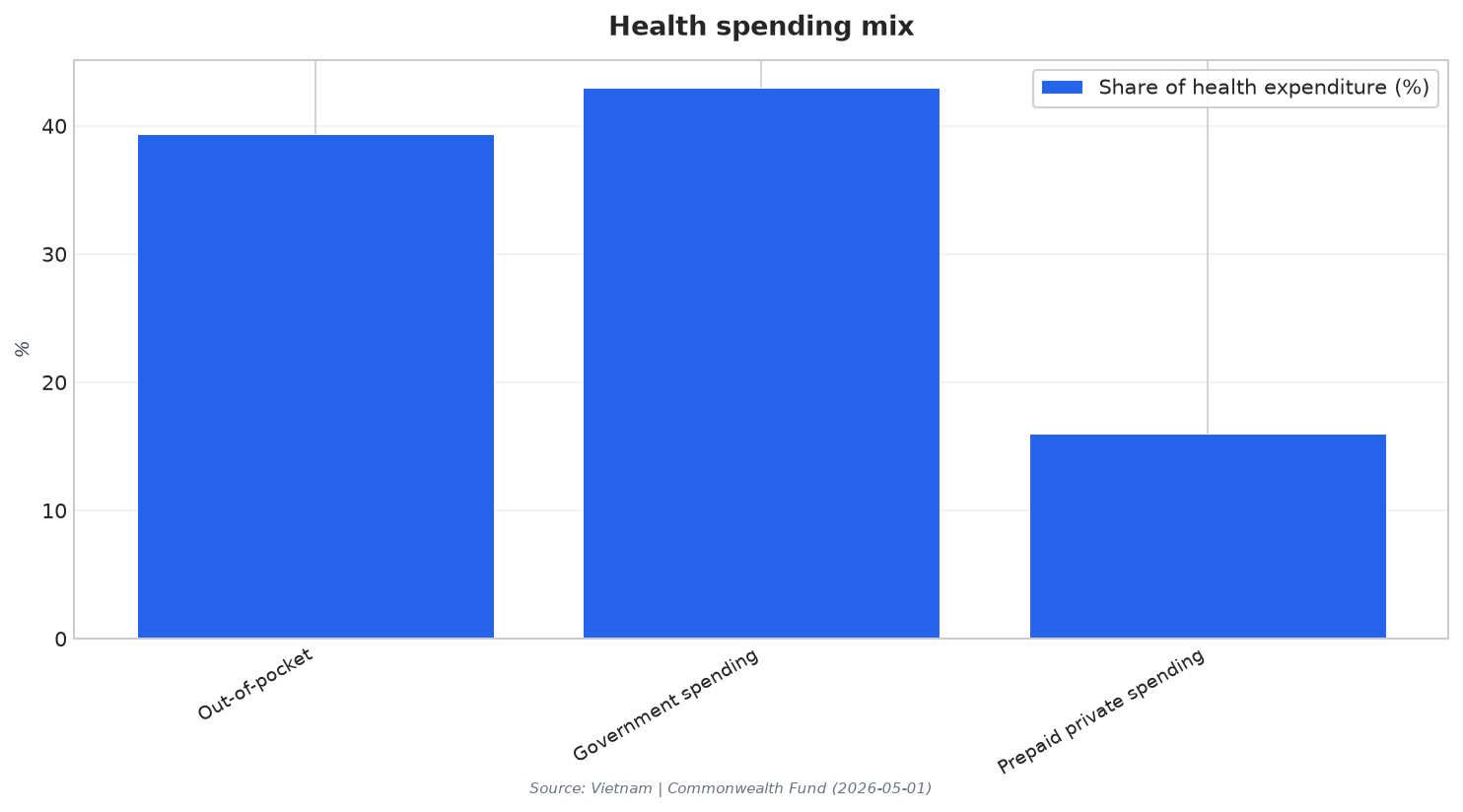
Insurers and claims administrators face parallel change. Vietnam’s health system covers 93% of the population through public insurance, while private insurance coverage is 7%, according to the Commonwealth Fund. Yet the financial burden remains material, with out-of-pocket spending at 39.4% of total health care spend, and government spending accounting for 43% of health expenditure in 2022. On programme funding, one proposal said the state budget may need about VNĐ6 trillion (around US$227 million at current exchange rates) per year to cover priority groups, drawing funding from employers’ contributions for workers, the health insurance fund, and the state budget. In the private ecosystem, another estimate puts Vietnam’s health insurance TPA market at $2.49 billion in 2024, expected to reach $4.83 billion by 2030 at a CAGR of 11.06% (2025–2030), with digitisation and automated verification positioned as tools to improve claims transparency and workflow efficiency.
What changes in 2026 under Vietnam’s new screening policy?
How will electronic health records support the Vietnam preventive healthcare program?
What early rollout signals are already visible for free checkups?
What do the sources say about Vietnam’s insurance coverage and out-of-pocket spending?
How big is Vietnam’s diagnostic lab services market in the cited forecast?