
QR scan-and-pay is no longer just a domestic checkout shortcut in Indonesia. It is becoming a cross-border habit. QRIS (Quick Response Code Indonesian Standard) launched in 2019 under Bank Indonesia and reached national scale by mid-2025, supporting about 39.3 million registered merchants and around 57 million users. Transaction volumes have risen with that footprint. Bank Indonesia recorded 6.05 billion QRIS transactions worth IDR 579 trillion (US$37 billion) in the first half of 2025, showing how QR acceptance has become embedded in day-to-day retail. This scale matters because cross-border rails only work commercially when merchant coverage is already deep.
Much of the adoption story is about lowering friction for small sellers. A Bank Indonesia policy waived merchant discount rates for QRIS transactions under IDR 500,000 (USD 29.7). Mordor Intelligence links that policy to merchant onboarding, citing 34.23 million new outlets and a 148.5% lift in quarterly QR volumes in 2025. Digital In Asia also highlights how minimal hardware needs support inclusion, noting that 92% of QRIS merchants are micro and small businesses. Together, these factors help explain why QRIS can spread quickly across traditional markets, street food, and transport use cases, not only formal retail.
Cross-Border QR Corridors: From Tourist Spend to Daily Utility
Interoperability is now moving from local standardization to international corridors. Indonesia already has cross-border QR connectivity with Thailand, Malaysia, and Singapore. By mid-2025, cross-border QRIS payments across Malaysia, Singapore, and Thailand reached about IDR 1.66 trillion (US$105 million) in total value, according to ASEAN Briefing. Malaysia is the largest corridor in that set. Between January and September 2025, Malaysian users completed 3.4 million transactions in Indonesia totaling IDR 775 billion (US$49 million), while Indonesian users conducted 516,000 transactions in Malaysia totaling IDR 178 billion (US$11 million). These are typically small-value purchases such as food services, transportation, and local retail.
The network is also widening beyond ASEAN links. CEOWORLD reports a two-way QR arrangement where Chinese users of Alipay and the UnionPay App can pay at more than 40 million QRIS merchants across Indonesia, and Indonesians using QRIS-enabled banking and e-wallet apps can scan in excess of 80 million Alipay and UnionPay QR codes throughout China. The strategic direction is expansion. ASEAN Briefing notes Indonesia is moving to expand QRIS interoperability across APEC economies, aligning with Asia-Pacific markets that account for roughly 70% of Indonesia’s export destinations. The stated aim is to simplify retail payments in tourism, transportation, and food services, where low-ticket spending is frequent.
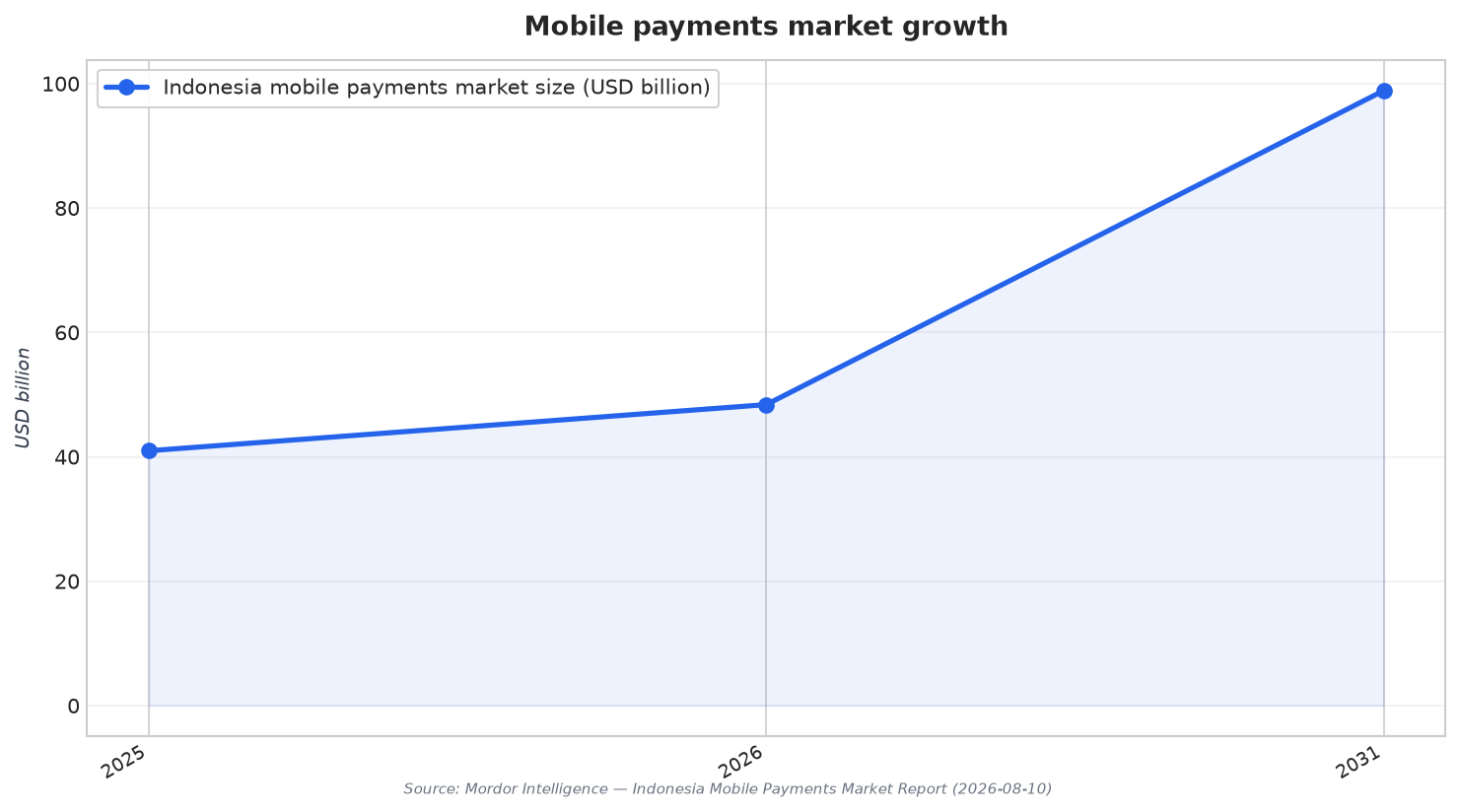
These rails sit inside a broader shift in how Southeast Asia pays. Digital In Asia says the region’s digital payments market has crossed the $1 trillion threshold in total transaction value, driven by QR codes, e-wallets, and government-built real-time systems. It also notes Indonesia’s QRIS connected 40 million merchants to 57 million users and recorded 2.6 billion transactions in a single quarter by early 2025. For businesses, the practical implication is simple: once QR acceptance is standardized at scale, competition moves to loyalty, embedded finance, and cross-border reach. Mordor Intelligence projects Indonesia’s mobile payments market expanding from USD 48.39 billion in 2026 to USD 98.87 billion by 2031, with QR-based payments growing at a 16.24% CAGR over 2026–2031, reinforcing why Indonesia QRIS digital payments remain central to regional consumer commerce.
How big is QRIS adoption in Indonesia by mid-2025?
What proof is there that cross-border QRIS payments are being used?
How do cross-border QR payments work in practice at the checkout?
What changed for small merchants under Indonesia’s QRIS policies?
What is driving Indonesia QRIS digital payments to matter beyond Indonesia?