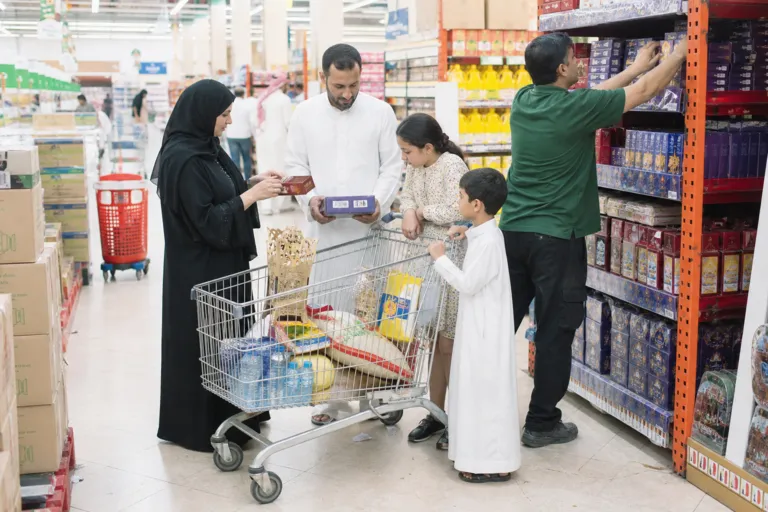
Saudi Ramadan 2026 is arriving earlier, and that shift is forcing a rethink of timing, merchandising, and messaging across the Gulf. Ramadan 2026 is expected to begin around February 18 or 19, depending on moon sighting, with Eid al-Fitr falling in the third week of March. This timing comes just weeks after year-end holidays and almost collides with Valentine’s Day on February 14 and Lunar New Year on February 17. Fahed Ghanim, CEO of Majid Al Futtaim Lifestyle, calls it a “genuine compression of the retail calendar.” In that compressed window, what wins is planning ahead, not last-minute adjustment.
For planners, the bigger takeaway is that the peak is no longer limited to the holy month. Shopping typically accelerates four to six weeks before Ramadan. Ghanim says the pre-Ramadan period is now as commercially important as major peak trading moments like Black Friday and Singles’ Day. Signals of the shift are showing up earlier, too. “Ataya,” an exhibition organized by Emirates Red Crescent, ran January 12 to 17, highlighting how the brand and retail calendar is moving earlier in the year. For GCC retailers and global brands, that earlier runway changes campaign build, inventory flow, and in-store activation schedules.
Why Saudi Is Setting the Rules for 2026
In Saudi Arabia, the conversation has moved beyond attracting international brands to deciding who sets the terms. Speaking in Riyadh around the 2026 RLC Global Forum, Emre Çakmak said new entrants must show “much more extensive engagement” and real cultural understanding. He pointed to the kingdom’s “thirty-five million local population” and stressed it is “not an expat mindset.” A Ramadan capsule alone no longer suffices. Çakmak argued it should not be only about jalabiyas or caftans, because consumers want to shop for every occasion, not just Ramadan. That reality is shaping Saudi Ramadan retail trends into an always-on strategy.
That always-on approach is linked to a proliferating calendar of commercially significant cultural moments. Çakmak cited National Day, Founding Day, the Saudi Cup, Riyadh Season, and Formula 1 as examples that each demand a distinct strategy. The consumer, he added, is younger, more digitally fluent, and more proudly local, and “it’s changing by the moment.” For international brands, this pushes localization beyond seasonal Eid campaigns. Vogue quotes Rania Mansri, CEO of The Giving Movement, saying there has been growing local pride, and that in difficult times people support each other, accelerating the shift toward local brands and culturally relevant engagement.
Regional volatility is also clarifying what is resilient and what is exposed. After February 28, joint U.S.-Israeli strikes on Iran and retaliatory missiles and drones across all six GCC states led to airspace closures and temporary store shutdowns across Bahrain, the UAE, Kuwait, and Qatar. Oxford Economics projected inbound arrivals could fall between 11 and 27 percent year on year, with a potential loss of between $34 billion and $56 billion in visitor spending. Yet WWD reported Cenomi’s 2026 Ramadan and Eid trading outperformed 2025 by double digits in both footfall and retail sales, underscoring the strength of structurally grounded, local demand.
Executives say the shopper is still active, but more deliberate. Khalifa Bin Braik, CEO of Majid Al Futtaim Asset Management, described “a recalibration in spending priorities,” with consumers becoming more selective and generally more cautious. In the same reporting, entertainment held up, with Vox Cinemas performing strongly through Eid and Easter, while beauty continued to outperform broader luxury trends. For luxury, the strategic significance remains. Miral Youssef of Kering Middle East and Africa said Ramadan represents a sizable share of business across the Middle East and Africa when approached with intention and cultural relevance. Saudi Ramadan retail trends are becoming the blueprint for how GCC retail plans under pressure.
What are the key Saudi Ramadan retail trends for 2026?
When is Ramadan expected to begin in 2026, and why does it matter for retail?
Why do Saudi retail leaders say a Ramadan capsule is not enough anymore?
What did Oxford Economics project about inbound arrivals during the 2026 GCC disruption?
What signals show the retail calendar is shifting earlier ahead of Ramadan?