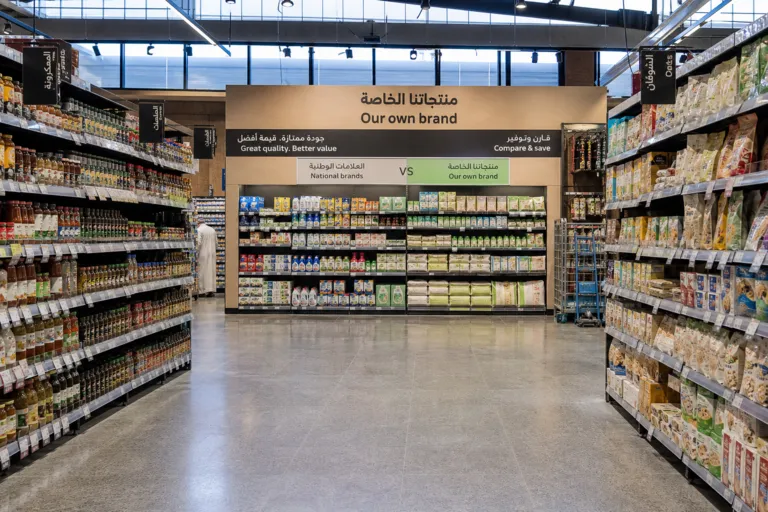
In private label GCC retail, the biggest shift is perception. What used to be seen as a cheap substitute has become a core tool for margin, differentiation, and loyalty. A 2026 GCC-focused playbook frames own brand as “in many cases the retailer’s single best tool” because the retailer controls sourcing and removes the marketing premium that comes with national brands. That control matters when shoppers are focused on value and retailers are striving to protect margins, as a GCC-focused marketing analysis warns that constant discounting can become a risky default. It notes that relying on repeated price reductions can impact brand value and long-term viability, even as private label continues to gain traction.
The GCC numbers show why this is not theoretical. Private label already makes up around 35% of grocery sales in the GCC, according to the GCC playbook source. It also reports that roughly 60% of shoppers say they would buy more if the range were wider. That combination signals a practical opportunity: widen the assortment and customers self-select into more own-brand purchases without needing endless promotions. The same source positions own brand as a deliberate, actively managed strategy rather than a short-term “tight economy” response. For value shoppers, this matters because it reframes the decision from “cheapest item” to “trusted choice that still helps the basket.”
What’s Powering the Shift From Value to Loyalty
Globally, the momentum supports what GCC retailers are building. NielsenIQ is cited as reporting global private label sales outpacing national brands by around 2.5 times, with US store-brand sales growing about 3.9% in a recent year versus roughly 1% for national brands. The same GCC playbook also cites private label market share climbing past 21% in the US, while another US-focused source states private label hit 21.2% market share in 2025. Together, these figures are not GCC-specific, but they help explain why retailers increasingly treat own brand as a strategic lever. The playbook argues own brand wins on three fronts at once: margin, differentiation through exclusivity, and loyalty that attaches to the retailer.
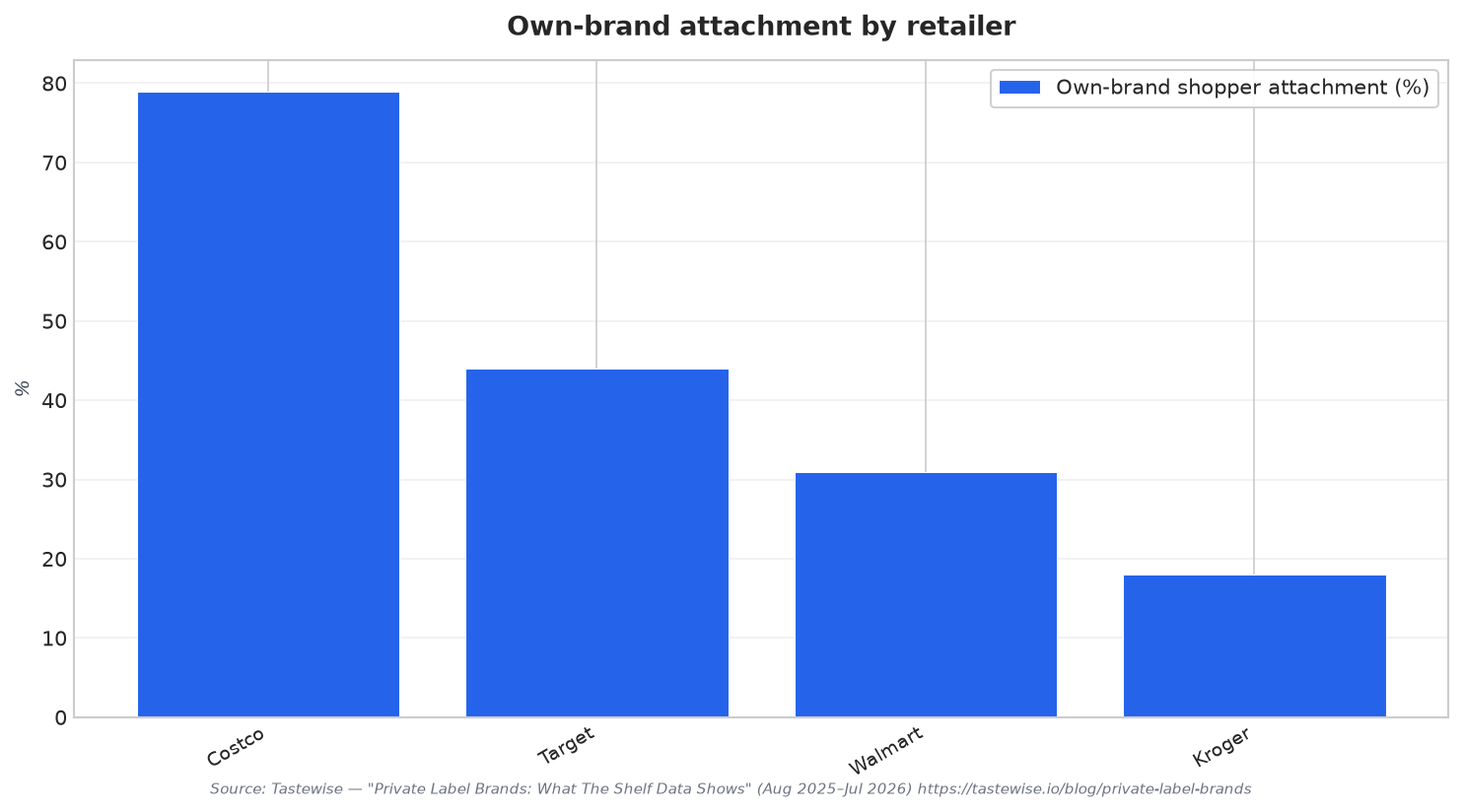
Data from the US also highlights how “attachment” to own brand can vary by retailer, reinforcing why execution matters store by store. A US consumer panel analysis reports own-brand attachment from 79% of Costco shoppers down to 18% of Kroger shoppers, with Target at 44% and Walmart at 31% (August 2025 to July 2026). It also reports that across all US grocery shoppers, private label reaches 28% (1.66M of 6.02M food and beverage consumers). While this is not GCC data, it supports a GCC-facing point: shoppers do not buy “private label” in the abstract; they buy a specific retailer’s own brand when they trust it and can find it easily. That is especially relevant when another GCC-focused marketing source says up to 85% of purchases are decided in-store, often in under 20 seconds.
For GCC retailers, the immediate play is to make the value proposition visible while expanding the range shoppers say they want. The GCC playbook suggests that a private label a customer loves builds a bond with the retailer itself, not with a supplier that also sells to competitors. At the same time, US market context shows private label is not only a cost response: one statistics roundup cites FMI research that 94% of shoppers say they would keep buying store brands even if grocery prices decline. Another global data point from the same set sizes total US private label CPG sales at USD 330 billion, accounting for 24% of unit sales and 23% of dollar sales, with food and beverage at 24% value share. GCC retailers do not need those numbers to be local to learn the lesson: invest in trust, range breadth, and a tiered offer that can win the value shopper without being trapped in permanent discounting.
What share of grocery sales does private label represent in the GCC?
What do GCC shoppers say would make them buy more own-brand products?
How fast is private label growing compared with national brands globally?
In private label GCC retail, what are the main strategic advantages for retailers?
How quickly are purchase decisions made in-store, and why does that matter for own brand?