Saudi Arabia’s real estate story is being reshaped by a pivotal access change. The Saudi foreign property ownership law took effect in January 2026 and, according to reports citing the new legislation, it allows non-resident international investors to purchase property in the Kingdom for the first time. The framework is tied to 170 designated geographic areas, and key markets named in coverage include Riyadh and Jeddah, alongside Makkah and Madinah. Separately, market trackers describe broader regulatory reform as reducing transaction costs and opening the door to more international capital and expertise. Together, these changes are shifting the demand conversation from purely domestic cycles to a wider mix of buyers, funding sources, and use cases.
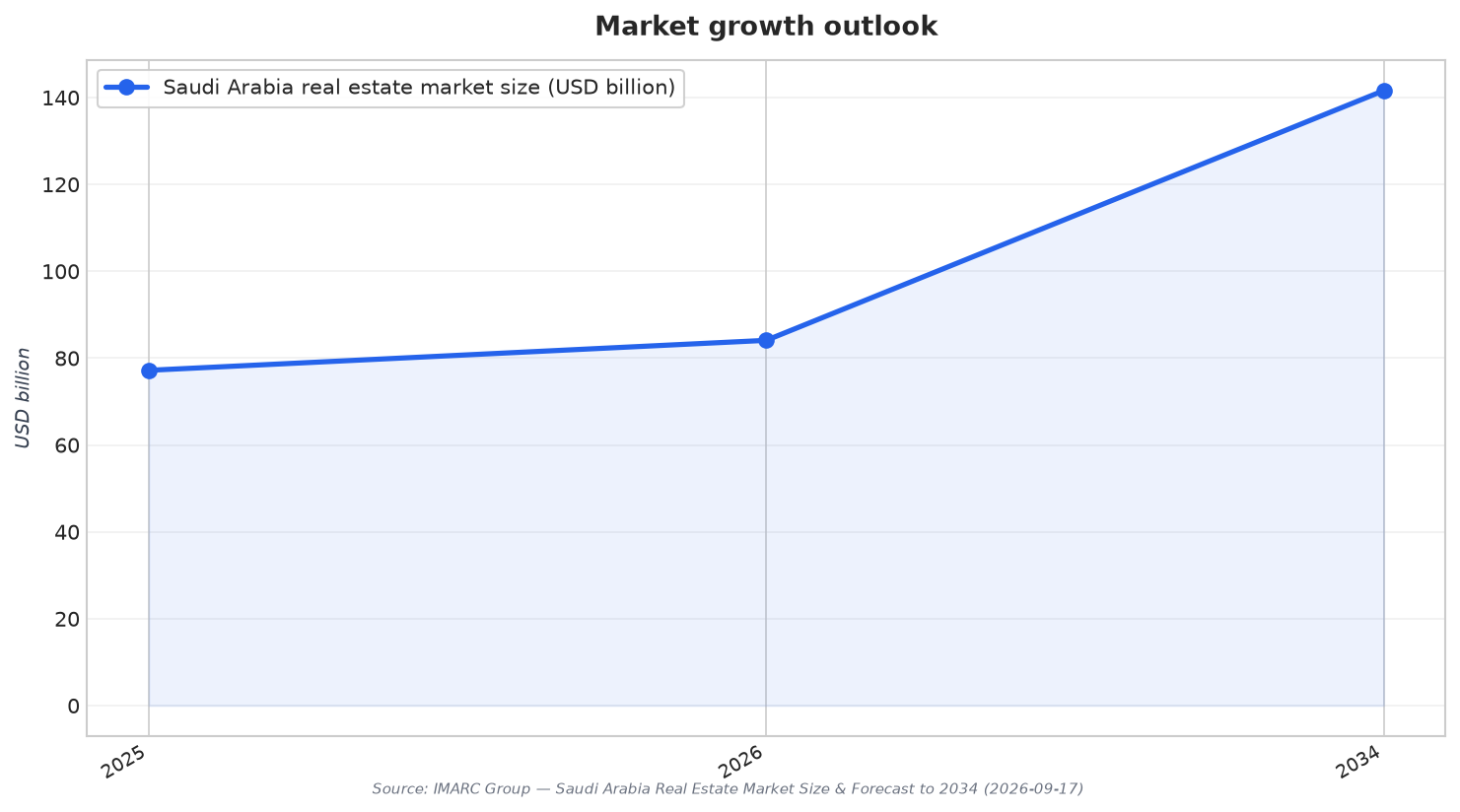
That new access arrives as the market expands, but not without short-term softness in pricing. One forecast says Saudi Arabia’s real estate market size increased from USD 77.2 billion in 2025 to USD 84.1 billion in 2026 and is expected to reach USD 141.6 billion at a CAGR of 6.73% during 2026-2034. Yet the residential index fell by 2.24% year-on-year to Q4 2025, and it was down 4.25% year-on-year when adjusted for inflation, based on GAStat figures cited in a housing market analysis. In Q4 2025 alone, prices dropped 0.38% quarter-on-quarter. This combination—bigger market ambitions alongside cooling residential price indicators—creates an environment where policy-driven buyer expansion can materially influence activity in specific districts and product types.
Riyadh and Jeddah: Where New Buyer Pools Meet Real Demand Pressures
Riyadh stands out because demand is being framed as both structural and immediate. Knight Frank analysis reported in regional coverage says Riyadh will require more than 305,000 additional homes by 2034 to meet population growth. Another guide focused on the capital states that Riyadh holds a 41.5% share of the market it describes, and it characterizes Riyadh’s residential sector as a USD 64 billion market within a wider residential market it values at approximately USD 154.6 billion in 2025. The same guide says industry estimates project the 2026 reform could expand buyer pools by 40% to 60% in approved zones. In practice, this suggests that even with broader price cooling, a larger eligible buyer base can support liquidity and keep competition elevated for well-located stock, especially in zones chosen for eligibility.
Jeddah demand signals are also being pulled by product positioning and active place-making, not just the legal change. Reports highlight Saudi Arabia as a dynamic growth market for branded residences in the GCC, listing global brands such as Raffles, Ritz-Carlton, Armani, Aman, SLS, Trump, and Jumeirah, with introductions in destinations that include Jeddah and Diriyah Gate in Riyadh. Meanwhile, retail occupancy data points to strong utilization in the major markets: Riyadh averages 93% occupancy, Jeddah records 88%, and the Dammam Metropolitan Area reaches 94%, supported by named developments such as The Avenues and Cenomi Jawharat Al Riyadh. Coverage also notes Saudi Entertainment Ventures plans approximately 570,000 square metres of entertainment space nationwide with an investment value exceeding USD 4.7 billion. These figures matter for housing demand because lifestyle and employment anchors can reinforce interest from both domestic and newly eligible international buyers.
For investors and end users, the core shift is not simply “more interest,” but broader participation at a moment of active development and policy alignment. One market overview links foreign ownership liberalization with the attraction of global investment capital and points to major project momentum, including NEOM securing contracts worth USD 24 billion in October 2025. It also notes Riyadh achieving 98% occupancy rates in premium districts for Grade A offices, tying demand to corporate relocation dynamics. The near-term residential backdrop remains nuanced—GAStat-linked data shows apartments down 2.46% year-on-year in Q4 2025 and villas down 1.35%—but the 2026 ownership framework’s designated-zone model, paired with visible demand requirements like Riyadh’s housing need through 2034, helps explain why attention is concentrating on Riyadh and Jeddah rather than spreading evenly across the Kingdom.
What changed under Saudi Arabia’s 2026 foreign property ownership reform?
How could the Saudi foreign property ownership law affect demand in Riyadh?
What do the latest residential price indicators show in Saudi Arabia?
What signals suggest strong commercial or lifestyle-linked demand in Riyadh and Jeddah?