The proposed ASEAN GCC free trade agreement is still at an early stage, but the direction of travel is clear. GCC and ASEAN leaders agreed to explore closer economic ties at their first summit in Riyadh in October 2023. Momentum continued in Kuala Lumpur in May 2025, when they adopted a joint declaration calling for a joint feasibility study and for discussions to begin. As of now, there is no negotiating text, terms of reference, or timetable. For companies, that uncertainty is not a reason to wait. It is a reason to prepare scenarios for tariffs, customs processes, services commitments, and digital trade rules that could eventually apply across 10 ASEAN markets.
Businesses should also ground their planning in how trade and competition are already shifting. Bilateral flows between the Gulf and Southeast Asian nations rose nearly 15% in 2024 to US$128bn, while Gulf and China trade rose to US$257bn, overtaking combined trade with the US, UK, and eurozone for the first time. At the country level, 2023 trade with Gulf nations was reported at US$36bn for Thailand, US$15.7bn for Indonesia, US$22.3bn for Malaysia, and roughly US$20.9bn for Vietnam. These numbers point to a corridor that is becoming operational, not theoretical, and they raise the stakes for firms that need predictable landed costs, reliable routing, and resilient multi-country sourcing.
What to Prepare While the Deal Text Is Still Unknown
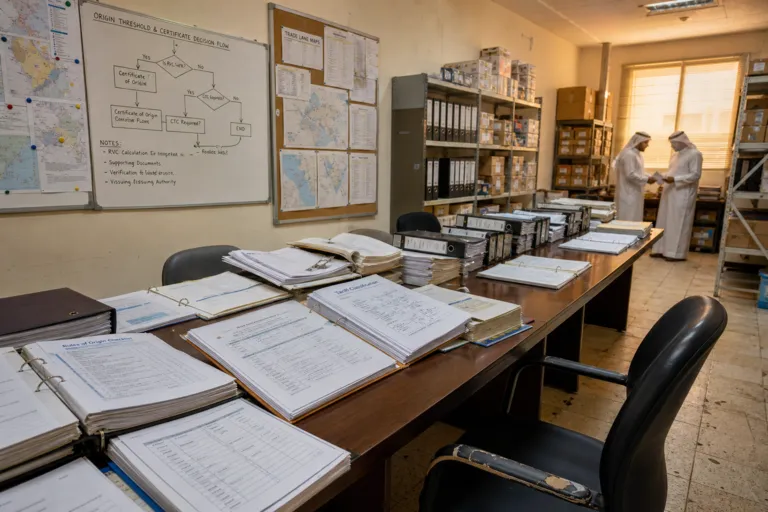
Start with rules-of-origin readiness, because bloc deals often change how inputs can be combined. One likely feature is origin cumulation, where processing or value-added across multiple partner economies can count together toward originating status. If that emerges, manufacturers could treat ASEAN as a sourcing area rather than juggling separate bilateral rulebooks, but it is not guaranteed until a text appears. Teams should map bills of materials, identify where value is created, and document supplier origin evidence now. UAE-linked firms have a head start through the CEPA program launched in 2021, with agreements in force with Indonesia, Cambodia, Malaysia, and Vietnam, and a Philippines deal signed and awaiting entry into force. Vietnam alone recorded more than US$16bn in two-way non-oil trade with the UAE in 2025, up 27.4% year on year.
Next, plan for competitive asymmetry within ASEAN itself. The main gap highlighted for UAE businesses is Thailand, where a CEPA has been negotiated since 2023 with nothing agreed. If a bloc deal ultimately covers Thailand, it could be commercially meaningful for market entry and sourcing. Meanwhile, Vietnam is pursuing additional Middle East FTAs, and its CEPA with the UAE took effect on February 3, 2026. Thailand’s own Office of Commercial Affairs in Ho Chi Minh City has urged Thai businesses to monitor Vietnam’s trade policy and regulatory requirements under its latest FTAs, reflecting how preferential access can quickly reshape market shares. Companies should model competitor tariff advantages, redesign go-to-market plans, and review regulatory monitoring processes across product lines.
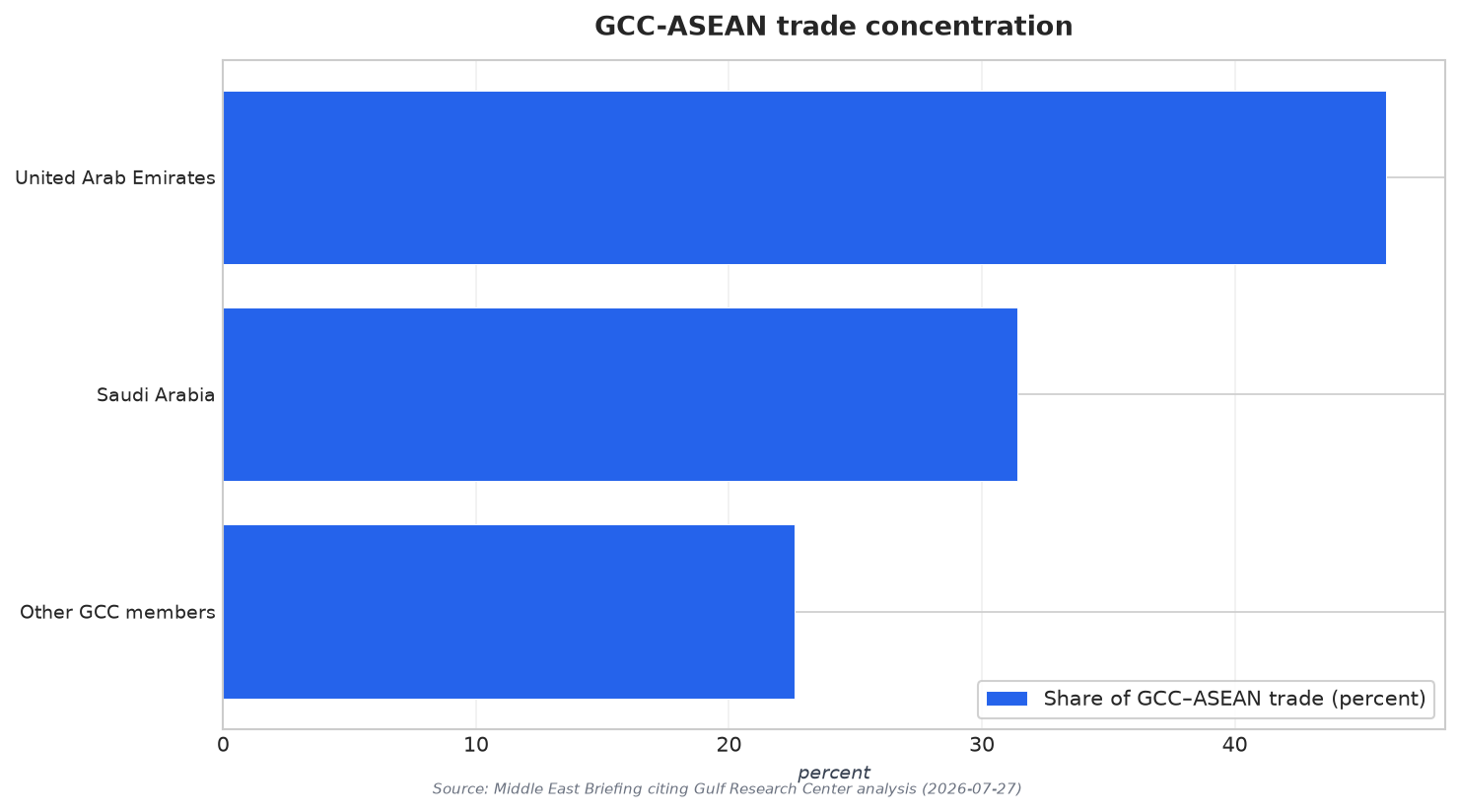
Finally, do not treat logistics and risk as an afterthought. Trade growth is being matched by new risk profiles, especially along China and ASEAN-to-Gulf routes. Research cited by TT Club found that 76% of cargo thefts in the Gulf occur in storage facilities, with the highest concentrations in the UAE and Saudi Arabia. Businesses should audit storage and handover points, tighten custody controls, and revisit insurance and trade finance processes before volumes rise. On investment, ASEAN’s Gulf link is still shallow: not even 0.2% of ASEAN’s 2023 foreign direct investment originated from the Gulf, with most coming from the UAE. That gap means firms may need to create their own channels for partners, financing, and bankable compliance documentation as public-private dialogue expands under the 2024–28 Framework of Cooperation.
Where do GCC-ASEAN FTA talks stand right now?
Why should companies prepare before the agreement is finalized?
What is the biggest rules issue businesses should get ready for?
How could Thailand factor into an eventual GCC-ASEAN deal?
How should firms think about risk while planning for an ASEAN GCC free trade agreement?