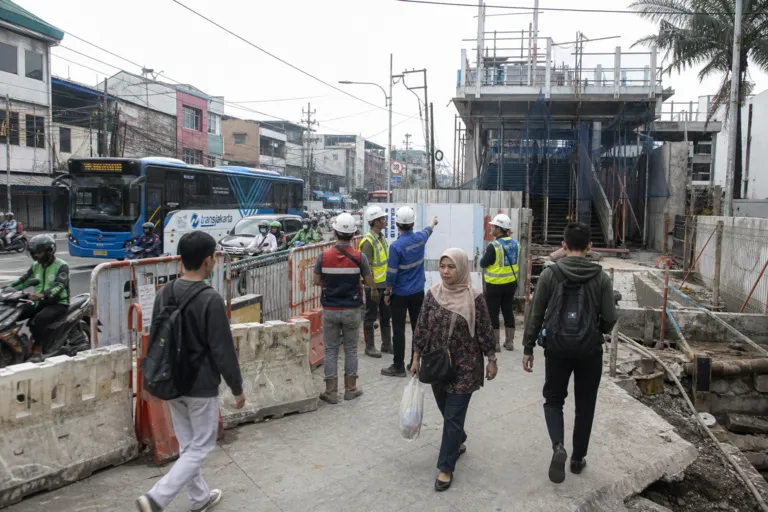
Jakarta’s MRT Phase 2 lands in a moment when Indonesian urbanisation is pushing cities to change fast. Jakarta is described as a bustling metropolis and the political and economic heart of Indonesia, with a population of over 10 million. That scale shapes every mobility decision. At the same time, Indonesia’s cities are framed as cultural melting pots that attract people from across the archipelago. This steady pull creates daily pressure on streets, commuting patterns, and public expectations. In that context, Jakarta MRT urban mobility is not only about trains. It is about how a mega-city keeps working while it rebuilds itself.
Big transit construction also brings immediate disruption. A transport analysis in another country describes how infrastructure contractors announce new road closures each week tied to transportation projects, and how closing one route can lead to heavy congestion on surrounding roads. It also notes that large projects tend to face delays, and that people feel frustration when their route to work is blocked. The lesson for Jakarta’s MRT Phase 2 is practical. Construction management must anticipate anger, not just engineering risks. It must also plan for detours, changing traffic patterns, and the perception that progress is unclear.
Phase 2 Is a Governance Test, Not Just a Build
What turns disruption into durable trust is communication. The same analysis argues that authorities must treat the public as a partner, adhere to timelines, and be transparent. It stresses that communicating the stage of each project is essential so the public feels it is part of a shared effort to improve conditions, and that foot-dragging must not be allowed. For MRT Phase 2, this points to a specific urbanisation challenge. Jakarta is not only growing. It is also becoming more demanding about accountability. Clear updates, predictable milestones, and visible responsiveness shape whether residents accept short-term pain for long-term mobility gains.
MRT Phase 2 also sits inside a wider technology and planning shift. One city profile notes that Jakarta has implemented various smart city projects aimed at improving urban mobility, public safety, and environmental sustainability. This matters because urban mobility is no longer just a service. It is a platform for coordination across agencies and systems. Another forward-looking transport piece argues that rail can gain capacity through modern signaling and automation, describing a global trend of rail systems getting digital upgrades. Even without Jakarta-specific technical details in these sources, the direction is clear. MRT expansion and smarter operations are increasingly linked.
To understand why Jakarta’s transit transformation matters for Indonesia, it helps to zoom out. An urban development analysis calls Indonesia the 4th most populous country and describes how the last 60 years have seen the rise of the mega-city, defined as established urban environments of greater than 10 million people. It lists Jakarta among such locations and also notes a Jakarta group’s plan called the “100 cities programme.” In parallel, investment and land-use pressures keep rising around cities. A JLL-based report says Jakarta prime logistics supply is projected to reach 3.2 million sqm of total cumulative supply while maintaining single-digit vacancy rates of approximately 9%.
Put together, MRT Phase 2 signals what Indonesian urbanisation needs next: mobility that can scale, and public institutions that can manage change in the open. Jakarta’s density and economic role make it a proving ground. If authorities provide frequent progress updates, treat residents as partners, and keep timelines visible, the city can reduce the friction that comes with closures and congestion. If not, the same disruption can harden into mistrust. Jakarta MRT urban mobility, in other words, is becoming a benchmark for how Indonesia’s dynamic cities balance growth, culture, technology, and everyday movement.
What does MRT Phase 2 mean for Jakarta MRT urban mobility?
Why is communication so important during major transit construction?
How does Jakarta’s size shape the stakes of MRT expansion?
How do smart city efforts connect to transit transformation in Jakarta?