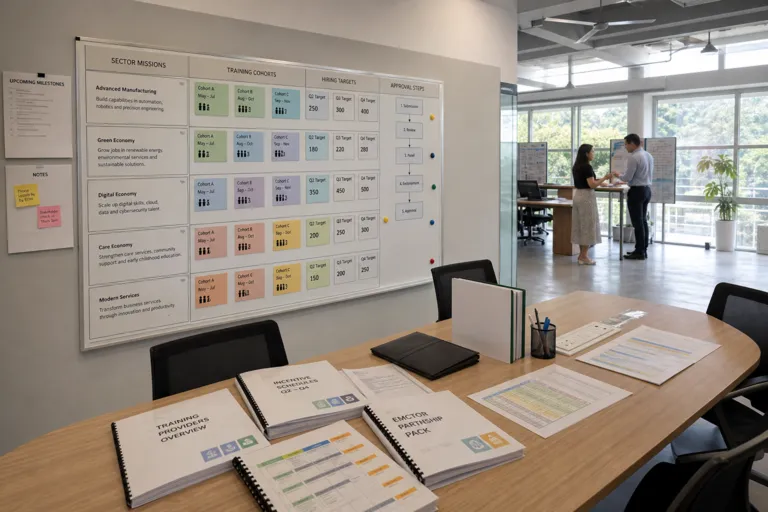
Singapore’s Budget 2026 reframes enterprise AI as an operating decision, not a lab experiment. At the centre is the Singapore National AI Council, chaired by Prime Minister Lawrence Wong, created to align research and development, regulation, and investment promotion so agencies “pull in the same direction.” The Budget also introduced National AI Missions in four sectors: advanced manufacturing, connectivity and logistics, finance, and healthcare. The intent is practical value, such as automating logistics operations and enhancing financial advisory work, while giving companies clearer lanes to move from pilot activity to repeatable deployment.
The incentives matter because they change project economics. For Years of Assessment 2027 and 2028, businesses can claim a 400% tax deduction on AI-related expenditures, capped at S$50,000 per year, under AI’s inclusion in the Enterprise Innovation Scheme. Budget 2026 also committed S$37 billion under the RIE2030 research and innovation plan. For companies still wrestling with compute access and implementation costs, this sits alongside the S$150 million Enterprise Compute Initiative announced at Budget 2025, which pairs firms with cloud and AI providers for credits and consultancy support. The policy message is that spend on applied AI is no longer treated as a niche experiment.
Why “From Pilot to Payroll” Now Means Workforce Redesign
Budget 2026 repeatedly ties AI adoption to workforce change, not just software selection. A new Champions of AI programme will support firms that commit to transformation, with tailored guidance that can include enterprise transformation and workforce training. The National AI Impact Programme will strengthen AI capabilities for up to 10,000 enterprises over the next three years, and support 100,000 workers to become AI-bilingual. Delivery mechanisms include a Digital Leaders Accelerator Bootcamp, grant support for SMEs to access proven cost-effective AI solutions, and enhancements to the TechSkills Accelerator programme to help non-tech workers build practical AI capabilities, starting with the legal and accountancy professions.
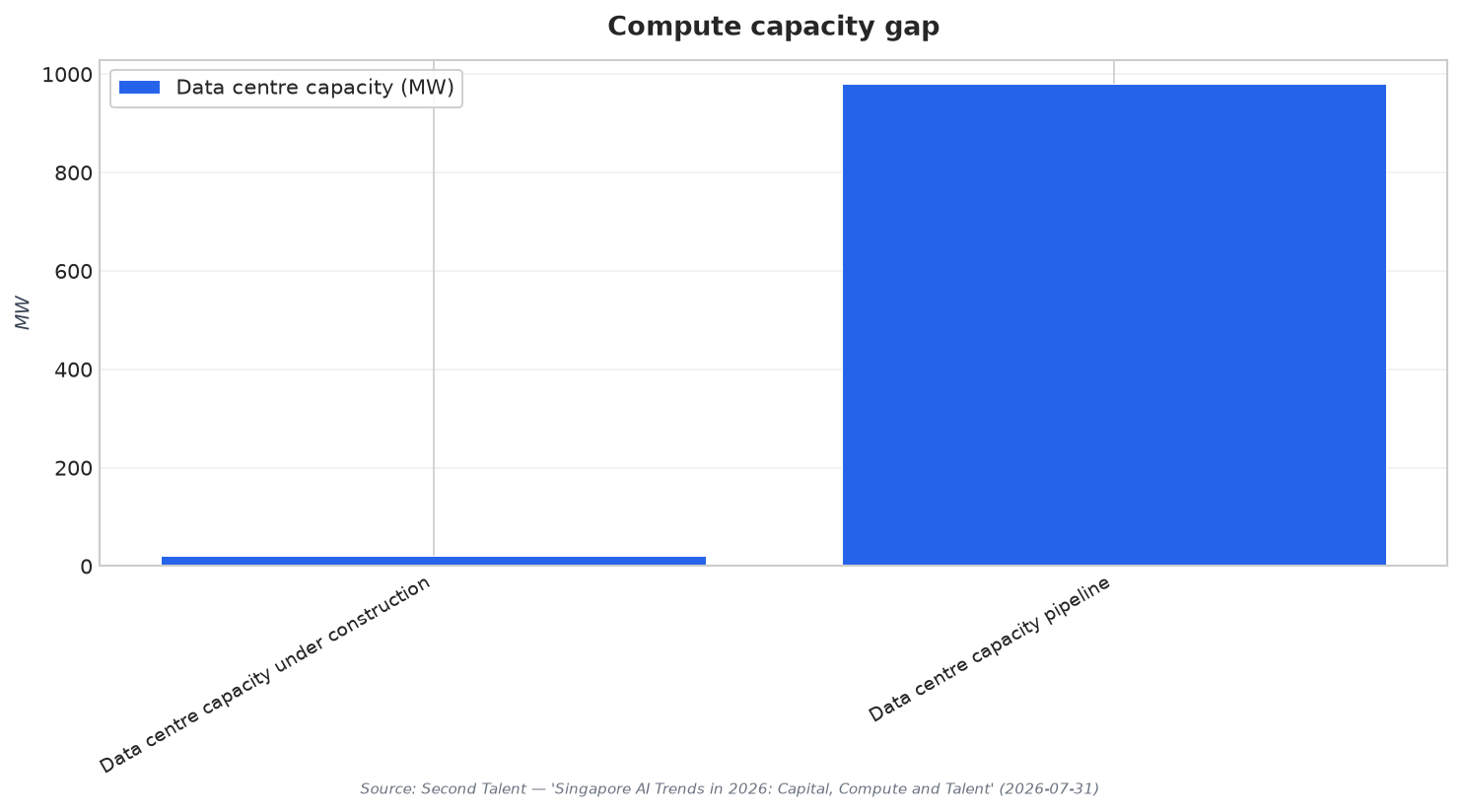
Execution still runs into constraints, which is why the council-and-incentives model is paired with talent and capacity planning. One Singapore-focused analysis highlights that 95% of employers report difficulty filling tech roles, and 26% name AI model and application development as their hardest capability to hire. It also points to infrastructure limits: only about 20 MW of data centre capacity is under construction against a pipeline near 980 MW. At the same time, the same source describes private investment momentum, including an OpenAI commitment of S$300 million for its first overseas Applied AI Lab, expected to create more than 200 technical roles in Singapore, plus NVIDIA opening its second Asia-Pacific AI research lab in the country.
For leaders, the practical shift is that AI scaling is being packaged as a governed, sector-anchored programme with funding, tax design, and training pathways. EDB also cited a regional signal: an “AI in Southeast Asia: An Era of Opportunity” report surveying 330 respondents across six ASEAN markets found 81% of companies in the region moving beyond experimentation into pilot and scaling phases, while nearly 90% plan to experiment with agentic AI. Singapore’s approach adds targeted enterprise support, including examples like Oracle partnering Digital Industry Singapore to accelerate AI transformation across 300 Singapore-based enterprises, offering resources up to S$250,000 per company, alongside a separate S$1.9 million pledge to enhance private cloud infrastructure for enterprises handling sensitive data.
What is the role of Singapore’s National AI Council in Budget 2026?
What tax incentive does Budget 2026 provide for enterprise AI projects?
Which sectors are covered by the National AI Missions?
How does Budget 2026 support AI skills and workforce change?
What constraints could slow AI scaling even with incentives in place?