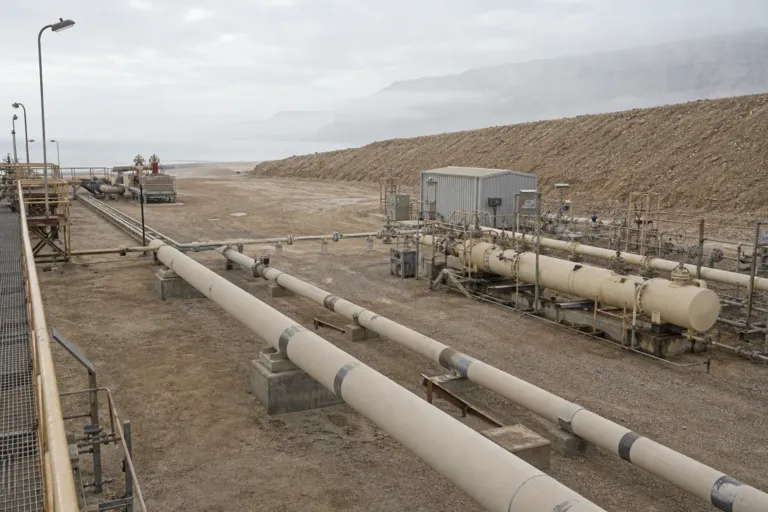
After the conflict that began on 28 February, exporters in the Gulf faced a painful reminder that the Strait of Hormuz is a single point of failure. Before the war, around 20% of the world’s oil moved through the strait, and in peacetime it also carried 20 million barrels of oil per day, according to Al Jazeera. The IEA also notes that about 20% of global LNG supply moved through the strait in 2025. As commercial traffic was disrupted, producers began pushing more barrels through alternative routes and workarounds, including ship-to-ship transfers and new loading patterns outside the strait.
The scale of the disruption is visible in the reported collapse in vessel movement. Al Jazeera said traffic through the strait plunged by more than 95% after Iran’s March 2 announcement that it was “closed,” followed by new rules requiring Tehran’s approval for transit. It also reported about 2,000 ships stuck on either side. In this environment, Gulf states accelerated investments in alternatives, as described by CNBC, with the IEA warning that chokepoints can leave the “$110 trillion global economy” vulnerable. The result is a new focus on building and maximizing routes that can function even when maritime access is constrained.
Which Bypass Routes Are Carrying the Load Now?
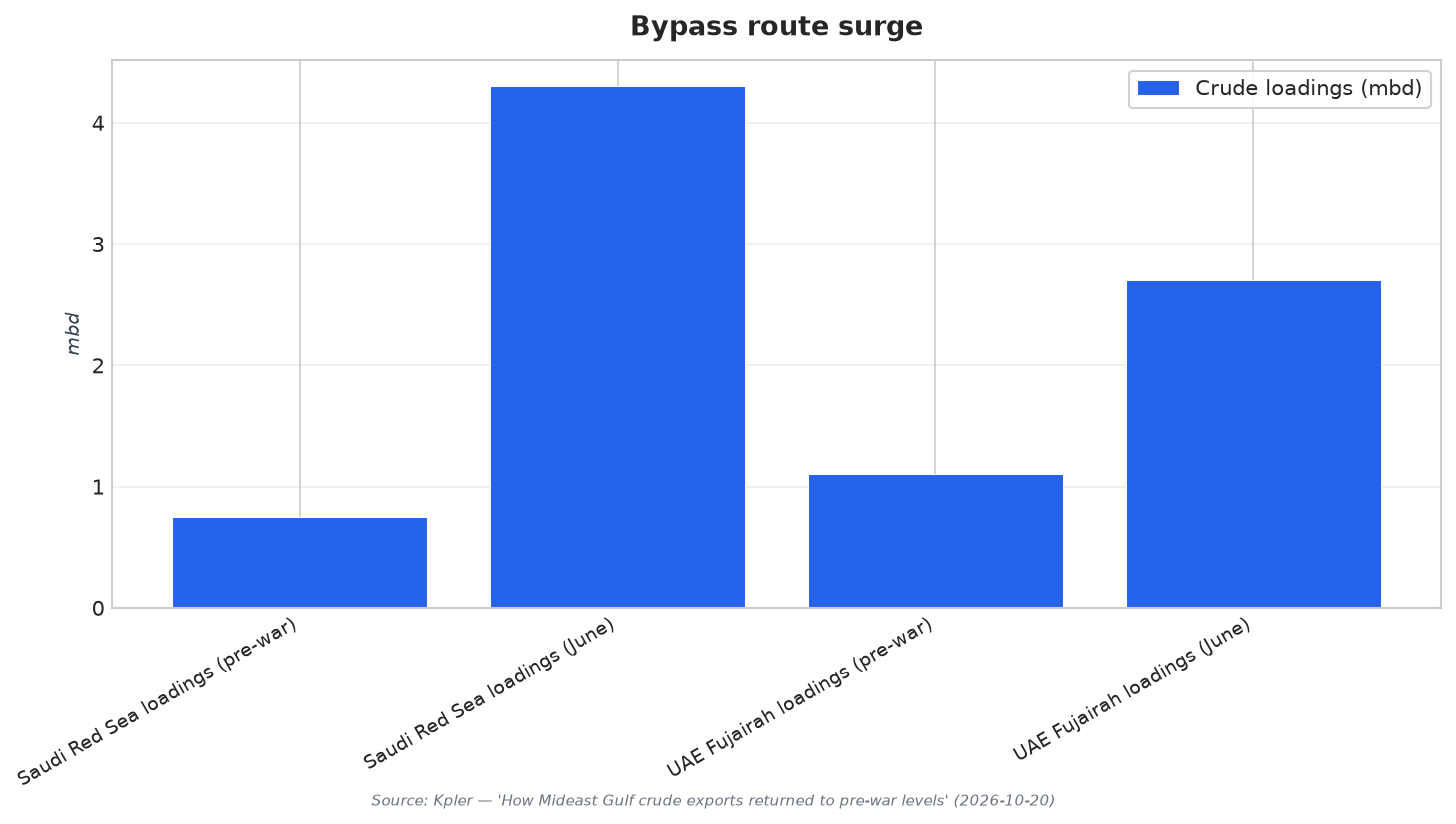
Two routes stand out for immediate impact: Saudi Arabia’s Red Sea outlet and the UAE’s link to Fujairah. Kpler reported Saudi Red Sea loadings rose from 0.75 mbd before the war to 4.3 mbd in June as the Yanbu bypass took over from the Gulf coast, and said the UAE increased loadings at Fujairah from 1.1 mbd to 2.7 mbd by moving crude through the Abu Dhabi Crude Oil Pipeline. The Middle East Institute described that line as a 1.8 million bpd pipeline connecting Abu Dhabi production to Fujairah on the Gulf of Oman. These Hormuz bypass pipelines have acted as relief valves, but they still do not fully replace the strait for the broader region.
Even where infrastructure exists, the recovery has required complex logistics. Kpler said that by May, 86% of the crude crossing the strait changed tankers in the Gulf of Oman, and that excluding Iran, exports from the Middle East Gulf region returned to pre-war levels in September with at least 16.5 mbd leaving the region. The IEA similarly reported that crude exports from Gulf producers surged to 13.9 million barrels per day in September, reaching over 75% of pre-war levels, using ship-to-ship transfers and alternative routes. Kpler added that, excluding Iran, 40% of crude now bypasses Hormuz, highlighting a structural shift in routing rather than a short-term detour.
Limits and new threats remain part of the equation. Kpler noted that Kuwait, Qatar, and most of Iraq have no route around the strait, meaning their recovery depends on getting flows back through Hormuz. The Middle East Institute added that Iraq’s recently opened Iraq-Turkey Pipeline remains underutilized and would still fall well short of what is needed to replace sea exports, while Qatar’s geography does not allow it to place liquefaction capacity outside the strait. Looking forward, CNBC reported producers are building or contemplating seven bypass projects, and Goldman Sachs estimates Middle East pipeline capacity could expand to cover more than 60% of Gulf states’ pre-war export volume by the end of 2028. Yet the same CNBC report warns that pipelines are a hedge, not a full replacement, and that threats can shift toward other chokepoints such as the Bab el-Mandeb.
Why are Gulf producers prioritizing alternatives to the Strait of Hormuz now?
Which reroutes showed the biggest visible jump in crude loadings?
How much crude is bypassing Hormuz after the export system reset?
What role do Hormuz bypass pipelines play compared with tanker workarounds?
How far could new pipeline projects reduce dependence on Hormuz by 2028?