
Green finance in ASEAN is becoming a critical factor in Southeast Asia's sustainable urban transformation. Governments and businesses require substantial capital to develop cleaner energy systems, resilient infrastructure, efficient buildings, and sustainable transportation networks. However, the financing currently reaching the region remains below the levels estimated to be necessary.
The Future ASEAN Sustainable Cities whitepaper by Eurogroup Consulting, developed in cooperation with the French Foreign Trade Advisors (CCE), examines the financing challenge alongside the region's broader urban development opportunities. The report cites estimates of approximately US$200–210 billion in annual investment requirements, while historical green-finance flows have been considerably lower.
For investors, development institutions, and international companies, this gap highlights both the scale of the challenge and the importance of developing commercially viable projects.
Green Finance in ASEAN: Understanding the Capital Challenge
Sustainable urban development requires investment across interconnected infrastructure systems. Projects can involve substantial upfront expenditure, long operating periods, and complex arrangements between public institutions and private businesses.
The whitepaper distinguishes between two related concepts: climate finance and green finance. Climate finance supports activities directly associated with climate-change mitigation and adaptation. Green finance encompasses a broader range of environmentally beneficial activities, potentially including pollution reduction, biodiversity protection, and sustainable resource management.
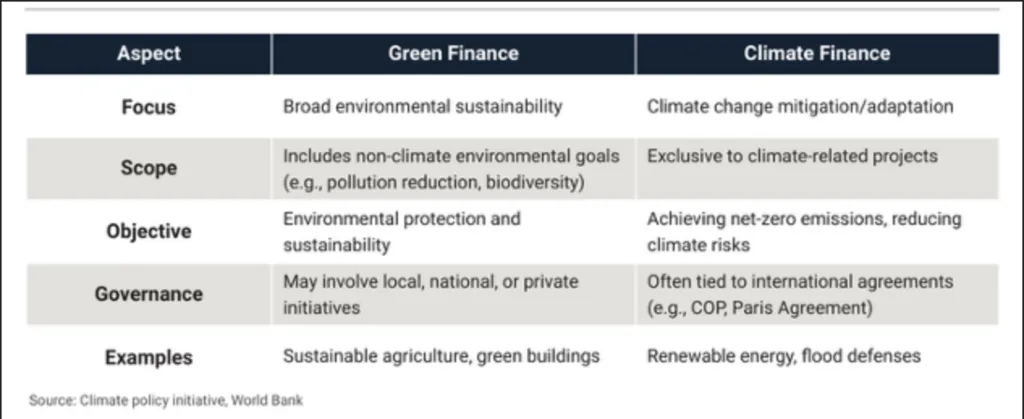
Figure 1: Green Finance vs. Climate Finance. Source: Future ASEAN Sustainable Cities, Eurogroup Consulting (p. 49), based on Climate Policy Initiative and World Bank.
The distinction matters because financing estimates can cover different activities and may not be directly comparable. For companies developing sustainability-related projects, understanding the relevant financing category can influence eligibility criteria, reporting requirements, and potential funding partners.
The Future ASEAN Sustainable Cities whitepaper provides further analysis of ASEAN financing mechanisms and their relationship with long-term urban development.
How Large Is ASEAN's Green Investment Gap?
The Asian Development Bank (ADB) estimates that Southeast Asia requires approximately US$210 billion annually in climate financing through 2030. The Monetary Authority of Singapore (MAS) provides a related estimate of approximately US$200 billion in annual green investment requirements. These estimates refer to related but not identical financing concepts and should not be treated as interchangeable.
Historical financing flows indicate a substantial shortfall. According to the whitepaper, MAS estimated annual green-finance flows in Southeast Asia at approximately US$40 billion during the period covered by the research.
Separately, Eurogroup Consulting estimated annual ASEAN climate finance at approximately US$72 billion, drawing on the Global Landscape of Climate Finance and its own regional allocation analysis. The figure is based on the 2021–2022 research period, rather than an independently reported current total.
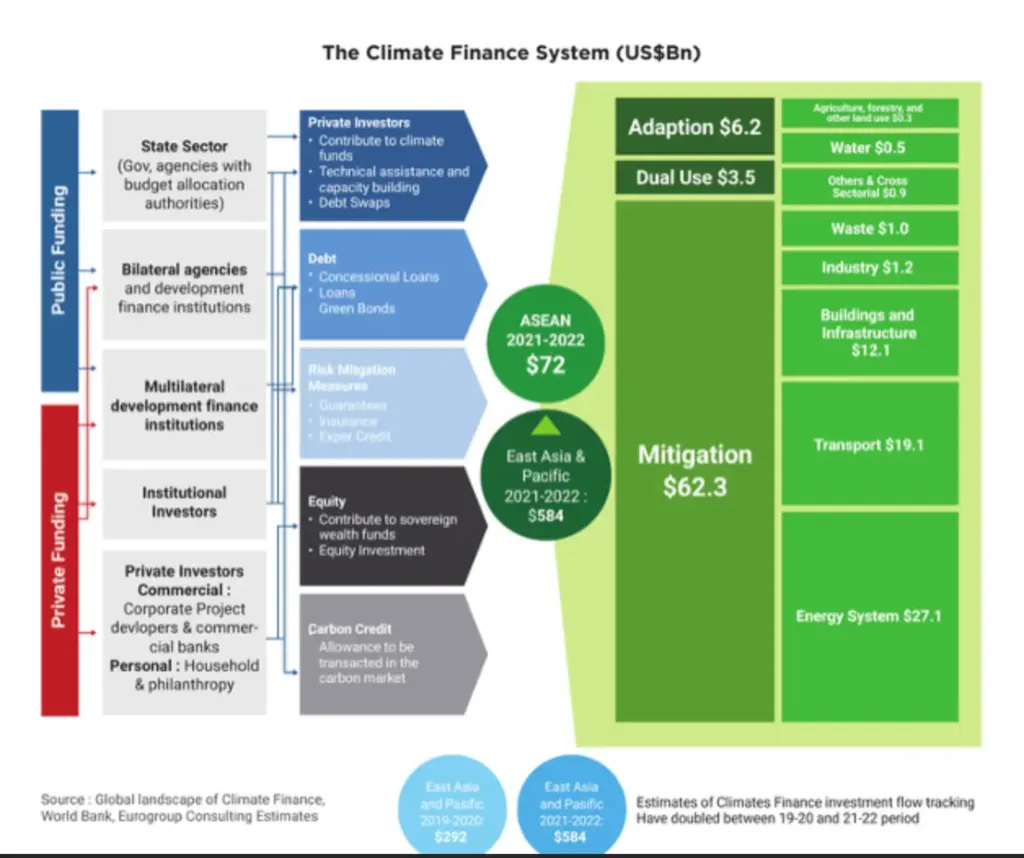
Figure 2: The Climate Finance System (US$Bn). Source: Future ASEAN Sustainable Cities, Eurogroup Consulting (p. 51), based on Global Landscape of Climate Finance, World Bank and Eurogroup Consulting estimates.
The investment gap does not necessarily mean that sufficient capital is unavailable in every market. It can also reflect challenges in developing bankable projects, coordinating stakeholders, structuring financial instruments, and demonstrating reliable financial returns.
Where Is Climate Finance Flowing Across Southeast Asia?
The Eurogroup Consulting whitepaper estimates that energy systems represented approximately US$27.1 billion of the region's annual climate-finance allocation in its 2021–2022 research snapshot. Transportation accounted for an estimated US$19.1 billion, while buildings and infrastructure represented approximately US$12.1 billion.
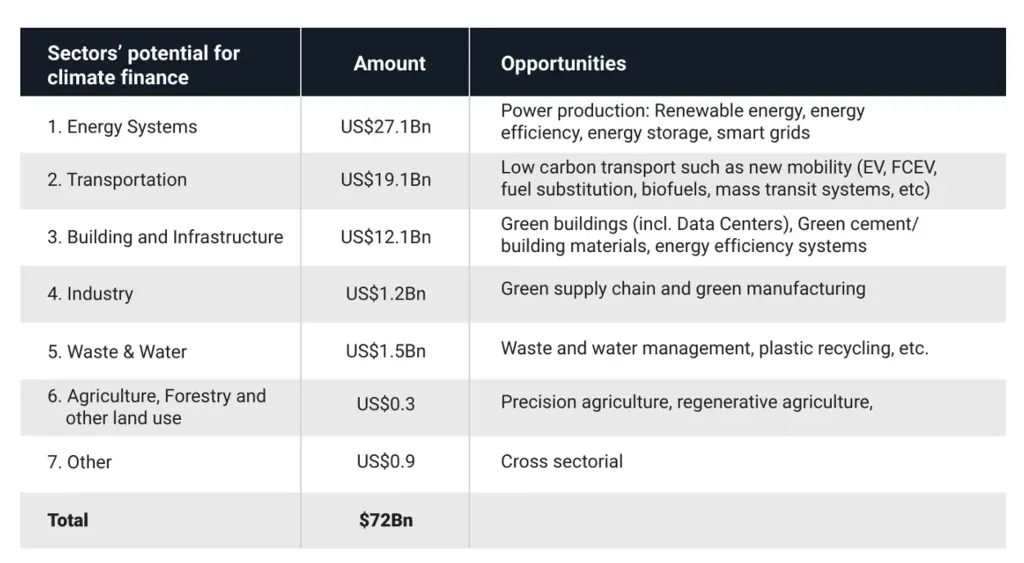
Figure 3: Sectors' Potential for Climate Finance in ASEAN. Source: Future ASEAN Sustainable Cities, Eurogroup Consulting (p. 52).
However, individual projects differ considerably in how they generate revenue and attract investors. Some infrastructure may produce identifiable commercial returns, while other activities generate public benefits that are more difficult to monetize. As a result, financing often involves combinations of public resources, private capital, development funding, and risk-sharing mechanisms.
The whitepaper describes several instruments used across ASEAN, including green loans, green bonds, green sukuk, equity investment, grants, and guarantees. Between 2016 and 2023, ASEAN countries issued around US$58.16 billion in green debt. Green bonds and green sukuk can connect eligible environmental projects with investors seeking sustainability-linked financial instruments.
Yet financial structures alone cannot ensure successful implementation. Projects need credible technical assumptions, suitable governance arrangements, and transparent reporting of environmental outcomes.
Public and Private Capital: Building a Financing Ecosystem
Governments can establish enabling regulations, provide infrastructure investment, and support projects where public benefits exceed immediately available commercial returns. Development finance institutions may contribute funding, technical assistance, and mechanisms designed to reduce investment risks, while private investors can provide additional capital when projects offer appropriate financial characteristics.
As Jean-Pierre Marcelli, Regional Director of Agence Française de Développement (AFD) Southeast Asia, observes in the report:
"The region has a powerful budgetary capacity, coupled with a strong private sector trusted by governments."
However, mobilizing capital also depends on project preparation. Investors need clarity regarding revenues, risk allocation, technical performance, and contractual responsibilities.
Read more in Financing the In-between: Singapore's Bold Push for Southeast Asia Transition Finance, which explores how transition-finance instruments and frameworks can support companies seeking to decarbonize activities that do not yet meet conventional green-financing criteria.
From Financing Gaps to Business Opportunities
The Future ASEAN Sustainable Cities whitepaper identifies four strategic recommendations for companies seeking to operate successfully in the region.
- Localize to Thrive: Emphasizes understanding individual markets, building trusted relationships, and aligning business strategies with local priorities.
- Demonstrate Technology: Focuses on showing how solutions can deliver practical outcomes, including operational benefits and measurable value.
- Collaborate for Impact: Highlights the importance of working within broader ecosystems involving businesses, institutions, and other stakeholders.
- Unlock Opportunities: Addresses the need to identify appropriate financing mechanisms and support tools for project development.
The wider opportunity is therefore not limited to supplying environmental technologies. It involves helping governments, developers, infrastructure operators, and investors translate sustainable urban ambitions into projects that can be financed, implemented, and operated effectively.
Frequently Asked Questions
What is green finance in ASEAN?
Green finance refers to financial resources and instruments used to support environmentally beneficial activities. In ASEAN, applications may include renewable energy, sustainable infrastructure, resource efficiency, pollution reduction, and biodiversity protection.
How much sustainable investment does ASEAN need?
The Future ASEAN Sustainable Cities whitepaper cites an Asian Development Bank estimate of approximately US$210 billion in annual climate financing through 2030, and a Monetary Authority of Singapore estimate of approximately US$200 billion in annual green investment requirements.
What are green bonds and green sukuk?
Green bonds are debt instruments used to raise funding for eligible environmental projects. Green sukuk serve a similar purpose through structures designed to comply with Islamic finance principles.
Turning ASEAN's Sustainability Ambitions Into Investment Opportunities
Download the Full Future ASEAN Sustainable Cities Whitepaper
Explore Eurogroup Consulting's complete research, developed in cooperation with the French Foreign Trade Advisors (CCE), featuring eight sustainability trends, climate and green-finance analysis, expert interviews, and strategic recommendations for succeeding in ASEAN's evolving urban markets.