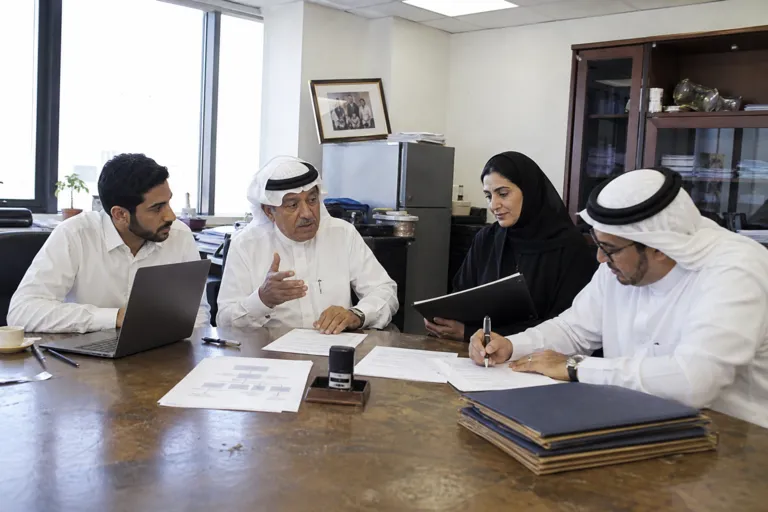
GCC family business succession is moving from informal handovers to designed transitions. Capital Insights describes a succession crisis “beneath a veneer of prosperity,” warning that founder-led models can become vulnerable during transitions. The risk is not abstract. Nearly half of UAE business owners admit they have no formal succession plan. When the handover is delayed, uncertainty grows, and that uncertainty can erode stability. The outcome can be governance breakdowns, ownership fragmentation, and value destruction. Families that last are those that professionalise operations and invest in future leaders.
This reset matters because family firms sit at the centre of the economy. KPMG’s UAE edition report (October 2022) says family-owned entities account for 60% of gross domestic product, employ 80% of the workforce, and represent 90% of private companies in the UAE. Yet survival across generations is hard. Capital Insights notes that globally only 10–15% of family firms survive to the third generation. That combination—high economic weight and low long-term survival odds—pushes Gulf families to treat succession as a board-level priority, not a private conversation.
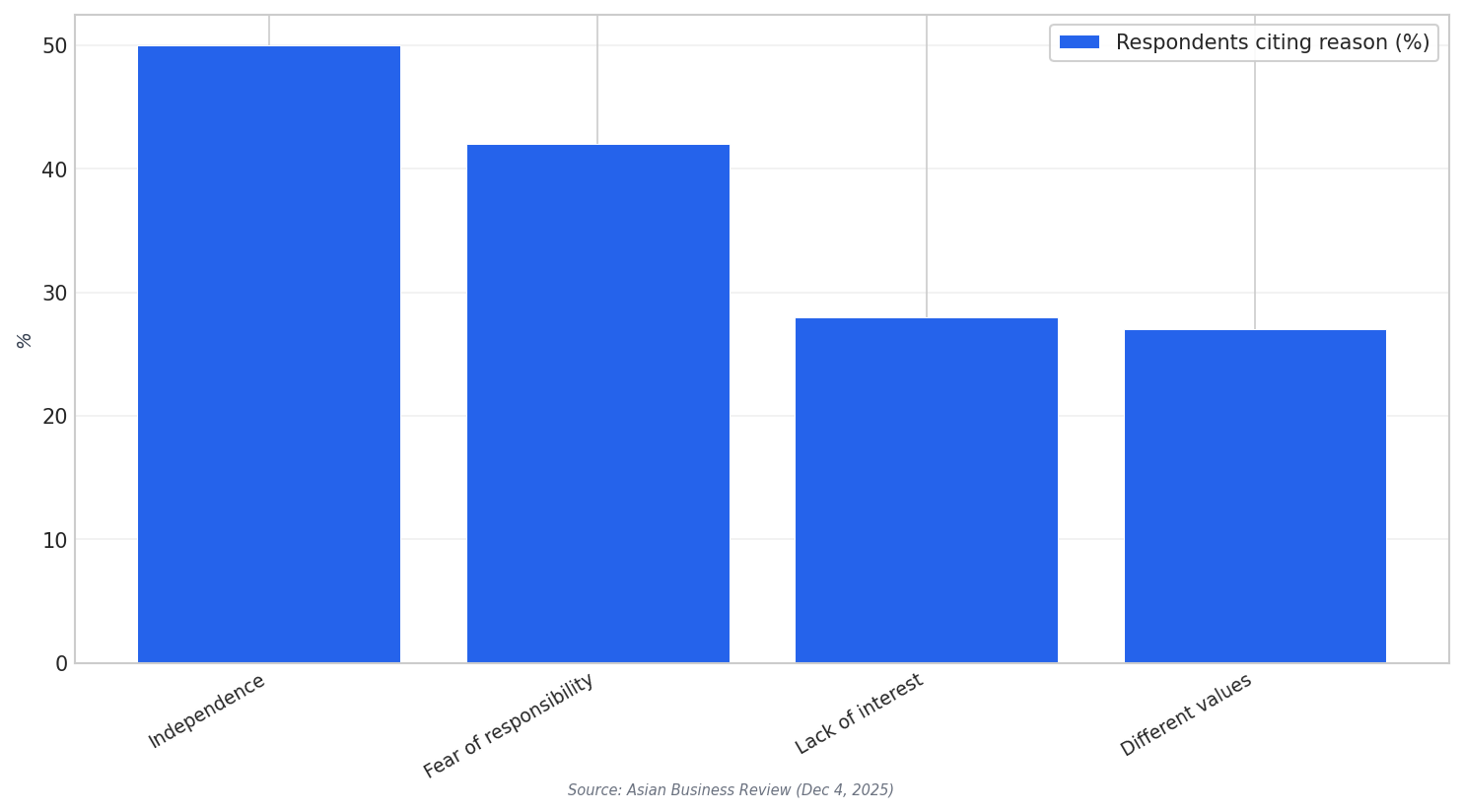
On the next-generation side, willingness is not guaranteed. Asian Business Review reports that only 40% of business owners believe the next generation is fully willing to take over. Among next-generation respondents not currently involved in the business, just 31% say they are fully willing to assume leadership. Reasons include independence (50%), fear of responsibility (42%), lack of interest (28%), and different values (27%). These tensions show why succession planning now blends leadership development with clearer role design, so ownership, work expectations, and authority do not collide at the worst possible time.
Governance and Institutions Are Becoming the Default
Across the Gulf, the antidote repeatedly cited is governance. Capital Insights calls robust governance the “new engine for growth,” shifting resilience away from family ties and toward institutions. In the UAE, H.E. Abdulaziz Al Nuaimi frames the transition as a “national imperative,” pointing to initiatives like the THABAT Venture Building Program to train the next generation and the new Family Business Law. The law is described as a flexible framework to codify charters, define roles, and manage ownership transitions without sacrificing agility. Dubai Chambers also points to the Dubai Centre for Family Businesses, which provides an integrated framework for governance, succession planning, and capacity building across generations.
Capital strategy is also being used as a succession tool. WealthBriefingAsia notes that private equity can provide a structured approach to leadership transitions to help ensure continuity, stability, and legacy. In parallel, family offices are professionalising. At Dubai’s Family Office Summit, the ecosystem was described as managing over $1.2 trillion in assets, with discussions focused on governance, artificial intelligence, and separating legacy business from investment capital. That separation is presented as a practical fix: it reduces distraction inside the operating business while letting wealth strategy evolve with the next generation. The same modernisation pressure appears in family office research, where 59% of respondents expect to transfer assets within 10 years, and technology adoption—including AI for market research—is already underway in many offices.
What is driving GCC family business succession to change now?
How willing is the next generation to take over leadership?
What does “GCC family business succession” look like in a governance-first model?
How can private equity support succession planning in family firms?
Why are Gulf families separating the operating business from wealth strategy?