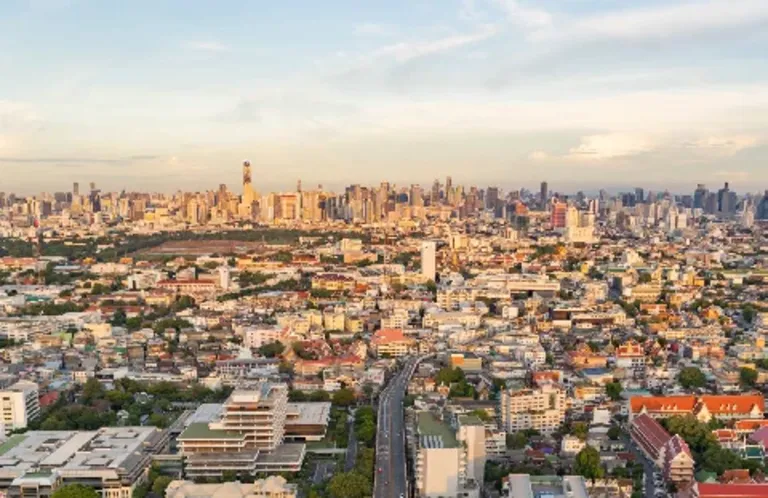
Southeast Asia’s urban future depends on more than constructing additional infrastructure. Cities across ASEAN face the combined challenge of supporting economic activity, improving everyday services and responding to climate risks. Eurogroup Consulting’s “Future ASEAN Sustainable Cities” whitepaper examines how locally appropriate solutions can advance these priorities.
Read the full analysis here.
The whitepaper explores the key priorities shaping sustainable urban development across Southeast Asia, from clean energy and smart infrastructure to sustainable mobility and resource management. It highlights opportunities for governments, investors, and technology providers to collaborate on practical solutions that improve urban efficiency, strengthen resilience, and support long-term economic and environmental sustainability.
Six Priorities for Sustainable Urban Development
Energy transition is one priority, particularly where cleaner electricity and greater efficiency can strengthen urban systems. Advanced planning, engineering and data integration form another, helping decision-makers connect infrastructure projects with actual urban needs. These efforts require coordination between public policy, technical capabilities and financing.
The whitepaper also addresses green buildings, hybrid and smart transportation, improved water and waste management, and circular-economy models. Each area contributes differently: buildings influence energy consumption, mobility affects access and emissions, and waste-to-resource initiatives can make municipal systems more productive.
Opportunities for Cities, Investors and Businesses
These areas create distinct opportunities for infrastructure developers, utilities, construction companies and technology firms. However, implementing a successful project requires an understanding of local governance, operating conditions and the existing infrastructure base. A concept that works in one ASEAN city may need substantial adaptation elsewhere.
The larger opportunity lies in combining environmental objectives with economic and social value. Eurogroup Consulting’s trailer highlights the need for pragmatic urban strategies that connect engineering, investment and long-term operations. For organizations evaluating Southeast Asian cities, that perspective offers a useful starting point for identifying partnerships and priority projects.
Cities also need mechanisms to move promising ideas from pilots into everyday services. Procurement requirements, maintenance budgets and the availability of skilled operating teams all affect whether new systems last. An urban mobility initiative, for example, may depend on connections with existing transport networks as much as its technology. Waste management improvements may require coordination between municipal authorities, processors and private partners. These practical questions are relevant to investors seeking projects with durable impact. The video presents sustainability as a connected agenda rather than a series of isolated products. This makes it valuable for organizations working at the intersection of engineering, public services, financing and technology.
Successful urban development should be measured through service quality and operational outcomes, not just new infrastructure announcements. Stakeholders can use these themes to compare priorities, define partnerships and assess whether proposed solutions suit local communities.