Egypt’s canal strategy in 2025–2026 is being shaped by a measurable recovery in shipping activity and a push to capture value beyond tolls. The Suez Canal Authority (SCA) reported vessel traffic expanded by 23.6% for a third successive quarter, as more operators returned to the Asia–Europe–Mediterranean route through Suez. In response, the SCA announced a broad increase in temporary vessel surcharges effective from mid-July, including a first-ever additional levy on container ships: a 12% surcharge on container vessels. This pricing shift sits alongside a wider policy goal: making the canal corridor more resilient to volatility in trade routes by expanding services linked to ports, logistics, and industrial activity.
The rebound is also visible in revenue benchmarks and short-term projections cited by multiple sources. One assessment noted fiscal year 2025–2026 revenue climbed 23% to $4.67 billion, with vessel transits up 10% year-on-year and cargo tonnage rising 22%, compared with a cited peak of $9.4 billion in fiscal year 2022–2023. Separately, the SCA introduced a 15% discount in May 2025 for large container ships with net tonnage of at least 130,000 tons to pull volume back after instability. In November 2025, SCA Chairman Osama Rabie projected revenues would reach $4.2 billion by the end of the current year, up from $3.9 billion recorded in 2024.
From Pricing Power to Value Capture Along the Corridor
Beyond fee adjustments, officials and analysts describe a deliberate pivot into value-added logistics and port-linked services, which frames today’s Suez Canal Economic Zone investment narrative. Ecofin Agency reported that, beyond transit fees, the SCA is aggressively expanding into value-added logistics, including ship maintenance and green fuel bunkering, as it seeks to strengthen the waterway’s long-term resilience. The same report also cited SCA data showing a 17.5% year-on-year increase in dollar revenue as of late 2025, with projections aiming for $8 billion in the 2025/26 fiscal year. These steps are positioned as a way to earn from ships and cargo even when routing decisions fluctuate, rather than relying only on a single toll-based model.
Cost and time incentives also shape why capturing adjacent value matters when operators compare Suez with alternative routes. Ecofin Agency stated that rerouting around the Cape of Good Hope adds roughly 3,500 to 4,000 nautical miles, consumes an additional 1,300 tons of fuel, and can cost upwards of $900,000 per trip in extra expenses, while returning to the Suez route can shave 10 to 14 days off transit times. Another analysis described Suez as avoiding a 6,000-mile detour and reducing an Asia–Europe container voyage by roughly ten to fourteen days, translating into fuel cost savings of 25% to 40%. Against that backdrop, the corridor’s services strategy aims to monetize the return of flows through repair, bunkering, and logistics offerings tied to the canal’s ports and industrial zones.
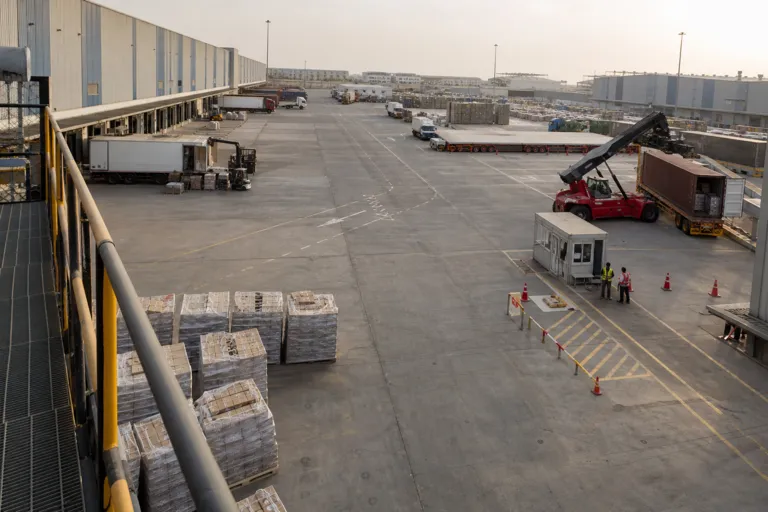
Market commentary also links the canal corridor to broader logistics development in Egypt, with the Economic Zone highlighted as an operational anchor for warehousing and re-export flows. MarkWide Research stated the Egypt Freight and Logistics Market was valued at $32.8 billion in 2026 and is forecast to scale to $57.33 billion by 2035, progressing at a 6.40% CAGR. It also described distribution running through bonded warehouse networks in the Suez Canal Economic Zone, and said captive warehousing networks in the zone anchor supply positioning and pricing power for bonded logistics operators serving re-export flows. Put together with the SCA’s evolving pricing tools and services expansion, the corridor’s play is to convert recovering traffic into recurring commercial activity onshore, not only one-off passage fees.
Why is Egypt changing the Suez Canal pricing model as traffic returns?
What recent figures show the canal’s recovery in revenue and volumes?
How does the Suez route compare with the Cape of Good Hope alternative in the sources?
How does Suez Canal Economic Zone investment support value capture beyond tolls?
What do the sources say about Egypt’s broader freight and logistics outlook tied to the corridor?