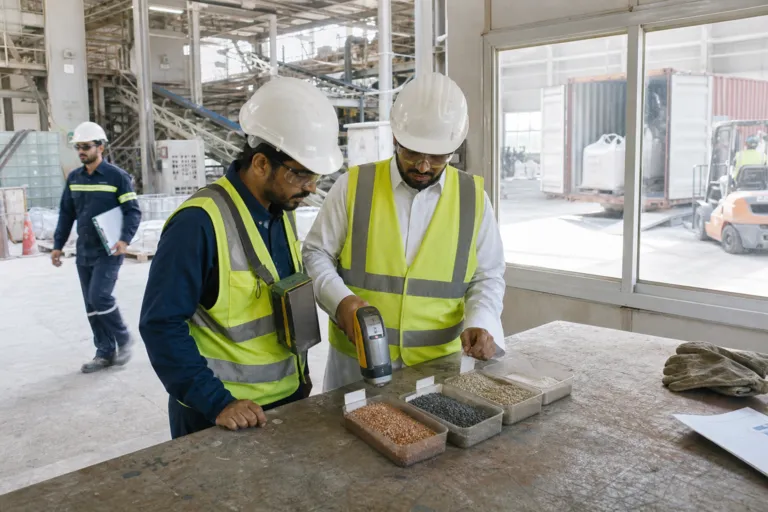
Saudi Arabia’s minerals strategy is moving beyond phosphate and into critical materials tied to electrification, data centers, and advanced manufacturing. The country’s Vision 2030 plan names mining as a key pillar, and the push is now framed around building supply chains, not only extracting ore. CNN reports Saudi claims of $2.5 trillion in mineral reserves, including gold, zinc, copper, lithium, and rare earth deposits such as dysprosium, terbium, neodymium, and praseodymium. At the same time, demand narratives are widening. Discovery Alert notes aluminium’s strategic relevance for the energy transition and for artificial intelligence infrastructure, adding confidence for expansion investments.
Ma’aden is central to this pivot and to the export logic that comes with it. Semafor reports the state-controlled miner will invest $110 billion over the next decade to boost production of phosphates, aluminium, and gold, with plans to triple its phosphate and gold business and double its aluminium business. Its chief executive also tied these investments to increasing exports of phosphates and reducing aluminium imports, supporting the balance of payments. Rare Earth Exchanges adds that Ma’aden’s plan is about building a vertically integrated minerals operating system, moving past “dig-and-ship” toward processing capacity, policy leverage, and greater control across the value chain.
From Bulk Commodities to Battery and Rare Earth Supply Chains
The next phase is the critical minerals set that underpins EVs, renewables, and data infrastructure. Oil & Gas 360 describes partnerships with the UK and the United States framed around copper, lithium, and nickel for EVs and “AI-hungry data centers.” It also says Saudi Arabia wants to produce battery metals by the late 2020s, referencing a non-binding term sheet with Aramco and KAUST to explore a minerals venture focused on energy-transition metals, including lithium extraction from unconventional sources. Discovery Alert similarly highlights Saudi market entry into rare earths and copper, while warning that processing and environmental management systems are essential for these materials.
Processing and export infrastructure are becoming the differentiator. CNN says China dominates the sector, controlling over 90% of the world’s output of refined rare earths and over 60% of rare earth mining production, citing the International Energy Agency. That concentration is why Saudi ambitions increasingly emphasize refining and hubs, not only mines. Mining.com.au notes analysts see Aramco’s large-scale infrastructure capabilities as supportive of processing facilities, transportation corridors, and mineral export platforms, alongside emerging battery and critical minerals processing hubs that reduce export-only models and build upstream-to-downstream value chains inside the Kingdom.
Saudi policy and exploration intensity are rising in parallel with the export ambition. CNN reports Saudi Arabia’s exploratory mining budget increased 595% between 2021 and 2025, and licensing has gathered pace. Stratfor adds that in the first six months of 2025 Saudi Arabia issued 22 mining licenses, up from nine in the same period of 2024, and highlights a UK-Saudi critical minerals cooperation deal signed on Jan. 14. Rare Earth Exchanges reports policy reforms including tax cuts from 45% to 20%, and says Ma’aden is backed by 63.9% ownership from the Public Investment Fund, while also noting Ma’aden’s market cap surged to $73.8 billion.
Saudi critical minerals exports will also be shaped by what happens beyond its borders. African.business reports the Kingdom’s unexploited mineral wealth is estimated at over $2.4 trillion, up 90% since 2016 after comprehensive surveys revealed resources including rare earths, copper, zinc, lithium, and gold. The same source says Africa holds an estimated 30% of the world’s proven critical mineral reserves, including around 55% of cobalt, almost half of manganese supply, and more than 20% of natural graphite. With Saudi targeting 30% of new car sales being electric by 2030 and aiming for 50% of electricity generation from renewables, the push for secure inputs and scalable processing is increasingly tied to export positioning and long-run geopolitical leverage.
What does “Saudi critical minerals exports” mean in practice?
Which companies are leading Saudi Arabia’s minerals expansion?
Why is processing such a big part of the strategy?
What signals show Saudi Arabia is accelerating exploration and licensing?
How does Africa fit into Saudi Arabia’s critical minerals goals?