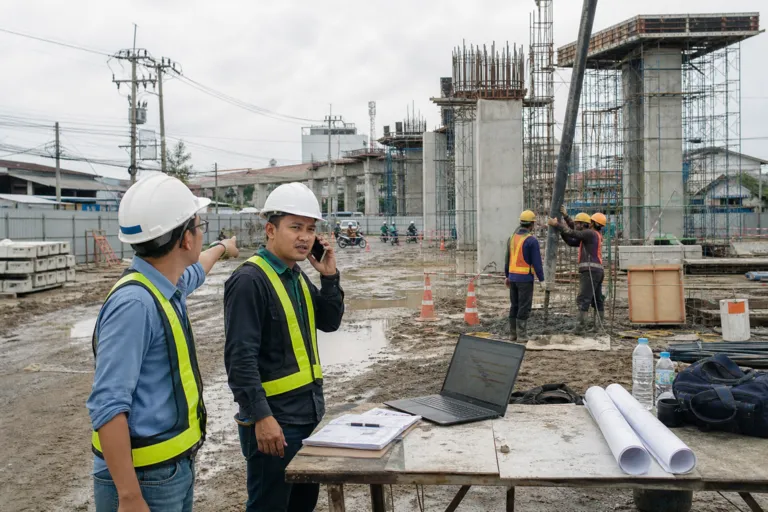
The first phase of the Thai–Chinese high-speed rail project, from Bangkok to Nakhon Ratchasima, now stands at 250.77 kilometres with a total investment of THB179.41221 billion. The line is being delivered through cooperation between the Thai and Chinese governments and uses Chinese high-speed rail technology throughout. Yet the schedule pressure is becoming harder to ignore. The State Railway of Thailand (SRT) reported cumulative progress of 52.4%, which is 28.2 percentage points behind the programme target of 80.73% at this point. This gap is the core issue behind the Thailand China high speed rail delay conversation, because it directly compresses the remaining time available for civil works and the following system installation steps.
SRT deputy governor and acting governor Anan Phonimdaeng said the previously set 2030 service opening target is now “very tight.” The reason is practical: the remaining civil works will require at least another three and a half years before the works can be handed over for system works under Contract 2.3. That timeline matters because any slippage in multiple packages can stack up. Anan warned that if processes under three civil works contracts and the rail system installation contract remain delayed beyond the revised plan, the overall opening schedule could be affected. He also said some procedures are waiting for clarity on the appointment of a new SRT board and a new board chairman, who would have authority to make decisions and formally sign the SRT governor’s employment contract, helping management continue without interruption.
Contract Progress Shows Why the Timeline Is Tight
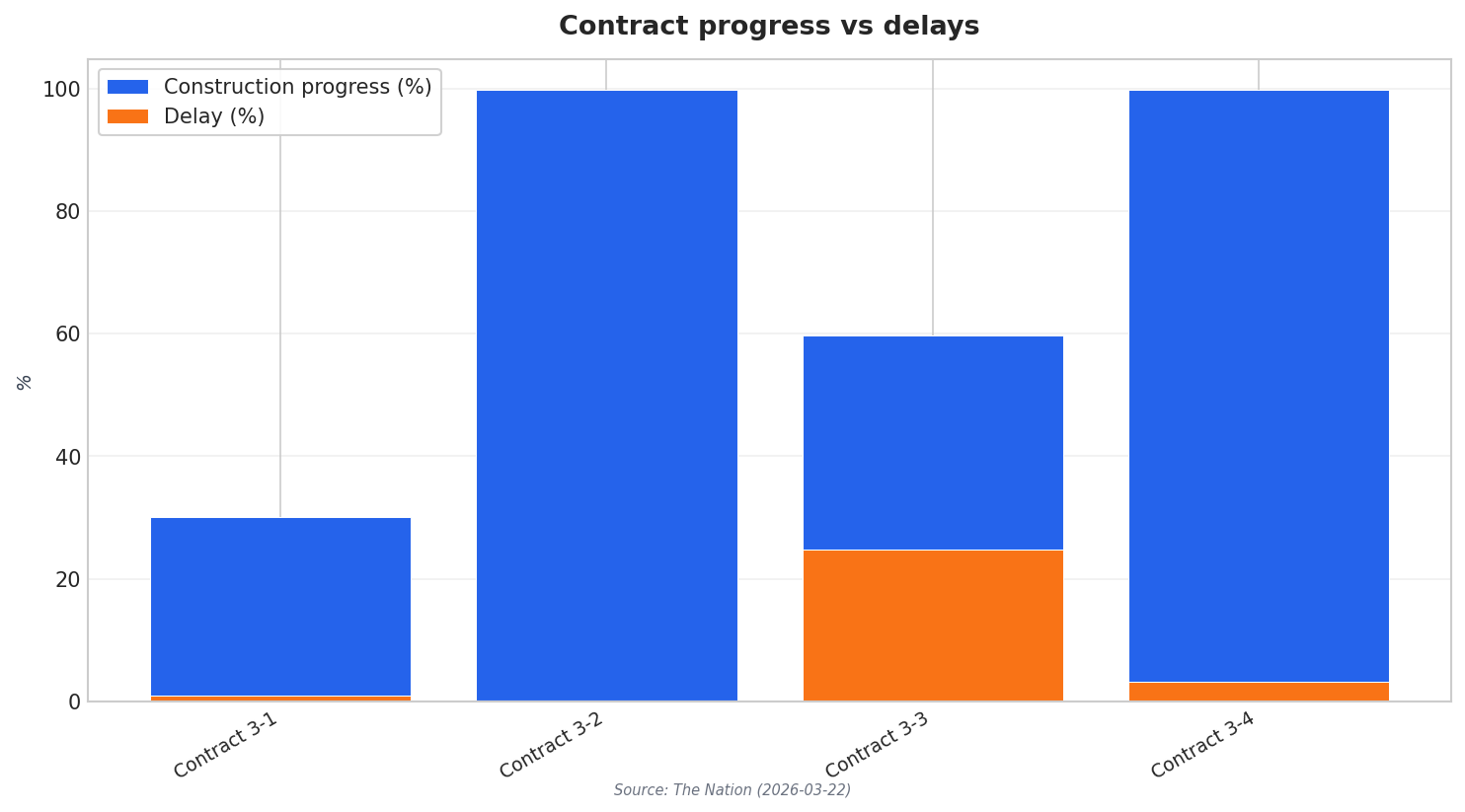
On the ground, the project is structured into 14 civil works contracts, and progress is uneven. Two contracts have been completed: Contract 1-1 (Klang Dong–Pang Asok) covers 3.5 kilometres with a budget of THB362 million and was constructed by the Department of Highways; Contract 2-1 (Sikhio–Kut Chik) covers 11 kilometres with a budget of THB3.11498 billion, with Civil Construction Services & Products Company Limited as contractor. Another 10 contracts are under construction, including Contract 3-1 (30.21 kilometres, THB9.34899 billion) at 30.06% progress with a 0.9% delay; Contract 3-2 (Muak Lek and Lam Takhong tunnels, 12.23 kilometres, THB4.27933 billion) at 99.8% progress with a 0.13% delay; and Contract 3-3 (26.10 kilometres, THB9.838 billion) at 59.7% progress with delays of 24.8%. Contract 3-4 is at 99.8% progress with a 3.2% delay, but it is also described as facing construction problems following a major incident involving a construction crane.
Beyond construction percentages, there are also specific bottlenecks that can hold up handovers and sequencing. Reporting cited obstacles on some sections that have caused construction to fall behind schedule, particularly land handover issues and unresolved problems in three contracts. One named example is Contract 4-1 covering the Bang Sue–Don Mueang section, where the area overlaps with the high-speed rail project linking the three airports. Anan said the approach to negotiations looking ahead would be to ask the Chinese side to gradually enter construction areas in phases, so that system installation can begin in parallel with the completion of civil works. That kind of phasing can reduce idle time, but it still depends on timely access, approvals, and coordinated delivery across multiple contracts.
The implications extend beyond the Bangkok–Nakhon Ratchasima segment because it is framed as the first instalment of a larger vision. Separate reporting describes a planned continuation from Bangkok through Nakhon Ratchasima to Nong Khai on the Mekong River, where the line would cross into Laos and connect with the Laos–China Railway opened in December 2021, forming a longer standard-gauge link. In that context, the Phase 1 schedule is more than a single deadline: it becomes the foundation for follow-on sequencing. For now, the key takeaway from the 52.4% figure is simple. With at least another three and a half years of civil works needed before Contract 2.3 system works can proceed, the path to a 2030 service opening exists, but it is narrow and highly sensitive to further delays.
What is the current progress of Thailand’s Thai–Chinese high-speed rail Phase 1?
Why is the 2030 opening date now described as “very tight”?
How do contract-level delays contribute to the Thailand China high speed rail delay topic?
How many civil works contracts are in the first phase, and how many are complete?
What does the first phase cover in distance and investment value?