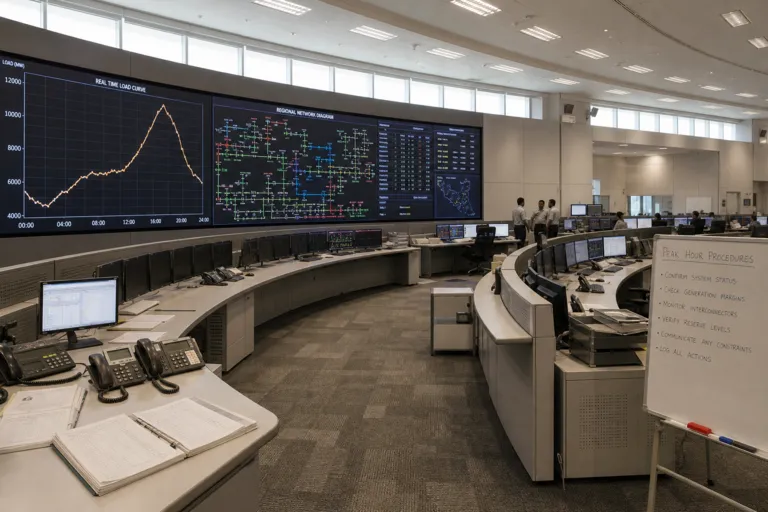
In the Gulf, the hardest part of power planning is not the annual average. It is the hottest hours. The International Energy Agency is cited as estimating that peak electricity demand in GCC countries exceeds 160 GW. At the same time, air conditioning is described as accounting for nearly 70% of residential load in nations like Saudi Arabia and the UAE, with household cooling use reaching up to 75% during peak months. This combination makes grid stress feel immediate and physical. When cooling dominates residential consumption, even a system adding capacity can still be judged by how it performs at the top of the load curve.
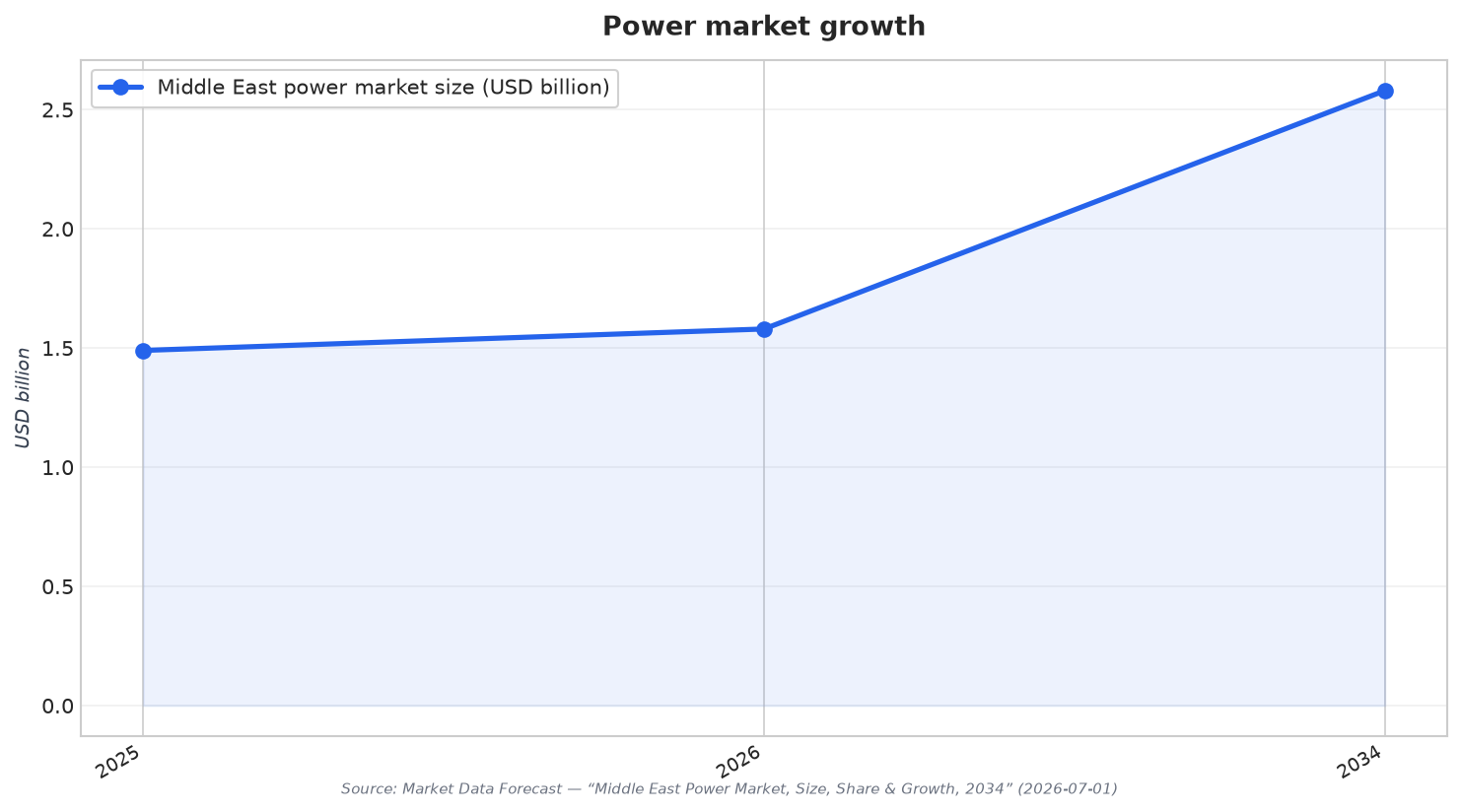
The strain is arriving while regional power systems are also trying to modernize. One market view values the Middle East power market at USD 1.49 billion in 2025, forecasts USD 1.58 billion in 2026, and expects USD 2.58 billion by 2034, at a 6.3% CAGR from 2026 to 2034. The same framing points to a strategic shift toward diversification in a region historically dominated by fossil fuels. But diversification does not remove the summer spike. Instead, it raises the bar for reliability, because the grid must serve expanding cities and industrial projects while staying stable during prolonged heatwaves.
When Cooling and Water Constraints Collide
Cooling stress is not only about end-use demand. It can also reach back into generation operations through the energy-water nexus. In Saudi Arabia, over 60% of desalinated water is cited as being used for industrial and power generation purposes. Kuwait provides another example of vulnerability: in 2022, the Doha East Power Plant experienced temporary shutdowns due to insufficient cooling water supply during a heatwave, as confirmed by the Ministry of Electricity and Water. These constraints matter because they can reduce operational flexibility right when the system needs it most, reinforcing how peak-season resilience depends on both electricity and water systems.
Energy-transition commitments add another layer of complexity. Carnegie notes Gulf states are balancing the costs of transition with economic diversification and resilience against climate impacts, while also highlighting that both the UAE and Saudi Arabia have announced net-zero emissions targets and national climate strategies, including the UAE’s Net Zero 2050 Strategy and Saudi Arabia’s Circular Carbon Economy. Yet the same analysis emphasizes the structural challenge of decoupling growth from hydrocarbon revenues. In practice, that means grids must stay firm under rising cooling load while policymakers also navigate how and how fast to reshape power supply, industry, and investment incentives.
Globally, grid execution is emerging as the limiting factor for transition speed, and the Gulf is not insulated from that reality. The International Energy Agency is reported as finding at least 1,650 GW of renewable capacity worldwide waiting for grid connections in 2024. In the same global context, the energy transition market is projected at $3.17 trillion in 2026, with a separate forecast projecting $5.99 trillion by 2032 at an 11.1% CAGR. The lesson for Gulf planners is straightforward: meeting extreme summer peaks while integrating new technologies depends on transmission, interconnection, and practical deliverability, not only targets and project announcements.
Why is summer cooling such a decisive factor for Gulf power systems?
How do water constraints affect power reliability during heatwaves?
What does the Middle East power market forecast signal about investment momentum?
How does the global grid-connection backlog relate to GCC electricity demand and cooling challenges?
Which Gulf strategies are cited for supporting long-term decarbonization goals?