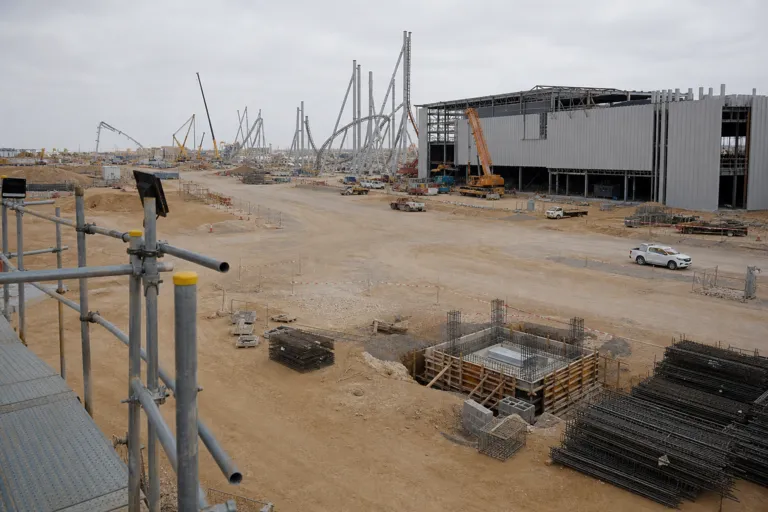
In 2026, the story of Qiddiya is no longer only about moving earth. It is increasingly about installing rides, grading circuits, and preparing real attractions that can carry the “capital of entertainment, sports, and the arts” positioning southwest of Riyadh. The Qiddiya Progress Tracker describes Phase 1 as active, with Six Flags and the Speed Park advancing, while keeping a 2030 visitor target of 17 million annually. Separately, a February 2026 analysis notes visible construction progress, especially on the entertainment core and the Six Flags theme park component. Together, these signals frame Qiddiya’s delivery as a transition from enabling works into operational assets.
Several 2026-facing milestones also clarify what “delivery” means for a giga-project built to sell experiences, not just square metres. The tracker states that Six Flags Qiddiya advanced through construction completion and ride installation, and that Falcon’s Flight is on track to claim the world record for fastest and tallest coaster, specified at over 250 km/h and 200 metres in height. The same source describes a water theme park progressing through construction, positioned as one of the largest water parks globally by area, and a golf course that neared completion to anchor a resort and residential district. In parallel, a separate tracker reports Six Flags Qiddiya City opened to select medium-sized groups ahead of an official launch before the end of the year.
What the 2026 Updates Say About Giga-Project Delivery
The 2026 milestones reveal that Qiddiya’s delivery risk is not only about construction sequencing. It is also about making the site reachable and programmable at scale. The tracker highlights infrastructure works including a dedicated highway link from central Riyadh, utility networks, and a planned metro extension. It also frames the addressable market in blunt terms: Saudi citizens are estimated to spend $20 billion or more each year on overseas leisure and entertainment travel, and Qiddiya’s economic thesis is to recapture part of that spend with world-class domestic offerings. This ties construction milestones directly to the need for repeatable demand, not one-off opening events.
Scale and geography further explain why Qiddiya’s progress is tracked component by component. The programme is located 40 kilometres southwest of Riyadh, on a 366 km² site, in the Tuwaiq Mountain escarpment. The tracker explicitly compares the footprint to the Las Vegas metropolitan area, stating Qiddiya’s site is larger. It also describes a phased buildout over two decades, spanning theme parks, water parks, motorsport, golf, performing arts venues, residential communities, nature reserves, and outdoor adventure activities. A distinct data point from the same tracker notes Riyadh’s population of eight million, underscoring the local catchment that improved connectivity is designed to serve.
Finally, the Qiddiya construction progress 2026 narrative is not just about concrete and steel; it is about operators, standards, and credibility. The Speed Park is described as progressing with circuit grading, grandstand construction, and pit facilities designed to FIA Grade 1 standards, positioning Qiddiya as a potential venue for Formula 1 and other international motorsport events. The tracker also states Qiddiya Investment Company secured partnerships with international entertainment operators, sports federations, and hospitality brands to populate commercial programming. In an October 2025 milestone, Nesma & Partners won a contract to build the Qiddiya Performing Arts Centre, intended to house a variety of live entertainment shows. These specifics show how delivery is being shaped by use-cases, not only timelines.
What do the 2026 milestones show about Qiddiya’s construction progress?
What visitor targets are cited for Qiddiya?
What are the key specifications mentioned for Falcon’s Flight?
How is connectivity to Riyadh described in the updates?
Why do partnerships matter for Qiddiya’s delivery story?