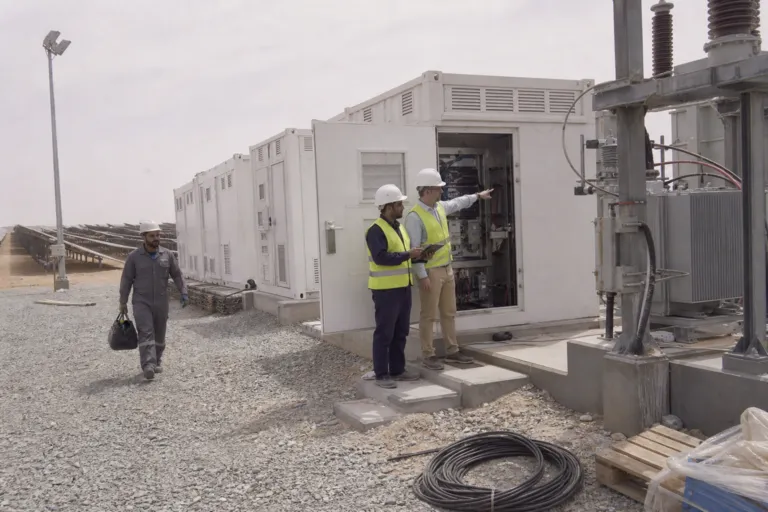
Saudi Arabia’s renewable build-out is moving from ambition to execution. UNDP officials say the country has connected over 10 gigawatts of renewable energy to its grid and has another 33 gigawatts in the pipeline. Saudi officials also want to install 20 gigawatts of green energy every year, aiming for 50% of the grid in only 5 years. At the same time, the Energy Ministry says renewables are going to make up around 50% of the energy mix used to produce electricity by 2030. This pace raises a practical question. How does the system keep power steady when the wind dies down or when night arrives?
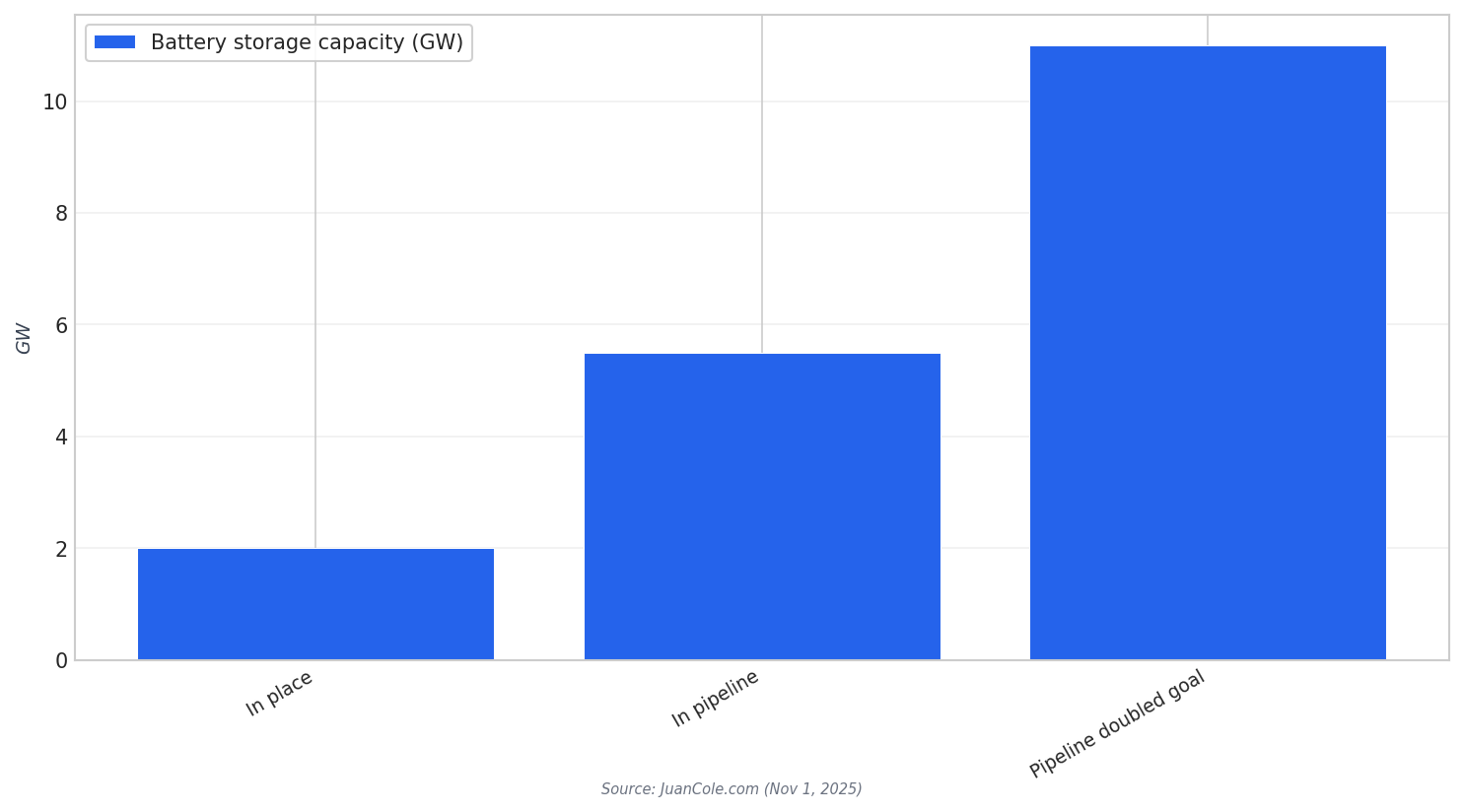
Battery storage is increasingly positioned as that missing link. One clear signal is already on the ground. Saudi Arabia has 2 gigawatts of battery storage in place. It also has another 5.5 gigawatts of battery storage in the pipeline, and wants to double that by 2030. This is not abstract planning. It is a direct response to the operating reality of wind and solar. Storage helps shift clean electricity to the hours when it is needed, instead of only when it is produced.
Recent procurement activity shows how quickly renewable capacity commitments are expanding. Saudi Power Procurement Company signed five solar PPAs totaling 12 GW and two wind PPAs totaling 3 GW, together billed as the largest renewable energy capacity signed for in a single phase globally to date. The projects are scheduled to be operational across 2027 and 2028. Separately, Saudi Arabia awarded five projects worth a total estimated investment of $2.4 billion, with a total capacity of 4.5 GW, as part of the sixth phase of the National Renewable Energy Program. As more projects reach commissioning, storage becomes less optional and more operationally necessary.
From Grid Strategy to Desert Operations
The case for battery energy storage Saudi Arabia is also being proven at the project level, not only in national plans. Ma’aden’s Al Baitha Bauxite Mine is set to run almost entirely on renewable energy under a 30-year PPA with Emerge Energy. The mine will be powered by an 8 MWp solar photovoltaic array and a 30 MWh battery storage system. The hybrid design is described as ensuring 24/7 electricity supply, even in harsh desert climate conditions. It is also framed as slashing carbon emissions by 13,800 tonnes annually, equated in the source to removing 3,000 cars from the road.
Industry watchers are also pointing toward what comes next. pv magazine reports that the main drivers of Saudi Arabia’s solar market are likely to shift toward grid integration and flexibility, including faster interconnection and a focus on large-scale solar-plus-storage. That framing matters because it matches what the pipeline suggests. As the country moves from connecting renewables to operating a larger renewable-heavy system, storage is the tool that turns rapid capacity additions into dependable electricity delivery. In short, batteries do not replace solar or wind. They make those investments work better when conditions change.
What is the current status of battery energy storage Saudi Arabia?
Why does Saudi Arabia need battery storage for renewables?
Is there a real Saudi project using solar-plus-storage today?
How big is Saudi Arabia’s renewable pipeline alongside storage plans?